At Blink Digital, we know that custom LED sign design goes beyond just buying a display – it’s about taking your brand’s vision and turning it into a vibrant, high-impact sign that resonates with customers. In Australia’s competitive retail and automotive markets, having a standout sign can make all the difference. With over 22 years of experience and premium components, we guide you through the entire process – from the first spark of an idea to long after the sign lights up your business. Whether it’s a bustling shopping centre or a sleek car dealership showroom, we tailor every step to match your needs.
In this article, we’ll walk through the full journey of custom LED signage – concept, design, approvals, installation, and support – and explain how Blink Digital helps businesses create LED signs that truly fit their brand and space. We’ll cover how to align signs with your brand identity, choose the right size and orientation for shopfronts or drive-throughs or indoor showrooms, and integrate LED displays smoothly with building architecture. We’ll also dive into practical considerations like electrical supply, structural requirements, council approvals (especially here in Brendale, QLD), and installation best practices. Finally, we’ll give you a handy checklist to prepare for your project and highlight the ongoing support we provide. By the end, you’ll see why Blink Digital is a trusted partner for bespoke LED display automotive showroom Australia clients and retailers alike.
The Journey from Concept to Completion
Every great LED signage project begins with understanding your vision and goals. In the concept phase, we work closely with you to figure out what you want your sign to achieve. Are you showcasing promotions outside a shopfront? Guiding visitors through a shopping centre? Drawing attention to a new car model in a showroom? We discuss your audience, messaging, and the feelings you want to evoke. At Blink Digital, we take time to understand your brand, target customers, and physical site. This phase often includes a site visit where we measure the location, check ambient lighting, and assess viewing angles. By the end of this stage, we’ll have a clear idea of factors like sign location, size requirements, and content strategy.
Next comes designing the sign itself. This is where your brand identity really comes into play. Our creative team will mock up the sign’s look and feel, including graphics, fonts, animations, and how your logo and colours will appear on the LED display. For retail shopfronts, we ensure the sign matches your store’s style – whether that’s bold and energetic or sleek and minimalist. For automotive showrooms, we might create dynamic visuals that highlight car models or promotions in a way that feels luxurious and high-quality. We also decide on the technical side: will it be a full-motion video display or a static logo sign? Landscape or portrait orientation? This design process is collaborative. We value your feedback and revise until the mock-ups fit your branding perfectly. The result is a final design plan that aligns your brand identity with practical considerations like size and location. This step ensures that our LED sign brand identity retail shopfront will stand out while feeling like a natural extension of your business.
Once the design is locked in, we handle approvals and regulations. In Queensland (and all of Australia), many signs, especially illuminated LED ones, need local government approval. For example, if your business is in Brendale or elsewhere in Moreton Bay or Brisbane, certain sizes or locations of advertising devices require council permission. We have deep knowledge of local rules, such as the Moreton Bay Council and Brisbane City Council planning schemes. Depending on the zoning, some small signs may be “self-assessable,” but larger or more complex LED displays often need a formal application. Blink Digital assists with this paperwork, ensuring your sign meets requirements for size, brightness, and placement. We also take care of any engineering assessments needed for structural mounting. This means you don’t have to navigate technical regulations alone – we make sure everything complies with Australian standards and local laws before installation begins.
When approval is granted, it’s time for manufacturing and installation. Our team builds your custom sign using premium components (we don’t cut corners on quality). We select high-grade LED modules, power supplies, and control systems to ensure bright, reliable performance. Each sign is assembled and tested in our Brendale facility before it travels to your site. On installation day, our certified installers safely mount the sign, run power, and configure it. We verify that the display looks perfect from the ground – colours calibrated, brightness optimized, and orientation correct. We also train your staff on using the sign’s content management system, so you feel confident updating messages or scheduling content in the future. After the sign is live, Blink Digital doesn’t disappear. We provide ongoing support and maintenance to keep your sign shining for years. Whether it’s routine cleaning, software updates, or quick troubleshooting, we’re your partner long after the install is complete.
Aligning Signage with Your Brand Identity
Your brand identity is the heart of your business, and your LED sign should be a true reflection of it. Think of your sign as a 24/7 advertisement on your storefront or showroom wall – it needs to communicate who you are. During the design process, Blink Digital pays close attention to your brand guidelines: fonts, colours, logo usage, and overall style. For a retail shopfront, you might have a playful, vibrant logo with bright colours. We’d design the LED sign’s content and even its physical casing to complement that energy. Maybe your brand uses a distinctive blue and white palette; the sign will feature those colours prominently. If your brand has an official tagline, we make sure it’s legible and timely on the display.
For automotive clients, brand consistency is just as crucial. A car dealership representing a luxury marque will have a different look than a family-oriented brand. We might use smooth animations and sleek transitions for premium car signage, or bold, dynamic visuals for a sportier brand. Importantly, we also consider the shopfront or showroom environment. A sign for a shopfront must be readable by people on foot or drivers nearby, using large lettering and clear logos. In a car showroom, an indoor LED display might have more detailed animations of car interiors or features. The key is to match the sign’s content and style with what your customers expect from your brand.
Even the shape and finish of the sign ties back to brand. For example, if your store’s facade has a curved design, we might propose a slightly curved LED screen to integrate seamlessly. The sign’s frame and casing can also be custom-colored or textured. Our goal is a sign that feels like your brand – consistent with your online presence and in-store graphics. This is why having a cohesive LED sign design is important: an LED sign brand identity retail shopfront tells customers “we know who we are,” which builds trust and recognition. In the end, a sign that aligns with brand identity doesn’t just attract eyes; it creates a professional, polished image for your business.
Choosing the Right Size and Orientation
Not all signs are created equal. The size, orientation, and placement of an LED sign depend entirely on where it will live and who will see it. Blink Digital helps you pick the perfect dimensions so your message is clear and compelling.
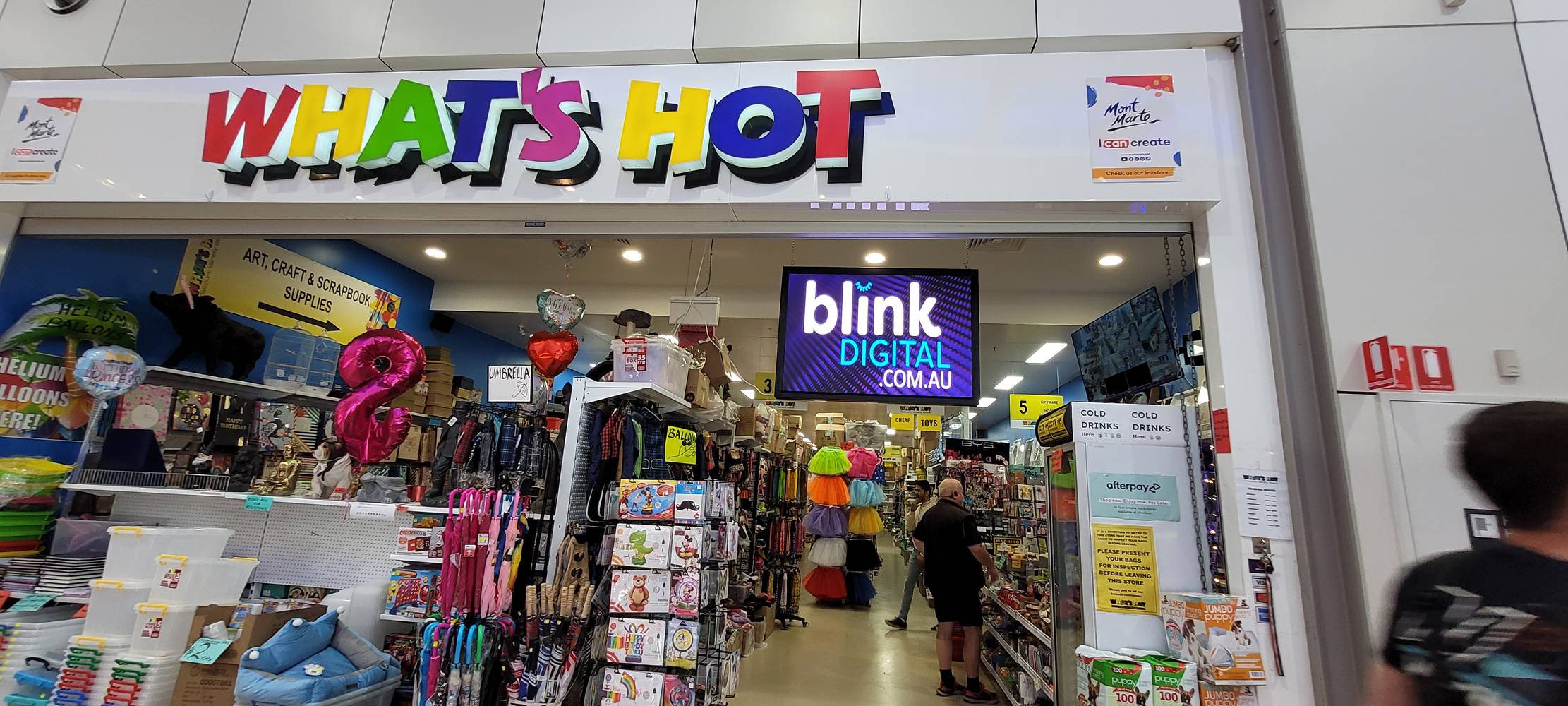
- Shopfront Signs: For a street-facing storefront, signs are usually larger and landscape-oriented. They need to be visible from a distance so passing pedestrians and vehicles can read them. For example, a shop on a busy retail strip might use a wide LED panel above the entrance. We consider factors like how close the footpath is, local lamp poles or awnings, and recommended viewing distances. If your shopfront faces a high street, a sign might be several metres wide to be eye-catching. We make sure your logo and text are sized so a person walking or driving by has at least a second or two to read it. A good rule of thumb is that for every metre of viewing distance, letters should be about 10mm tall.
- Drive-Through and Roadside Signs: Some retail businesses have drive-through lanes (think takeaway food or pharmacy pick-up) or roadside appeal (like a garden centre visible from the road). For these, portrait orientation or even double-sided signs can work better. A portrait sign hung higher near the entrance can be seen by drivers in cars, while a double-sided panel (one facing each direction) ensures maximum exposure. We also make these signs super bright to combat daylight, and use anti-glare coatings so drivers aren’t blinded. Blink Digital’s experience means we know how to make signs that are quick and easy to read for someone moving by in a vehicle. If your business includes a drive-through, we’ll ensure the LED display is weather-rated and can handle vibrations and exhaust exposure.
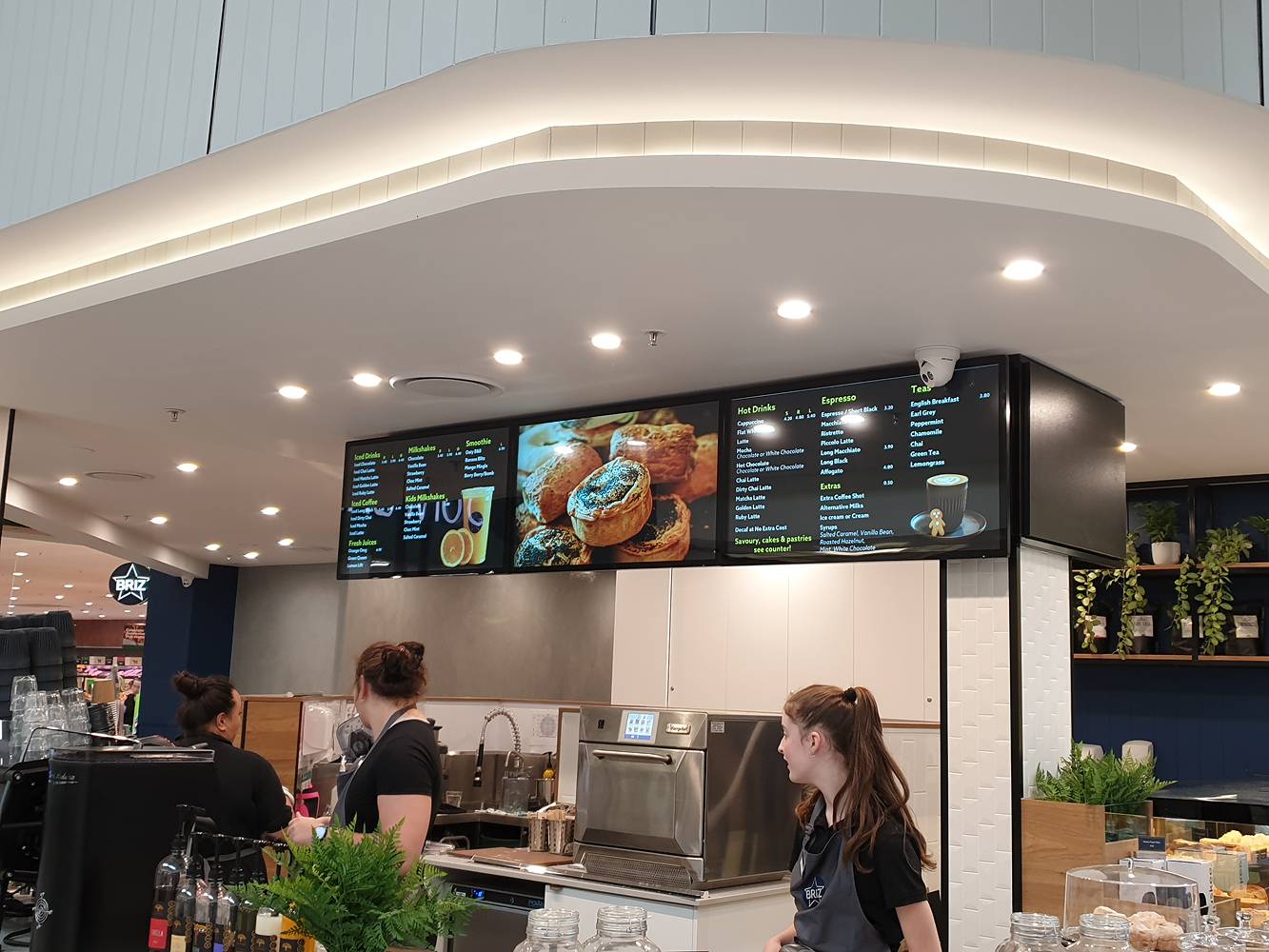
- Interior Showroom Displays: Inside a car dealership or shopping centre, viewing distances are shorter, and customers often linger. Here, high-resolution displays are important. We might recommend a fine-pitch LED screen (for example, P2 or P3 pixel pitch) so that logos, car images, and text look crisp up close. The size can vary – maybe a vertical panel next to a sales counter, or a multi-panel video wall in the showroom. For automotive showrooms, LED walls can showcase cars from different angles, play feature videos, or display stock information. Because showroom signs often run during the evening or have controlled lighting, we don’t need as much brightness as outdoors, but colour accuracy and sharpness are key. We’ll orient and size the sign so it complements the interior design – perhaps building it into a podium or as part of a wall accent.
Throughout this process, Blink Digital checks the numbers. We calculate optimal resolution and pixel pitch based on your typical viewing distance. For instance, if most viewers stand 3 metres from an indoor sign, a P2 display (2mm between LEDs) might be chosen. If drivers see an outdoor sign from 30 metres away, a P10 or P16 display would suffice (and be more cost-effective). We also consider installation limits – very large signs might need extra structural support, so we ensure those details are planned. By the end, you’ll have a sign that’s perfectly sized and oriented for its purpose – whether that’s drawing in mall traffic, guiding customers through a drive-through, or making a statement in your showroom. This tailored approach is at the heart of Blink Digital’s custom LED design service.
Integrating LED Signs into Your Building’s Architecture
An LED sign should complement your building, not clash with it. Blink Digital works with your architects and builders to integrate signage seamlessly into the existing design. This can involve customizing the sign’s shape, mounting style, and enclosure.
For example, if your storefront has a curved glass facade, a rigid flat LED screen might look out of place. Instead, we could use a flexible LED panel or multiple angled sections that wrap around the curve. Or, if your building features a large archway, we can create a curved sign to fit. Matching materials also helps: perhaps your building has a wooden overhang, so we design the sign’s frame with a similar stain. For modern glass-front stores, we might recess an LED screen flush into a false wall so it doesn’t protrude.
We also align with architectural guidelines on height and clearance. If the building is heritage-listed or in a specific style, the sign can be made low-profile or tinted to blend when off. In retail malls, our signs can be sized to fit standard panel openings or integrated as part of wayfinding signage. On shopfronts, a sign might be mounted on a decorative bracket that matches the store’s brackets. Blink Digital often works with architects to provide CAD drawings or 3D renders, showing exactly how the sign will look on the building.
For automotive showrooms, integration is equally important. Dealerships often have clean, showroom-style facades with large glass panels. We can suspend LED signs from the ceiling inside or mount them behind tinted glass outside. In some cases, we build signs that are part of the entrance canopy. The goal is that by the time we finish, the sign looks like it belongs to the building. This thoughtful integration is part of making the signage a tailored solution, not just a generic add-on.
Finally, we consider environmental factors related to the building. If your shopfront has no shade, we ensure the sign is angled or has a visor to reduce sun washout. If it’s under an awning, we might boost brightness since ambient light is lower. For drive-through lanes, signs are often mounted on poles or windows, so we coordinate height and supports with the existing structure. Blink Digital’s team can handle creative mounting solutions – from framed recesses to wall brackets – all while respecting building codes. In short, our LED signs are designed to harmonise with architecture, making them look sleek and intentional rather than tacked-on.
Electrical, Structural and Council Considerations
Behind every impressive LED sign is solid engineering. Before and during installation, several technical aspects must be managed carefully. Blink Digital oversees all the electrical, structural and council requirements so you don’t have to worry.
Electrical Requirements
LED signs are high-tech electrical devices. They need a stable AC power supply (often 240VAC in Australia) and then internally convert that to low-voltage DC for the LEDs. We ensure your site has the right power set-up. This means arranging for a dedicated circuit or switchboard if necessary. We run electrical cables in accordance with Australian Standards (like AS/NZS 3000 for wiring safety) and ensure proper grounding and surge protection. If your sign is outdoors, the power feed will be in waterproof conduit to avoid any moisture issues. We also program adaptive brightness controls (often via a built-in light sensor) so the sign automatically dims at night. All our installations are done by licensed electricians who certify the work.
Structural Support
Large LED signs can be heavy and subject to wind loads. That’s why structural engineering is crucial. If we’re mounting a big outdoor display, we coordinate with engineers to verify the mounting point – whether it’s a metal frame on a pole or brackets on a wall. We calculate wind pressure based on local codes, ensuring brackets and fixings are strong enough. In some cases, especially for freestanding signs (like a roadside pylon sign), a concrete footing might be needed. Blink Digital can manage that process – from surveying soil conditions to ensuring signs are stable and safe. For interior displays, we consider ceiling loads and may use reinforced beams or special mounts. We always prioritize safety: no surprise collapses or signs falling in storms.
Council Approvals and Regulations
If your business is in Brendale QLD (Moreton Bay), Brisbane, or anywhere in Australia, local councils have rules about signage. An LED screen is typically classed as an “advertising device.” Things we check include:
- Size limits: Some councils allow small signs to be “self-assessable” (no formal permit needed) if under a certain area. Larger displays often require a development application.
- Illumination rules: Councils regulate how bright a sign can be, especially near roads or heritage areas. For example, we might need to demonstrate that the sign won’t blind drivers.
- Position and height: Signs can’t block traffic views or overshadow neighbours. Setbacks from property lines or pedestrian paths must meet code.
- Heritage and aesthetic controls: If you’re in a heritage zone, design guidelines might restrict illuminated signs or certain styles.
- Electrical safety: Separate from council, the electrical installation must comply with safety standards and be certified.
Blink Digital helps navigate all this. We prepare the necessary documentation (site plans, engineering reports, electrical compliance certificates) and liaise with council officers on your behalf. Our experience with Moreton Bay Council, for instance, means we already know typical conditions and can often anticipate what changes might be needed for approval. Handling all this paperwork might sound daunting, but it’s part of our end-to-end service. We ensure your custom sign not only looks great, but is also fully legal and safe according to Queensland regulations.
Best Practices for Installation: Weather-Proofing, Brightness and Viewing
Installing an LED sign is more than just hanging a screen; it’s about ensuring long-term performance in real-world conditions. Here are some of the best practices Blink Digital follows to make sure your sign stays brilliant for years to come:
- Weather-Proofing: Outdoor signs face rain, dust, heat, and sometimes bushfire smoke in Australia. We use enclosures rated to IP65 or higher, meaning they’re dust-tight and protected from water jets. LED modules themselves are sealed to keep moisture out. Cables and power supplies go in weatherproof boxes. We also use anti-corrosion coatings on metal parts. For locations near the coast, extra anti-salt-coating is applied. If a sign is going to see direct sunlight, we may add an external hood or shading device to prevent UV damage and overheating. Even the fans and ventilation (if any) are designed so rain can’t splash inside. Essentially, our signs are built to withstand Aussie conditions – from blistering summer sun to winter storms.
- Optimal Brightness: An LED sign’s brilliance is part of its impact, but too bright or too dim can be a problem. We aim for high brightness so your sign is eye-catching even in full daylight. Typical outdoor LED signs run at thousands of nits (brightness units); indoor signs use a few hundred nits. We calibrate each sign during installation using professional light meters. Many of our displays include ambient light sensors that automatically adjust brightness: dazzling and visible in sunlight, but gentle on the eyes at dusk. This prevents complaints from neighbours and conserves energy. We also test for any hotspot or dead-LED issues before finishing up. Your sign will be bright enough to be seen under the harsh Australian sun, yet easily adjustable for comfort at night.
- Viewing Distance and Clarity: Knowing how far away people will be when they look at the sign is key. For retail shopfronts, passers-by might only be a few metres away, so we ensure the text and graphics are large and clear. If a sign is meant to be seen from tens of metres (like from across a parking lot or street), we make it bigger and use a coarser pixel pitch so it still looks sharp from afar. We do a final “field test” at installation: walking around the site and checking the sign’s readability from all expected vantage points. If text looks too small or images too blurry, we can adjust content scale or even tweak the sign’s pixel mapping. We also set correct aspect ratio and orientation: a wide rectangular display for a long facade, or a tall display for a narrow pillar. In short, we match the technical specs to how people actually look at your sign.
- Safety and Access: During installation, safety is paramount. Our crew uses certified lifts, harnesses, and helmets for high work. We anchor scaffolding properly if needed. Sign placement considers maintenance access – for example, mounted so panels can open for service, or with walkable space if technicians must climb behind. After installation, we program the display and run diagnostics, confirming it’s connected to your network or control system. Then we give you a full handover.
By following these best practices, Blink Digital ensures your sign performs at its best and continues to do so. The sign won’t fade to yellow after a year, its brightness won’t drop unexpectedly, and messages will remain clear. We know you want a sign that works reliably 24/7, and our installation process is all about delivering that reliability with maximum impact.
After Installation: Training, Maintenance and Support
A common myth is that once an LED sign is up, the job is done. In reality, post-installation support is where Blink Digital shines as a partner, not just a supplier. We believe in setting you up for success from day one and beyond.
Training: On installation day, we walk you through using the sign’s software. Most modern LED signs have content management systems that let you upload images, videos or text schedules via a PC or mobile app. We teach your designated person (store manager, IT staff, etc.) how to log in, create playlists, and troubleshoot simple issues. Whether it’s updating a daily special or switching to a holiday theme, you’ll know how to control your own sign. We also share tips on creating effective content: for example, keeping messages concise, using brand colours, and timing updates for maximum customer reach. Our goal is that you feel fully confident using your new sign immediately, without needing to call us for every little change.
Maintenance Plan: Like any high-tech device, LED signs benefit from periodic upkeep. We can set up a maintenance schedule tailored to your environment. For example, in dusty or coastal areas, we recommend cleaning the LED modules every 6-12 months to prevent dimming from debris. Our technicians can handle this, or we can train your staff on a basic cleaning routine. We also monitor the sign’s performance. With many of our installs, we offer a 24/7 remote monitoring service: if a module fails or the system errors, our engineers get an instant alert. We then dispatch a technician if needed, often before you even notice the issue.
Warranty and Long-term Support: Blink Digital provides robust warranties on both parts and workmanship. Should anything go wrong with the hardware, we take care of repairs using high-quality replacement components. We also keep a stock of common parts (like LED drivers) so fixes are fast. Over time, as technology advances, we can upgrade your sign’s controller or software to add new features. And if your needs grow (say you want to link multiple screens or add interactive elements), we’re here to consult on the next steps.
Content Support: Some clients prefer ongoing creative support. If that’s you, we can help develop content calendars or promotional graphics that utilize the sign effectively. For retailers, this might mean ready-made templates for holiday sales; for car dealers, it could be monthly new-model spotlights. Blink Digital acts as your digital signage advisor, helping you get the most from the investment.
In essence, our relationship doesn’t end at installation. We become an extension of your team – the friendly experts you call whenever you need anything from a quick training refresher to a major sign upgrade. This long-term approach is why our clients say we stand out among LED signage companies. We aim to be your trusted LED signage partner for the long haul.
Client Preparation Checklist
Before a custom LED sign project begins, there are some things you can prepare to ensure everything runs smoothly. Here’s a mini checklist for clients to get ready:
- Brand Assets: Gather your logo files (ideally vector format), official colour codes, fonts, and any brand guidelines. Having these ready helps our designers integrate your brand seamlessly.
- Content Strategy: Think about what you’ll display on the sign. Do you have promotions, menus, or informational messages ready? Even a rough content plan (daily specials, announcements, etc.) guides the sign’s design.
- Site Information: Provide photos or a site plan of the intended sign location. Note distances (how far from the road or foot traffic) and any obstacles (trees, fences). This helps in sizing and planning the installation.
- Access and Approvals: Ensure you have permission from the property owner or manager for installation. If you haven’t already, check if a council permit is needed; we can assist. Also confirm power availability (e.g. nearest outlet or switchboard).
- Decision-Makers: Identify who at your company will make final decisions on design and sign placement. Quick approvals on mock-ups keep the project on schedule.
- Maintenance Plan: Decide who will handle routine sign care (cleaning, content updates). If it’s your team, ensure they have time to be trained; if not, consider our maintenance services.
- Budget and Timing: Have a budget range and installation timeline in mind. LED signs can range widely in cost, so knowing what you’re willing to invest helps us tailor options.
- Technical Contacts: If your building requires special electrical work or engineering sign-off, introduce us to any electricians, engineers, or contractors early. We’ll coordinate closely with them.
This checklist (think of it as your car dealership LED signage installation checklist) helps us hit the ground running. The clearer information you can give us upfront, the smoother the process will be. Blink Digital will guide you through each requirement, but having these pieces ready makes the project even more efficient and ensures a successful installation.
Partner with Blink Digital for Bespoke LED Signage
Custom LED signage is a powerful way to elevate your retail store or automotive showroom. From the moment we brainstorm your sign’s concept to the day it goes live – and beyond – Blink Digital is with you every step of the way. Our 22+ years of experience, premium components, and personalised approach mean your sign isn’t just a generic display: it’s a genuine extension of your brand. You’ll benefit from thoughtful design that resonates with customers, perfect sizing and placement for maximum visibility, and installation that ticks all safety, electrical and council boxes.
Most importantly, you’re not on your own. With Blink Digital’s ongoing support, your sign will keep performing beautifully for years. We train your team, maintain the hardware, and even help plan content, so your investment keeps delivering value. Retailers enjoy brighter shopfronts and higher foot traffic; automotive clients shine up their showrooms and draw in more buyers.
If you’re ready to create a custom LED sign design retail Australia shopfront or need advice on a bespoke LED display automotive showroom Australia, let Blink Digital help. Contact us today in Brendale, Queensland for a free consultation. We’ll discuss your vision, walk you through each step of the process, and show you why so many Australian businesses trust us as their digital signage partner. Together, we’ll light up your brand like never before.