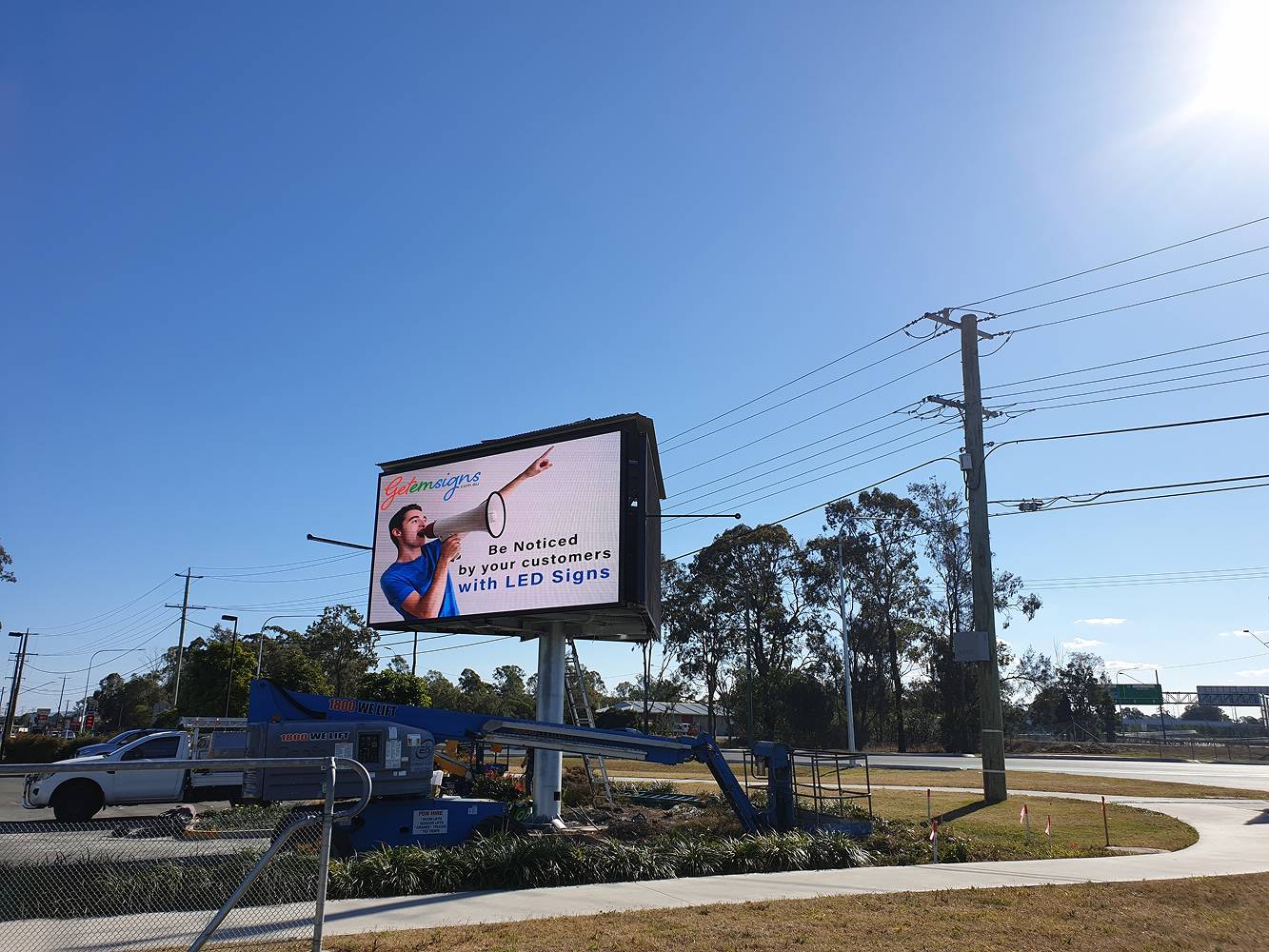
For Brisbane businesses, buying outdoor digital signage is not the same as buying an indoor screen and bolting it to a wall. South East Queensland asks a lot more from any display that needs to perform on a shopfront, roadside, forecourt or street-facing façade. It has to stay readable in bright daylight, cope with heat loading over long sunny periods, handle heavy rain and wind events, and keep working when the trading week gets busy and the last thing your team needs is a dimming panel or a content issue. That is exactly why a local buyer guide matters for businesses comparing digital signage Brisbane options and looking for LED signs Brisbane companies can rely on year-round. Blink Digital positions itself as a Brisbane-based provider of customised digital signage, handling design, installation and maintenance, which is especially relevant in a market where environmental conditions and site layout have a real effect on performance.
The climate data makes that local angle more than a marketing line. According to the Bureau of Meteorology’s Brisbane Aero climate statistics, the site records a mean maximum temperature of 29.2°C in January and 29.1°C in February, around 31.5 days per year of 30°C or above, annual mean rainfall of 1030.9 mm, about 85.4 days each year with at least 1 mm of rain, and 133.4 clear days on average. The same dataset shows mean daily solar exposure of 19.2 MJ/m² annually. In plain English, Brisbane is bright, warm and regularly wet, and any outdoor LED signs or digital signage solution has to be chosen for that reality rather than for an idealised showroom environment.
The UV story matters too. The Bureau of Meteorology’s UV climate maps explain that the UV Index is a simple measure of solar UV radiation at the earth’s surface, that protective measures are needed at UV levels of 3 or above, and that in January average clear-sky values of 11 or more cover virtually all of Australia. Even allowing for cloud cover and local variation, Queensland businesses operate in one of the brightest outdoor advertising environments in the world, which is why screen brightness, contrast, colour handling and automatic dimming should be treated as core buying criteria rather than optional extras.
Blink Digital’s own outdoor signage material reinforces that point. The company describes outdoor LED signs as ultra-bright displays built to stand out day or night, rain or shine, and says brightness, viewing distance and pixel pitch are among the key decisions when choosing a display. That is the right framing. Good LED signs are not just about being visible; they are about being readable at the real distance and angle your customers will actually see them from. In a Brisbane setting, that means designing for sun, weather, foot traffic, vehicle speed and access to maintenance from the start.
Why Brisbane changes the digital signage brief
A lot of generic buying guides talk about LED signs as though every business sits in the same environment. Brisbane proves otherwise. A screen on a suburban café frontage, a dealership forecourt sign near a busy arterial road, and a retail display on a high-footfall shopping strip may all be called outdoor digital signage, but they face different sightlines, different exposure and different operational risks. That matters because a sign that looks impressive in a product brochure can still underperform if it is too dim for full sun, too coarse for close viewing, poorly positioned for the street direction, or difficult to service once installed. Blink Digital’s own recent Brisbane posts make that distinction clearly: visibility is not the same as readability, and good results come from designing around real sightlines and peak foot-traffic patterns, not just screen size.
Queensland’s severe weather profile also changes the brief. Get Ready Queensland says severe weather is part of life in Queensland and notes that businesses can be affected by power outages, damaged stock, road closures, staff shortages and supply-chain disruption. Its business preparedness guidance specifically tells operators to think about what they will do if power or internet is lost, if the premises are inaccessible, or if the team needs to work remotely or from an alternative location. That is highly relevant to any digital signage Brisbane project because the screen is only one piece of the system. Power, connectivity, content delivery, access, safety and continuity all matter as much as the cabinet itself.
The reminder is not theoretical. In March 2025, ex-Tropical Cyclone Alfred brought heavy rain, damaging winds and widespread flooding to South East Queensland and northern New South Wales, leaving hundreds of thousands of properties without power across the broader region. For Brisbane businesses, events like that underline why “outdoor rated” should not be treated as a vague label. When severe weather hits, the questions become practical: can the sign stay safe, can it recover quickly, can content be updated remotely, and can the business get local support without waiting on an interstate supplier to respond.
That is one reason Blink Digital’s Brisbane footprint matters in this category. On its website, the company says it is based in Brisbane, operates from Brendale, and provides end-to-end service covering consultation, installation, maintenance and support. For digital signage Brisbane buyers, that local presence is not just a branding point. It means the supplier should better understand local weather patterns, installation conditions, service access issues and the difference between a screen that launches well and a screen that keeps performing through peak summer, storm season and busy trading periods.
Put simply, Brisbane changes the buying criteria. The right screen for a dark indoor foyer may be the wrong screen for a west-facing shopfront. The right message for slow-moving pedestrian traffic may fail completely on a fast road. And the lowest quote may become the most expensive choice if maintenance access is poor, brightness is inadequate or downtime starts chewing into campaigns. That is why Blink Digital can add real value by helping businesses compare product type, placement, brightness, pixel pitch and service needs together rather than in isolation.
How Queensland sun, UV and heat affect LED signs
The first technical filter for outdoor LED signs in Brisbane is simple: can people read the screen in hard daylight, not just notice it? Blink Digital’s outdoor signage guidance says outdoor displays need bright light for visibility in daylight and advises buyers to consider brightness requirements based on the location. The same page states that areas exposed to direct sunlight require higher brightness levels, and that Blink Digital uses high-brightness outdoor displays with automatic brightness adjustment. For Queensland streetfront conditions, that is exactly the right conversation to have first. If the screen cannot hold contrast and legibility in bright midday conditions, nothing else about the specification really matters.
The local climate data shows why. Brisbane Aero averages 8.2 hours of sunshine per day across the year and 133.4 clear days, while January and December mean daily solar exposure sit at 24.9 and 25.1 MJ/m² respectively. Combine that with the Bureau of Meteorology’s UV guidance and Brisbane’s warm summer profile, and it becomes obvious that “outdoor” in South East Queensland is not a mild operating environment. Outdoor LED signs Brisbane businesses choose need the brightness headroom to fight ambient light, and they need controls that reduce glare after dark so the display remains comfortable and compliant for viewers at night.
Heat is the second part of the same problem. On Blink Digital’s homepage, an embedded recent Brisbane post describes a familiar real-world issue: a screen can appear fine until heat builds, ventilation slips or the media player starts rebooting, after which brightness and performance drift. That is a useful operational insight because it moves the discussion beyond brochure specs. In practice, Queensland heat does not just test the face of the display; it tests ventilation, internal electronics, control gear, cable routes and service routines. If a sign is installed in a tight cavity with poor airflow, or in a location where nobody can easily inspect temperature and ventilation performance, the risk of gradual underperformance goes up.
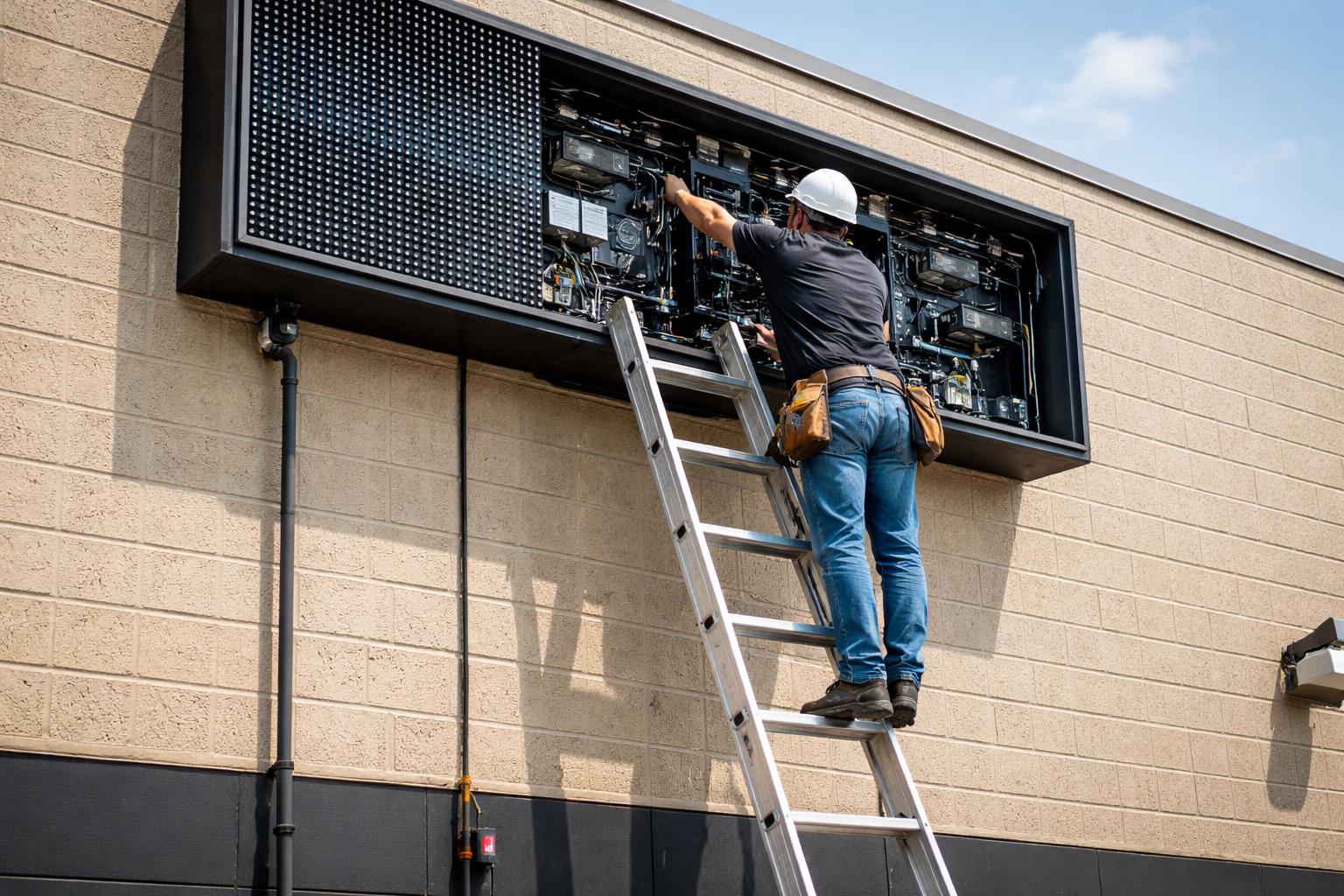
That is why smart digital signage Brisbane planning should include serviceability from day one. Blink Digital says its maintenance and support services include regular check-ups, troubleshooting and repairs, and the company’s own Brisbane posts refer to weekly checks on screen temperature, ventilation status and playback errors. For a Queensland buyer, that is a much more useful mindset than focusing only on upfront purchase price. A sign that is easy to maintain, monitor and access will usually create fewer headaches than one that is technically powerful but awkward to service once it is mounted over a shopfront or roadside frontage.
Creative choices matter in bright conditions as well. If your message will be seen in full daylight, the safest content usually has strong contrast, restrained colour palettes, large text, short copy and simple hierarchy. That is partly an inference from Blink Digital’s emphasis on brightness, visibility and sightlines, but it is also common sense: the more visual clutter you add, the harder it is for the message to survive glare, distance and motion. On a Queensland streetfront, many businesses get better results from bold offers, directional prompts, hours, hero products and clear brand identifiers than from fine-detail artwork or overbusy animation. Blink Digital can help refine that mix because the company explicitly positions itself around consulting, design and audience-specific solutions rather than just hardware supply.
Another important point is that brightness and content should be matched, not treated separately. A bright screen with weak content still wastes impressions. Blink Digital notes that outdoor LED signs can be updated in real time and that businesses can schedule different messages throughout the day. In Brisbane, that flexibility is especially valuable because the lighting environment changes sharply between full-sun trading hours, late afternoon, dusk and night. The strongest setups use that flexibility to run high-impact, short-read creative during brightest daytime windows, then transition to more detailed content or softer brand messaging when ambient light drops and dwell time increases.
What storms, rain and wind mean for outdoor LED signs Brisbane businesses buy
Sun is only half the Queensland story. Rain and wind matter just as much, and the Bureau of Meteorology data is a reminder that Brisbane is not a dry city. Brisbane Aero averages 1030.9 mm of rainfall annually, with heavier mean rainfall in January, February, March and December, and approximately 27.8 days each year with at least 10 mm of rain. The same climate record shows a maximum wind gust speed of 157 km/h in the available record, with that annual peak occurring in November 2025. For businesses choosing LED signs Brisbane-wide, those figures should immediately push the conversation towards structural fixing, sealing, drainage, cable protection and the real exposure of the site.
Get Ready Queensland’s home guidance is aimed at household resilience, but the principles translate well to signage planning. It advises Queenslanders to keep roofs and gutters maintained, trim overhanging branches, secure loose items, be ready to disconnect utilities if instructed, and prepare for severe weather before conditions worsen. For signage projects, that means thinking about water pathways, falling debris, nearby vegetation, safe isolation of electrical systems, and the practical difference between a fully exposed installation and one that has some shelter from an awning or recess. It also means not treating the screen as the only item that needs protection. Mounting frames, brackets, conduits, control gear, power feeds and data infrastructure all need to be suited to local conditions.
This is where site-specific design becomes more valuable than off-the-shelf thinking. A display mounted on a façade with full western exposure, no awning and regular wind loading calls for a different design response from a sign tucked beneath a canopy on a pedestrian strip. The hardware may be from the same family, but the engineering and protective detailing should not be identical. Blink Digital’s own approach to customised solutions and installation is useful here because the company says it tailors digital signage to brand and location, and its outdoor range includes different formats rather than one generic outdoor unit for every job.
The rain question also has an operational side. Severe weather does not just test the exterior of the sign; it can disrupt premises access, trading hours, roads, deliveries and comms. Get Ready Queensland’s business guidance tells operators to plan for loss of power or internet, inaccessible premises, alternative work arrangements, document backup and emergency communication methods. Blink Digital’s CMS guidance, which highlights remote access, cloud syncing and real-time updates, aligns well with that reality. In Queensland conditions, the value of digital signage is not merely that messages look better than printed posters; it is that content can be changed quickly when weather, hours, access or promotions change without sending staff outside to replace anything physically.
That same logic applies to contingency planning. If a severe system is forecast, a business might need to switch the sign from normal promotional content to opening-hour changes, safety messages, parking updates, service interruptions or temporary closures. A static sign cannot do that at speed. A properly chosen digital signage Brisbane setup can, provided the business has remote access and a plan. Blink Digital’s outdoor and CMS material repeatedly leans into that responsiveness, which makes sense in a Queensland market where weather and trading conditions can change quickly.
For this reason, weatherproofing should never be reduced to a single checkbox like “suitable for outdoors”. The better question is: suitable for which Brisbane site, under which exposure, with what maintenance access, and with what continuity plan if weather interrupts normal operations? That is the level of detail Blink Digital can help clients work through, especially because the company couples product supply with consultation, installation and ongoing support rather than leaving businesses to coordinate those pieces themselves.
How to match screen size, pixel pitch and brightness to your streetfront
Once the climate and exposure are understood, the next big decision is the display itself. Blink Digital’s outdoor LED guidance is refreshingly direct on this point: viewing distance influences the ideal pixel pitch, smaller pixel pitch means higher resolution and closer comfortable viewing, and larger-pitch options suit longer viewing distances. The company even gives a simple example, noting that a P10 sign suits longer viewing distances while a P4 sign offers higher resolution for closer viewing. That matters because choosing the wrong pixel pitch is one of the quickest ways to waste money. Too fine, and you may pay for resolution nobody sees. Too coarse, and nearby customers will notice a blunt, less readable image.
For fast-moving road traffic, the aim is usually instant recognition rather than dense information. That means fewer words, larger type, stronger spacing and a layout built around long viewing distances and short glances. In those environments, businesses often do better with a simpler message structure: brand, offer, directional prompt, or one major call to action. This is consistent with Blink Digital’s broader emphasis on brightness, viewing distance and real-world readability. If the sign is meant to pull drivers into a site, the creative should behave like a decisive roadside cue, not like a web page.
On a mixed streetfront where cars, walkers and slow-moving traffic all interact, the brief becomes more layered. Here, many digital signage Brisbane sites need a compromise between long-range noticeability and close-range legibility. A business might want brand presence at distance, but also the ability for nearby pedestrians to read opening hours, product offers or service prompts. This is where Blink Digital’s consultancy model becomes valuable, because the company expressly says it helps determine the best fit based on marketing goals and installation environment rather than just selling by size. In practical terms, that means aligning cabinet size, pixel pitch, brightness and content style with the actual audience behaviour on that frontage.
In close-up pedestrian environments, readability usually becomes more important than brute scale. Blink Digital’s Brisbane case-style post about redesigning a venue screen around entrance sightlines and queue positions is a good illustration. A sign can be visible but still fail if the message does not land where people actually make decisions. For footpath trade, clinics, hospitality venues and local retail, the right outcome is often a screen positioned where the customer naturally slows, with copy and motion restrained enough to be understood quickly. That may point to a finer pitch, a smaller format, or a different mounting position rather than simply buying the biggest panel that fits the wall.
Brightness belongs in the same decision set. Blink Digital says areas exposed to direct sunlight require higher brightness and notes that its outdoor displays use automatic brightness adjustment. That is important for both performance and comfort. Over-brightening a display at night can create glare and waste energy, while under-brightening it during the day makes the message collapse into the background. Queensland sites often swing between those extremes, so automatic adjustment is not just a nice feature; it is part of how a sign stays useful across the full trading day.
Then there is the question of content management. A modern LED sign should not lock the business into static messaging. Blink Digital says its outdoor and digital signage systems support remote updates, scheduling, real-time changes and non-technical operation. That matters because the most effective LED signs Brisbane businesses use are rarely showing the exact same content at 8.00 am, 12.30 pm, 5.30 pm and 9.00 pm. Morning commuter messaging, midday promotions, late-afternoon reminders and evening branding can all serve different customer intent. The technology should make that flexible, not cumbersome.
The best way to think about the specification, then, is not “Which sign is best?” but “Which sign is best for this frontage, at this distance, in this light, for this audience?” That framing is what separates good procurement from expensive guesswork, and it is precisely the sort of decision-making Blink Digital is well placed to support as a Brisbane-based supplier with design, installation and maintenance capability.
Where digital signage Brisbane businesses see the best returns
One reason this topic has strong local SEO value is that the search intent is commercial and practical. People looking for digital signage Brisbane or LED signs Brisbane are rarely browsing out of curiosity. They usually have a site, a visibility problem or a growth goal in mind. Blink Digital’s range reflects that breadth. Its site highlights outdoor LED signs, indoor LED signs, mobile LED signs, large billboards, LED poster signs, small fixed LED signs, transparent LED signage, underawning LED signs and multiple sector pages for retail, automotive, healthcare, entertainment, real estate, schools and more. That range suggests the company is not trying to force every client into one form factor, which is exactly what Brisbane businesses need.
Retail is one obvious example. On a bright Brisbane streetfront, a good LED sign can do several jobs at once: reinforce brand presence, announce offers, support seasonal merchandising and make the premises more visible from approach lines. Blink Digital says its outdoor signs can increase foot traffic through attention-grabbing visuals and real-time promotions, while also noting that message scheduling can target peak times through the day. Those are strong features for strip retail, food and beverage, health and beauty, and service-led businesses that depend on walk-by or drive-by awareness rather than destination traffic alone. Because Blink Digital also offers design and content-friendly systems, the screen can evolve with campaigns instead of becoming an expensive electronic poster.
Hospitality and venue sites benefit for slightly different reasons. The issue there is often not just attraction, but timing and direction: queues, trading hours, specials, entertainment, entry points and real-time updates. Blink Digital’s own Brisbane post about signage needing to land at the entrance or from the checkout queue is useful because it reflects how customers actually behave. In practice, this means hospitality venues often see the best outcomes when the sign is treated as part of customer flow, not as a decorative add-on. The right screen in the wrong place can still underperform; the right screen placed on the customer decision path can materially improve conversion.
Automotive, large-format retail and trade sites tend to have longer viewing distances and stronger reliance on roadside noticeability. Those businesses often benefit from larger screens, stronger contrast and simpler offer structures that work for passing traffic. Blink Digital’s outdoor guide repeatedly frames LED displays as tools for visibility, high-impact promotion and remote message updates, which suits sites that want to rotate stock, weekend offers, lead-generation prompts or directional instructions without replacing printed signs every few days. In Brisbane’s daylight-heavy conditions, that kind of flexibility is particularly valuable because the display needs to keep working through changing promotions, not just look good at launch.
Healthcare, education and service businesses often have another requirement: clarity. For these sectors, the best return may come less from hard-sell promotions and more from legible information, reassurance and wayfinding. Blink Digital’s category pages for schools and healthcare, along with its consulting-and-design positioning, suggest a supplier approach that can adapt creative strategy to different environments. A medical practice may need appointment or directional messaging; a school may need clear notices and community information; a real estate office may need listing loops and auction prompts. The underlying lesson is the same: the best-performing LED signs are the ones matched to local audience behaviour, not the ones copied from a different industry.
There is also a strong case for Brisbane businesses to think in terms of “message architecture” rather than just “screen content”. If the sign is road-facing, your message architecture may need to prioritise instant recognition. If it is close to a queue, it may need fast, readable information. If it is on a busy pedestrian strip, it may need to alternate between brand reinforcement and tactical offers. Blink Digital’s content scheduling and daypart-oriented thinking on its site make that a natural extension of its service model. In other words, the screen earns its return not only because it is bright and digital, but because it shows the right thing for the viewer at the right point in the approach.
That is why qualified buyers searching for digital signage Brisbane are often better served by a local strategy conversation than by chasing the cheapest panel online. The goal is not to own a display; it is to own an asset that improves visibility, response time, customer communication and commercial performance in a Queensland environment. Blink Digital can help bridge that gap between hardware and business outcome because its website consistently presents the solution as design, install, support and long-term performance together.
Why local installation, servicing and support matter more than most buyers think
The final buying factor is often the one most underestimated: who is going to keep the sign performing after install day. Blink Digital’s own recent Brisbane commentary argues that many brands get digital advertising wrong by treating it as a once-off install. The company points to brightness changes, timing issues and missed maintenance checks as the kinds of problems that quietly erode results. That is an important warning, especially in Queensland conditions. A screen can degrade commercially before it fails technically. If content goes stale, brightness drifts, or ventilation issues start affecting playback, the sign may still turn on while steadily delivering less value.
This is where Blink Digital’s end-to-end offer becomes a genuine advantage. On its homepage, the company says it provides customised design, installation, maintenance and support, and that its Brisbane team understands the local market. It also says its maintenance staff carry out regular check-ups, troubleshooting and swift repairs. For businesses comparing LED signs Brisbane options, that means the conversation can extend from “Which panel?” to “How will this perform in six months, in summer, after storms, and through busy trading periods?” With outdoor digital signage, that long-view question matters.
Queensland’s own business preparedness guidance supports the same way of thinking. Get Ready Queensland tells businesses to set communication plans, clarify roles, decide how they will operate if conditions change, and think through loss of power, internet and site accessibility. A sign supplier who understands those conditions is more likely to recommend the right control setup, service access, backup process and content response plan. In that sense, local support is not just about repairs; it is also about building a signage system that fits the resilience needs of the business.
It is also worth noting that Blink Digital presents itself as a Brisbane and Australia provider, but with a clearly local base in Brendale and a skilled local team. That combination matters for qualified leads. Many buyers want a supplier that can deliver national-quality product without losing the practicality of local installation, site familiarisation and service response. For digital signage Brisbane projects, that balance is attractive because the work depends on site conditions, not just on online ordering.
So what should a Brisbane business actually ask before buying? Not just the price, and not just the size. Ask how the sign will read in morning sun and afternoon glare. Ask what brightness control is built in. Ask what pixel pitch suits the real viewing distance. Ask how the cabinet and mount will handle rain, wind and debris exposure. Ask where the control gear sits, how service access works, how content will be updated, and what happens when power, internet or weather interrupt normal trading. Ask who will maintain the sign after install and how quickly support can be provided locally. Those are the questions that turn a piece of hardware into a reliable business asset, and they are the kinds of questions Blink Digital is well placed to answer.
For businesses actively comparing digital signage Brisbane solutions, the best choice is usually the one that balances visibility, readability, weather resilience, maintainability and local support. That means choosing LED signs Brisbane operators can trust in full sun, storm season and everyday streetfront trading conditions, not simply the cheapest specification on paper. Blink Digital’s mix of customised solutions, Brisbane-based support, installation expertise and maintenance capability makes it a strong option for businesses that want a sign built for Queensland conditions rather than a generic import sold on headline specs alone.
If you are weighing up digital signage Brisbane options and want LED signs Brisbane businesses can rely on through Queensland sun, storms and real streetfront conditions, contact Blink Digital for more information and assistance. Blink Digital can help you choose the right screen type, brightness, pixel pitch, placement and support plan so your investment is not just visible on day one, but readable, durable and commercially useful all year round.