Choosing the perfect sign is crucial for any business: the right material and format can maximise visibility, last the required time, and avoid wasted spend. This guide covers the common signage types – from corrugated plastic (corflute) and aluminium panels to vinyl banners, decals and A-frames – and explains when each is ideal. We discuss short-term vs long-term use, indoor vs outdoor factors (wind, rain, UV), installation locations (fences, shopfronts, windows, vehicles) and typical lead times. You’ll also get practical design and production tips (text size, contrast, bleeds, lamination, glare) to avoid illegibility and reprints. Throughout, we’ll show how Blink Digital’s signage experts can advise, print and install the right solution for your needs.
Understanding Signage Materials and Formats
Businesses choose different sign materials depending on durability, budget and purpose. Below is a rundown of popular options and their best uses:
-
Corflute (Corrugated Plastic) Signs: Corrugated polypropylene (“Corflute®”) is extremely lightweight, waterproof and very affordable. It works well for short-term outdoor signs like event promotions, real-estate boards or election signs. Corflute signs are rigid yet easy to cut and print (often flatbed-printed or taped), making them quick to produce. However, colours will fade faster in direct sun, and strong winds can bend the board. Corflute is ideal for temporary campaigns (e.g. a seasonal sale or directional sign) that last a few weeks to months. For semi-permanent jobs, Blink Digital can advise whether a more durable material suits better.
-
Aluminium Signs: Solid aluminium sheet signs (either uncoated or powder-coated) are one of the most weatherproof long-term options. Aluminium never rusts or corrodes, and it can be painted or printed on. It’s lightweight for metal, and available in different thicknesses. Pros: excellent corrosion resistance (great for coastal or humid climates), high rigidity, UV stability. Cons: can dent on impact, and material cost is higher than plastic. Aluminium panels are ideal for permanent outdoor signage: street signs, directional signs, outdoor branding. Blink Digital can finish and install powder-coated or printed aluminium panels for storefronts or pylon signs.
-
Aluminium Composite (ACM/Dibond): Composite panels like Dibond sandwich a polyethylene core between thin aluminum sheets. This offers a super smooth print surface and light weight. Like solid aluminium, ACM is rustproof and warp-resistant, making it excellent for large, long-lasting signs (fascia panels, building lettering). ACM typically resists UV and weather very well, with vibrant colour retention. It is slightly less stiff than solid aluminium, so very large unsupported spans may need framing. Blink Digital’s large-format printers can produce high-quality graphics on ACM, giving a polished, modern look for permanent exterior or interior signage.
-
Acrylic & Glass-Look Signs: Acrylic (clear or coloured plastic) offers a shiny, high-end finish, often used for illuminated (backlit) signs, reception boards or dimensional lettering. It’s lightweight and can be laser-cut into shapes. Acrylic is UV-resistant and water-resistant, but it can scratch or crack and may yellow over decades. It suits indoor or short-to-medium-term outdoor use. For example, “frosted” acrylic window signs are popular for offices. Blink Digital can print or apply vinyl to acrylic – and advise on whether an acrylic or ACM backing better suits an external logo sign.
-
PVC Foamex Boards: Rigid PVC foam boards (Foamex) and similar sheets are lightweight, easy to cut, and can be printed with full colour. PVC is moisture-resistant and cost-effective, making it a common choice for indoor signage or budget outdoor signs. However, extended sun exposure can cause PVC to warp or fade. PVC is great for short-term outdoor banners or low-cost boards (when laminated) and is widely used for indoor wayfinding, menu boards, portraits, etc. Blink Digital stocks PVC and Corflute materials for fast-turnaround printing (see Turnaround section below).
-
Vinyl Banners (PVC Fabric): Standard outdoor banners are usually printed on vinyl (flexible plastic) and finished with eyelets or hems. Pros: Highly portable (rolls up), waterproof, tear-resistant especially with UV-coated ink. They can cover large areas cheaply (trade show backdrops, building wraps, fence banners). Mesh banner (a vinyl with tiny holes) is especially good for very windy locations (it lets air through while still showing your design). Cons: Not rigid – must be hung or supported (grommets/frames). Can degrade over time (fade/tear after a few years if unprotected). Use vinyl banners for temporary or portable large graphics, and Blink Digital can reinforce, hem and finish them with UV-protective coating for longer life.
-
Banner Flags / Feather Flags: These tall, narrow outdoor flags (often “teardrop” or “feather” shapes) are printed on fabric or polymer and attached to a pole and weighted base. They’re eye-catching and easy to move, perfect for promotional stands, grand openings or events. Flags flutter in breeze for motion effect. Blink Digital offers custom feather flags in various sizes and can recommend the right pole/base for wind conditions. Like banners, flags use weatherproof fabric and inks, but since they’re usually used short-term, cost is modest.
-
Cut Vinyl Lettering & Decals: For shops and vehicles, cut vinyl lettering and decals are popular. Text and simple shapes are “plotted” from coloured vinyl and applied to surfaces (windows, vehicles, walls). Pros: Super clean, sharp graphics; no background – it looks like paint. Great for shopfront names, door hours, logos on cars, etc. Vinyl letters are UV-stable and removable (good for temporary messaging). Cons: Complex multi-colour graphics need layered cuts or printable vinyl. Keep font simple for readability. Blink Digital can produce cut vinyl graphics in any colour, and install on glass or walls with precision. We also print full-coverage vehicle wraps (self-adhesive vinyl printed with your design) for striking mobile branding.
-
Window & Glass Graphics: This overlaps with decals. Window signs can be printed vinyl (with adhesives) or perforated window film (one-way vision), and can range from opaque signage to semi-transparent graphics. For compliance or informational signs on shop windows, opaque cut vinyl letters work well. For more decorative or privacy uses, printed vinyl or frosted films are options. Blink Digital can advise on best window signage (e.g. UV-laminated vinyl vs corflute inside window).
-
A-Frame (Sandwich Board) Signs: These are portable double-sided boards that sit on sidewalks or inside stores. Often they hold interchangeable printed panels. A-frames are usually made of plastic or metal frames, with inserts made of corflute or rigid PVC. They’re ideal for street-level promotions (daily specials, open/closed notices). Graphics should be bold and changeable (so you reuse the frame). Blink Digital can supply frames and produce the printed corflute or PVC panels to fit.
-
Large Format Posters & Murals: This category includes any very large prints – from wall murals to billboards. Common materials are vinyl, paper/plastic posters, or massive foam boards. Banners and vinyl wraps (see above) are also large format. For example, a construction site hoarding is often a printed mesh banner. Indoor murals might use digitally-printed wallpaper. Blink Digital’s wide-format printers cover all these: full-colour images up to several metres wide. We ensure indoor/outdoor durability with proper material choice (heavy vinyl, UV inks, etc.) and finishes (matte for art, gloss for impact).
In short, choose a rigid board material (aluminium/ACM, PVC, acrylic) for permanent or semi-permanent signage, and a flexible or corrugated material (vinyl banner, corflute, mesh) for short-term or portable signs. Corflute is about the cheapest for quick jobs, whereas metals cost more but last years. Figure out the campaign length and environment first, then pick the sign type.
Matching Signage to Use Cases and Environment
How will the sign be used? That determines the best format:
-
Short-term vs Long-term: Corflute and basic vinyl banners are ideal for temporary promotions (sales, events) because they’re cheap and quick. They may last a few weeks or a season. For long-term branding, choose materials rated for years: aluminium signs, aluminium-composite panels, acrylic or high-grade vinyl with lamination. For example, Optima Signs notes “a printed Coroplast sign might last a few months… an aluminum sign… [lasts] many years”. Blink Digital can recommend lifespan expectations: if you want a sign to endure sun and rain for 5–10 years, we’ll steer you to aluminium, ACM or fully laminated vinyl rather than corflute or unlaminated poster.
-
Indoor vs Outdoor: Outdoor signs need weatherproofing. Vinyl banners, polyester substrates and corflute are waterproof by nature. Inkwell typically uses UV-resistant inks on outdoor prints. For very sunny locations, adding an anti-UV laminate can double life. If installing indoors or under cover, many materials work (foamcore posters, PVC, acrylic, etc.), allowing for lower cost or higher graphic fidelity. For outdoors, prefer tough materials: vinyl (banner/mesh) and metal/acrylic for more permanent fixtures. For example, LF Signs (Australia) advises mesh or vinyl with UV-treated inks for long campaigns outdoors, whereas corflute is “best for short-term outdoor use”.
-
Wind Exposure: In windy spots (along fences or on rooftops), use open-weave mesh banners rather than solid vinyl, or choose small rigid signs instead. Mesh signage lets air pass through, drastically reducing stress on fixings. A-frames and banner flags should have weighted bases and be secured (or taken in high winds). Blink Digital can supply wind-rated A-frames and mesh banners for construction sites or coastal areas.
-
Rain & Humidity: Almost all printed vinyl and plastic boards handle rain well (they’re waterproof). Metallic signs (aluminium) also resist corrosion. However, untreated paper or fabric will fail outdoors. If heavy exposure to moisture is expected (water parks, kitchens), consider completely waterproof laminates or PVC-based materials.
-
Sun/UV: In Australia’s harsh sun, colours fade over time. Use UV-protected inks and over-laminates for outdoor signs. Gloss or satin laminates are common. (See Design Tips below for laminate finishes.) Blink Digital applies UV varnish or lamination on outdoor prints to prolong vibrancy. For maximum longevity under brutal sun, metal signage is unbeatable – then colour doesn’t matter as much as the metal’s rustproof nature. Light-coloured backgrounds also fade more noticeably, so design accordingly.
-
Location & Installation:
-
Fence or Scaffolding: Long construction site banners often use mesh or heavy vinyl with grommets, tied to fences. Corflute also ties on fences (its flutes handle drilling holes). LF Signs notes mesh banners as popular for scaffolding because “the small holes… keep the signage stable”. Blink Digital can install fence banners or mesh with reinforced edges.
-
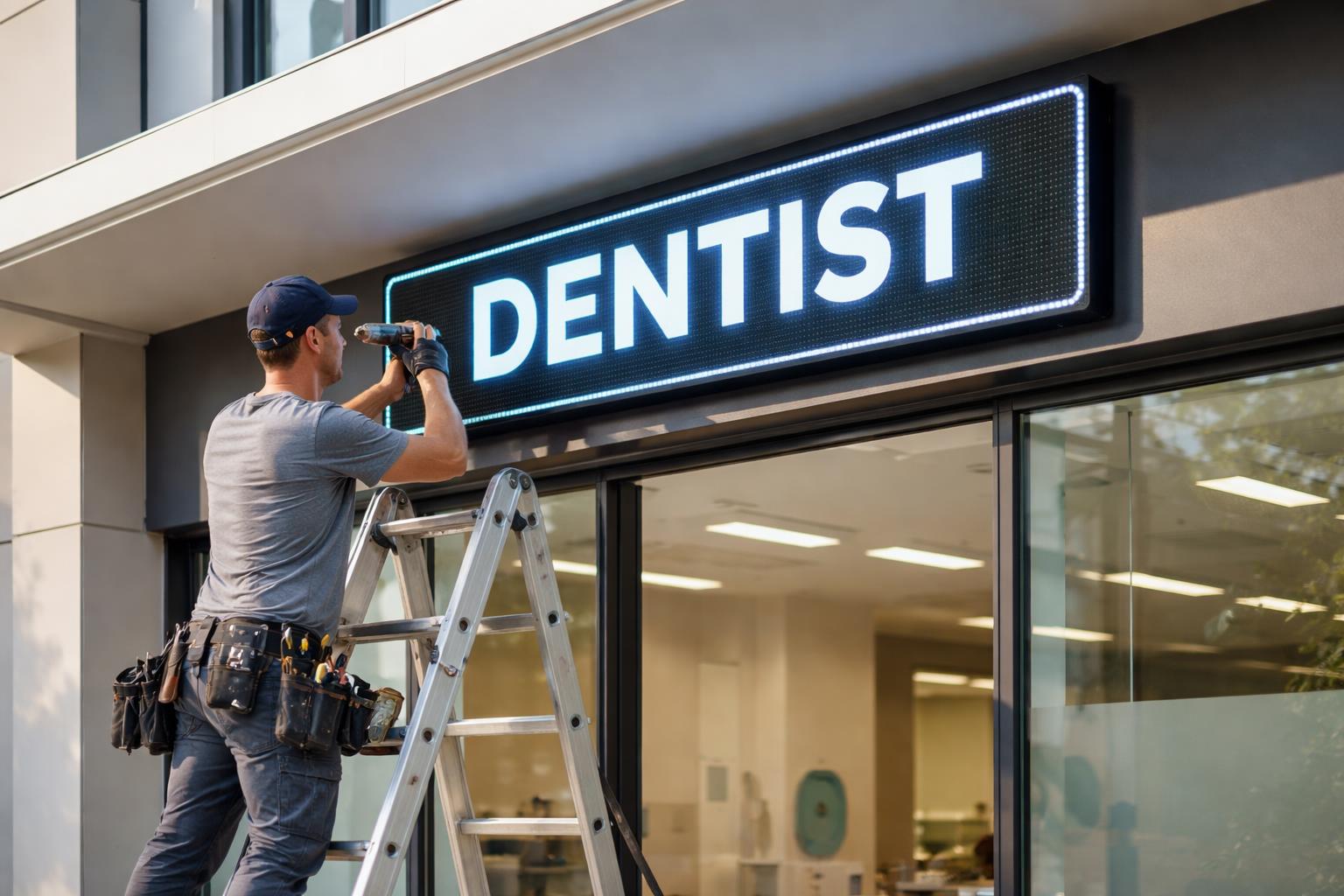
Shopfront or Building Façade: Permanent front-signs are usually metal or illuminated acrylic/LED boxes. Window graphics (cut vinyl logos or printed decals) are common on glass. For doors/windows, cut vinyl lettering looks sharp for business names/hours. For awnings or wall panels, you might use ACM or acrylic. Blink Digital’s shopfront signage packages often combine acrylic logos, vinyl window signs and awning banners for a coherent look.
-
Vehicles: If turning a car into a mobile billboard, use cast vinyl for durability. You can cover doors or entire vehicles. (Flatbed trucks might just have vinyl banners attached to sides.) Magnets are removable options for short runs. Blink Digital’s vehicle signage team can produce full wraps or decals to suit any fleet or lone car.
-
Outdoor Display (A-Frame, Sidewalk, Event): These benefit from portability. A-frames (sandwich boards) can sit on any sidewalk. Flags and banners (with stands) can be moved between events. Place A-frames at footpaths or driveways – don’t block traffic, but position where people can easily read the message. Blink Digital supplies sturdy outdoor frames that won’t blow over or collapse on minor bumps.
-
-
Typical Turnaround Needs:
-
Fast Turnaround: Corflute signs, vinyl banners, stickers and cuts can often be produced in days. For example, vinyl banners are so common that many print shops (including Blink Digital) offer same-week turnaround. A simple corflute panel can sometimes be printed in 1–2 days. If you have a tight deadline (e.g. an event next week), mention it – Blink Digital can prioritise fast jobs with express printing.
-
Longer Lead Times: Custom-cut aluminium or cast metal signs may take a few extra days to fabricate, especially if you require painting or CNC-cut edges. Similarly, large-format digital prints above a certain size (murals, wrapped columns) might need more processing time. However, Blink Digital’s on-site large-format printers and cutter streamline the workflow so even big jobs are efficient. In all cases, it’s wise to plan at least a few weeks for a new branded sign, and get a quote early.
-
By considering these factors – campaign length, weather, location and time – you can match the sign type to the purpose. The table below summarises key sign types by use-case:
-
Promotional/Short-Term Outdoor: Corflute boards, vinyl banners, mesh banners, feather flags, A-frames. (Cheap, fast production, up to ~6–12 months life.)
-
Permanent Outdoor: Aluminium sheet or ACM panels, acrylic signs, rigid PVC, backlit lightboxes. (More costly, long-lasting, needs professional installation.)
-
Indoor Signage: PVC foamboard, acrylic, foamcore posters, vinyl stickers on walls. (Graphics-focused, lower durability needed.)
-
Wayfinding/Compliance: Mounted aluminium or acrylic (for durability), plus UV-protected printed plaques.
-
Vehicle/Transit: Cast adhesive vinyl (wrapped graphics) or vehicle magnetics (portable ads).
Blink Digital’s expertise ensures you don’t guess wrong: our team can recommend the optimal material for your environment and budget. We stand by quality and longevity, ensuring your sign lasts exactly as long as you need.
Design and Production Tips to Reduce Reprints
Even with the right materials, a poorly-designed sign can fail. Here are some production guidelines to make your sign effective and reprint-free:
-
Legible Text & Size: Ensure text is large enough for the expected viewing distance. A handy rule is “1 inch of letter height for every 10 feet of viewing distance”. In Australian units, that’s about 25mm per 3 metres. For example, for a roadside banner seen at ~30m, main headlines should be several hundred millimetres tall. DGI Communications advises “at least one inch per 10 feet” of distance. Common recommendations: store-window lettering often uses 200–300mm (8–12″) tall text, while street banners use 300–600mm (12–24″) text. Keep the most important message (brand name or offer) at this size; any smaller text will be read only from close up.
-
Font & Contrast: Choose bold, san-serif fonts for clarity. Thin or script fonts are harder to read at a glance. High contrast between text and background is critical: e.g. white on dark blue or black on yellow. As 48HourPrint notes, bright colours catch the eye, and ensure your copy/background have “sufficient contrast so the text is easier to understand”. Avoid busy backgrounds behind text. Where possible, keep layout simple: one main headline, one subheading or image.
-
Negative Space: Don’t overcrowd your design. A good rule of thumb (from signage graphics standards) is to use no more than ~40% of the sign area for content. The rest (60%) should be “white space” or background. This spacing helps the eye focus. In practice, leave margins around text and images. For instance, flyers and banners should not cram text to the edges – leave at least 20–30mm margin (or more on large signs). Blink Digital can help with simple, uncluttered layouts in our design service.
-
Colours & Branding: Use your brand colours, but remember UV exposure can fade some bright dyes. We recommend Pantone or CMYK colours with UV coating on outdoor prints to retain vibrancy. Limit the palette to 2–3 main colours so the message is clear. Very light text on light background (e.g. yellow on white) is unreadable, so prioritise contrast. Blink Digital proof-checks designs on screen and can print small test cuts to confirm legibility if needed.
-
Images & Resolution: Always use high-resolution artwork (300 DPI or vector format) for large prints. Lower-res images will be blurry when scaled up. If your logo is vector (AI, EPS) great; if it’s JPEG, ensure it’s big enough. For large banners or wall murals, an image that looks clear at 2x the needed size is safest. Blink Digital’s printers can output extremely high-resolution, but they still need good input files. When in doubt, ask us for templates or file-prep guidelines.
-
Bleed & Safe Area: Account for trimming. Most print jobs need a “bleed” (extra background beyond the trim edge) so that if the cutter shifts a bit, you don’t end up with white borders. Typically allow 3–5mm bleed on each edge for small prints, and up to 10mm or more on large posters. Crucially, keep any text or logos at least 3mm inside the trim lines (the “safe area”). This avoids cutting off letters. If your design has rounded corners or a border, give extra margin. When you send artwork to Blink Digital, we’ll provide exact bleed/safe specs.
-
Finishes (Lamination): Deciding on gloss vs matte finish can affect readability and durability. A gloss laminate makes colours pop and is easier to wipe clean, which is why it’s the standard for many outdoor signs. However, gloss reflects light and can glare under bright sun or spotlight. Matte laminate absorbs reflections, so it reduces glare and hides scratches (good for indoor directories or design-heavy signs). In practice, use gloss lamination on outdoor signs and fleet graphics for maximum impact, and consider matte for indoor informational boards or in very bright locations. Blink Digital uses premium over-laminate films that protect against UV, scratching and graffiti as needed. Ask our team for a recommendation based on placement: for example, “we usually suggest gloss for shopfronts and matte for museums”.
-
Anti-Glare and Legibility: To avoid illegibility from reflections (especially on glass or shiny surfaces), matte finishes or anti-glare laminates are ideal. Alternatively, angling a sign or reducing backlighting can help. For example, a menu board inside a café might use matte vinyl or a tinted acrylic backboard. Blink Digital’s production specialists will flag any signage likely to have glare and suggest tweaks – like repositioning lights or adding a textured finish.
-
Lamination & Protection: In Australia’s climate, extra protection is wise. All outdoor prints should get UV laminates (even gloss) to slow fading. Heavy-traffic indoor signs may also be laminated to prevent scuffs. Remember that lamination adds a few days to production, so plan ahead. Blink Digital uses lamination where it enhances longevity, and can show you samples of gloss vs matte for your design.
-
Templates and File Prep: Use templates for common sizes. Blink Digital provides design templates (with bleed guides) for A-frames, banners, etc. Always double-check artwork alignment and colours before sending to print. We can proof a digital mock-up, and our designers are available to adjust layouts to meet safe margins.
By following these tips — using large, bold text; high contrast colours; ample spacing; and correct bleeds — your first print should come out clear. If you ever need help with file setup, Blink Digital offers free proofing and on-call advice to ensure your sign looks great on day one.
Choosing Blink Digital for Your Signage Needs
Whether you need one sign or a complete branding package, Blink Digital is ready to help. Our Brisbane-based team has delivered over 250 signage projects across Australia, producing more than 1,000m² of printed material. We use eco-friendly, high-quality inks and materials to ensure colours stay vibrant and durable. From advising on material selection to professional installation, we cover all the bases:
-
Expert Consultation: We’ll discuss your goal (promotion, compliance, branding) and site conditions, then recommend the right format. For example, if you’re unsure whether to use corflute or aluminium for a shop sign, we’ll explain lifespan differences and help match it to your budget.
-
Design Assistance: Our in-house designers can refine your artwork to meet signage best-practices (font sizes, legibility, bleeds). We ensure files are print-ready to avoid last-minute hiccups.
-
Fast Production: Using top-tier large-format printers and cutters, we handle rush orders. Many banner and simple sign jobs can be done in days. We’ll give you a realistic lead time up front. Need signage for a next-week event? Just ask – often we can accommodate urgent requests.
-
Complete Installation: Blink Digital doesn’t just print signs; we install them securely. Whether it’s mounting aluminium panels on an awning, installing a sidewalk A-frame, or applying vehicle wraps, our installers ensure the job is neat and durable.
-
Nationwide Service: Though based in Queensland, we serve clients all over Australia. We can deliver and install in Melbourne, Sydney, Perth, wherever needed – or ship unassembled signage with instructions.
In short, matching signage type to purpose has never been easier. Blink Digital’s experienced signage consultants will guide you to the solution that maximises your message and minimises cost. As our stats show, customers often see a significant lift in engagement (up to 35%) after getting custom signage that truly catches the eye.
Ready to find the perfect sign? Contact Blink Digital for a free quote or personalised advice. Our team is ready to help you sort through the options and get your artwork print-ready. We stand by our workmanship 100% and look forward to making your brand stand out – on whatever medium suits your job best. Call today or click through to our contact page to start your project.