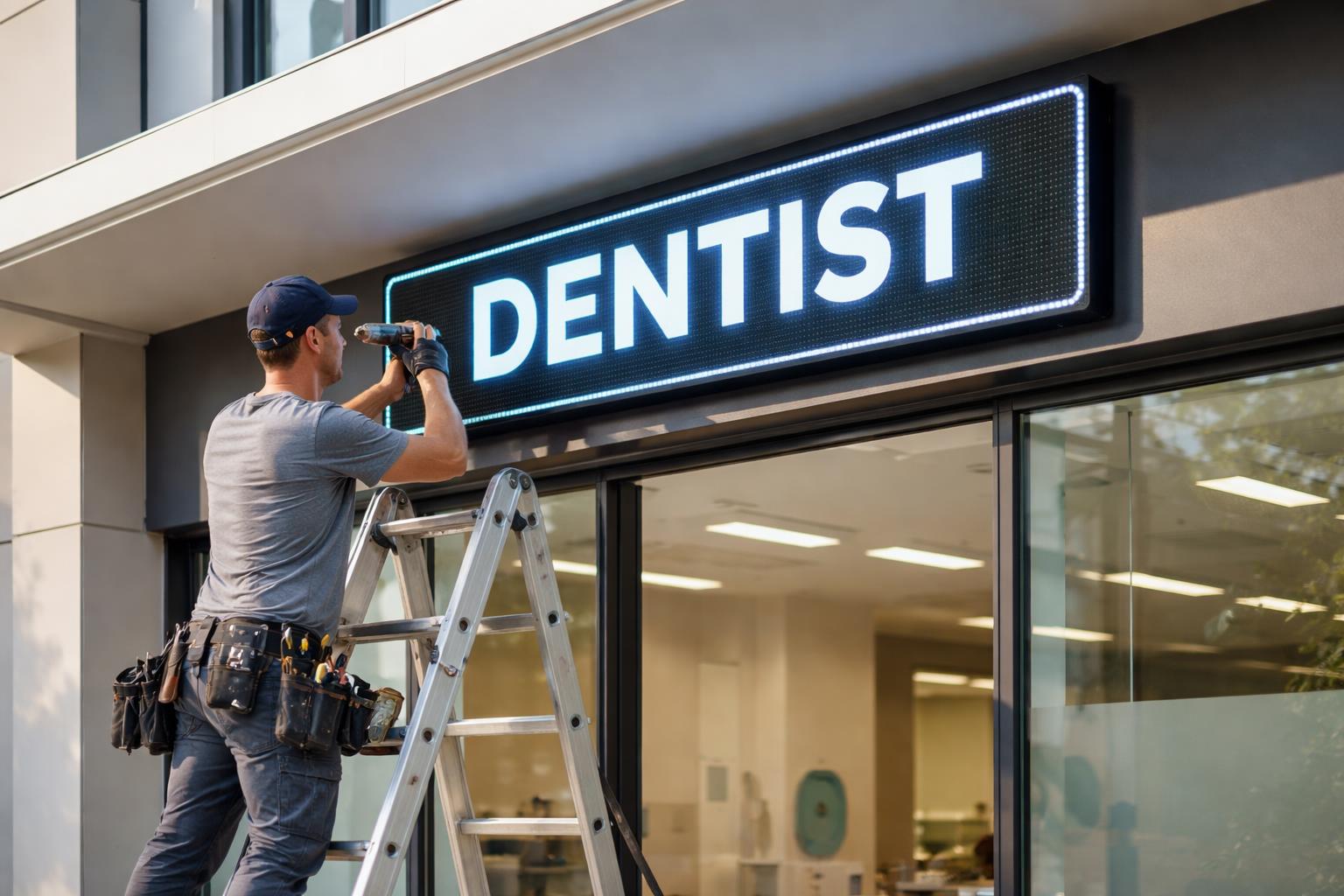
A smart signage strategy treats every sign as part of the customer journey – from catching the eye on the street, to welcoming people in the door, to reinforcing your brand as customers walk up, queue, and pay. Signage is not just decoration; it’s marketing. Studies show that effective signage grabs attention and drives foot traffic: for example, about 76% of consumers have entered a store they’d never visited before simply because its signs caught their eye. In a world of online ads and social media, physical signage still has unique power: “Consumers can’t send a sign to spam or unsubscribe from your signage. It’s always there, always visible, always prevalent.” Well-designed exterior signs, window graphics and A-frames pull new customers inside; clear wayfinding and promotions inside guide buying. Blink Digital can help build your visibility stack – a coordinated suite of non-digital signs – so your retail, hospitality or service business is seen and remembered along every step of the journey.
This playbook covers the key pieces of that visibility stack: window signage (one-way vision graphics, decals, cut vinyl), street-level signage (A-frame/sandwich boards, banner flags, vinyl banners), and mobile branding (vehicle decals and wraps). We’ll share practical tips – from keeping messages short and legible, to placing signs without clutter or hazards, to easy seasonal swaps and cleaning – plus essential compliance reminders (e.g. don’t block sightlines or required glass). Finally, we’ve included a handy checklist you can give to staff or agencies to ensure all bases are covered. Throughout, remember that Blink Digital’s Brisbane-based signage experts can design, produce and install cohesive signage packages tailored to your business needs. Contact us for personalised advice and a free quote.
Window Signage: Branding, Privacy & Promotion
Front windows are prime real estate. Whether your shop is on a busy street or a mall, the glass façade is where people look first. Window graphics let you brand that space and promote offers before customers step inside. Blink Digital offers a range of window signage solutions – from one-way vision films and window stickers to cut vinyl decals and frosted privacy graphics – to maximise this visibility without obscuring your store.
For example, one-way vision film (micro-perforated vinyl) is a great way to turn your windows into eye-catching posters. The film is printed on the outside with your message or graphics, while the reverse side is black, so people inside can still see out through the tiny holes. To the street, the busy pattern appears as a solid image, grabbing attention without sacrificing privacy or daylight. (For one-way film to work well, the outside should be brighter than the inside – e.g. daytime – so oncoming eyes focus on the image, while you retain visibility inside.) Blink Digital can print full-colour promotions or branding on this film, letting customers see your logo or offer from afar. Similarly, window decals and stickers (opaque cut vinyl or printed clings) can display your name, logo, hours or seasonal deals. These work well for simple, high-contrast messages: think “SALE 50% off”, “OPEN TODAY”, or your key service in big letters. Use our designers’ help to keep text and logos bold and minimal – a rule of thumb is no more than 7 words per sign, because pedestrians should grasp it at a glance. Fonts and colours should be large and high-contrast so they’re readable from several metres away.
Don’t clutter your window with too many lines of small text – focus on one main message per graphic. If you have multiple messages (e.g. store hours plus a sale), separate them into different stickers or posters. We recommend prioritising: for a retail shop, your brand name and a clear “open” sign are basics, then maybe one special offer (like “20% off uniforms”). For hospitality or service businesses, you might show opening hours or star ratings. Remember that brand consistency helps: use your logo colours and typeface so passersby immediately recognize your business. (As one marketing guide notes, signage is a direct reflection of your brand – 68–79% of customers judge the quality of a store by its signage – so first impressions count.)
Window signs also need to be practical. Avoid placing vinyl so heavily that fire exits or ventilation are compromised. In Australia, local building codes often limit the percentage of glazed area a business can cover. So our rule is: cover no more than about 50–60% of any window. Leave gaps or transparent sections around edges or corners, and definitely keep any safety/exit signs or automatic door glass clear. One-way film can cover a lot of area because it maintains transparency from the inside, but standard opaque vinyl should be used judiciously. Also think about lighting: at night, a backlit store interior will make dark vinyl quite visible from outside, but too much interior light can wash out a printed graphic. Blink Digital can advise on balancing your indoor lighting or adding external spotlights so your window ads look great day and night.
Cleaning and maintenance: Window graphics usually last years, but they need gentle care to stay effective. Use a mild soapy water and a soft microfiber cloth or sponge to clean windows with decals. Avoid ammonia-based cleaners or abrasive scrubbing – these can soften adhesive or scratch printed inks. For one-way vision film, dirt can clog the perforations over time. The manufacturer recommends waiting 24 hours after install, then occasionally using a soapy sponge and very gentle brush to remove grime from the holes. Dry-erase chalk markers are great for A-frame boards or laminated signs, but do not use permanent markers on your window vinyl. If you need to replace a graphic (for a new promotion or season), request “removable” vinyl from Blink Digital: it peels off cleanly with a little heat from a hairdryer. In general, inspect window signs monthly: if edges lift or dirt builds up, have us refresh the print to keep a professional look. (Fun fact: some overzealous landlords even frown on peeling paint – good to give them a heads-up that your signs are high-quality vinyl and won’t damage the glass.)
Street-Level Signage: A-Frames, Flags & Banners
As people approach your premises on foot or by car, they benefit from additional prompts right at street level. This is where A-frame (sandwich board) signs, feather/feather-shaped flags, and banners shine. A coordinated set of these can pull in customers who might otherwise walk or drive past. Generally, place A-frames and flags on the footpath or verge near your entrance (observing local rules), and hang banners or post them nearby for drivers.
A-Frame / Sandwich boards: These portable signs live outside your door. As Wolfpack Print explains, “A-Frames, also known as sandwich boards, are freestanding signs typically used for outdoor promotions… portable and easy to move, making them perfect for retail shops, cafés or events.” In practice, you can slip a printed panel or chalkboard into the A-frame to show today’s specials, promotions, or a friendly message. For example, “Two Burgers for $10 till noon!” or “New Gym classes – Free Trial”. Because A-frames sit right on the path, your message should be extremely clear and concise. Use a few large fonts (people glance quickly) and avoid clutter. Our designers can create a template so you can update daily or weekly with a fresh insert. (For clubs or food retailers, A-frames help stop customers in busy foot traffic – up to 76% of people enter a new shop because its signage caught their eye.)
Banner flags (feather flags) and erect flags: These tall, fluttering flags grab attention from a distance. They come in various shapes (teardrop, bow, feather), typically 3–5 metres high. A brightly coloured flag with your logo or slogan can draw both pedestrians and drivers. Best placement is near the curb, angled to face oncoming people or cars. Banner flags add motion and colour to your storefront, and they can be easily spotted at intersections or from the highway. Keep flag messages short – a single word or logo is often enough (e.g. “SALE”, “NOW OPEN”). Flags must be made of durable outdoor fabric (Blink Digital uses high-quality polyester flags with UV-resistant inks) so they last through wind and rain.
Vinyl banners: Large vinyl banners are ideal for big, temporary announcements – e.g. “GRAND OPENING” or “Christmas Clearance Now On.” You can string them above the entrance or fence (ensure they don’t obscure important signage or exits). Use durable PVC vinyl with hemming and grommets so the banner withstands wind. Keep the design bold: for a banner that might be read from a moving car, use huge letters and minimal text. Blink Digital can print custom banners in any size. We also offer roll-up (retractable) banners for indoor or curbside use during events. If you use banners or flags for seasonal campaigns (Valentine’s Day, summer sale, etc.), plan to swap them out quickly – consider spares or schedule installation with your events calendar. And always double-check local council rules: many areas restrict how long banners can be displayed outdoors or require a permit for A-frames.
Placement and Clutter
With all these signs, placement is critical. You want visibility without chaos or obstruction. Avoid putting multiple signs in the same narrow spot on the footpath. Instead, space them out: e.g., an A-frame right at the door, and a feather flag a little further up the footpath, so each sign has its own “view.” This prevents competition and makes each one legible from a different angle. Also ensure signage doesn’t block walking space – pedestrians (and wheelchairs, prams) need room to pass. By law, A-frames should not impede footpaths more than a certain amount (usually about 1.5 metres must remain clear). If your location is near a corner or driveway, never place anything that could obstruct a driver’s sightline to oncoming traffic. In short: capture attention without causing hazards.
From a branding standpoint, keep your look consistent. If your store uses blue and white colours in logos, all flags and posters should use the same palette. Repeat your logo or mascot so people make the connection. This “visual echo” means a passing shopper sees your A-frame, then your window sign, then even your staff uniform or cash register sign, and immediately knows it’s the same business. In fact, research shows that using consistent signage across all touchpoints strengthens brand recall and encourages customers to step inside.
Vehicle & Fleet Signage: Mobile Advertising
Your company vehicles are moving billboards. Every car, van or truck that bears your branding is another set of eyes on your business. Vehicle signage can include simple magnetic or adhesive vinyl signs, logos on doors and back windows, or full vehicle wraps. For many local businesses, wrapping a van or ute yields a fantastic return on investment: one study estimates a vehicle wrap can generate up to 30,000–70,000 impressions per day, far more than a static flyer. Blink Digital offers vehicle graphics services in Brisbane and beyond – we’ll help you choose the right level of coverage for your needs and budget.
Design tips: Just like other signage, vehicle graphics must be simple and bold. Large block letters and high-contrast colours are key, since people often see your vehicle from a distance or on the move. As the Outdoor Advertising Association notes, high-contrast colour combos (e.g. black on yellow or white on red) significantly improve recall. Our design team recommends putting only your logo, phone number and one key service on the vehicle. For example, a company van might say “ACME Landscaping” in 20cm letters, plus a 8-digit phone number, and a graphic of a lawnmower. Full wraps (covering the entire vehicle in custom artwork) work well for companies wanting maximum splash – think food trucks, tradespeople, or big fleets. Partial wraps (side panels only) can be more economical for smaller vehicles. In any case, keep text large: small details get lost. The SpeedPro guide puts it bluntly: “Food trucks…often end up in environments where people see them from far away…Designs with large fonts and imagery are much easier for people to see from a distance”. The same applies on the highway.
Compliance & Fit: In Australia, some vehicles have tinted or large rear windows. One-way vision film is available for vehicle windows too (often called “bus mask”). This lets you print an ad on the rear window without fully blocking the driver’s view. Blink Digital can fit these films to work with your vehicle’s lines. Also check dimensions carefully: designs should take into account doors, bumpers and vents so nothing important is cut off. We’ll ensure your vehicle sign complies with state regulations (for example, keeping the windscreen free of logos above the line of sight).
Cleaning & Care: Like any wrap or decal, vehicle graphics need gentle maintenance. Always hand-wash your vehicle wrap with a soft sponge or cloth and a mild detergent. Avoid automatic car washes with stiff brushes – these can scratch or lift the vinyl. Abrasive cleaners, solvents or polish waxes can dull the finish or cause peeling, so use wrap-safe cleaning products. It’s wise to wash your vehicle weekly or more if it’s exposed to lot of dust, salt or bird droppings. Long-term, watch for edge lifting: if you notice a corner peeling, contact us for repair – prompt fixes prevent further damage. If your wrap is meant to be temporary, ask for a premium vinyl with easy-release adhesive so it can be removed cleanly later (for example, test-drive cars often use such films). In any case, we recommend parking wrapped vehicles in shade whenever possible, as UV and heat can fade colours over time.
Design Essentials: Be Readable, Clear and Compelling
Across windows, street signs and vehicles, some design rules are universal. Message simplicity is key: every sign should have a single focus. Don’t overcrowd it with text or tiny logos. One well-known guideline is the “7-word rule”: keep any headline or main message to about seven words or fewer. For instance, “Gym Open 6am–9pm” or “20% Off All Coffee” work, whereas a paragraph of explanation would be ignored. Always lead with the big info: a customer should instantly know “what” and “why” – e.g. what the offer is and why it matters to them (savings, service or novelty).
Font and size: Use the largest, clearest font you can. People read signs from a distance or on the move. Wolfpack Print advises making the size, font, and colours optimised for visibility. Script fonts or thin letters often vanish against busy backgrounds. Aim for bold, sans-serif fonts (like Helvetica, Arial or similar) in uppercase for very short words. A common trick is to magnify the key word – e.g. “SALE” much bigger than the rest. Contrast is crucial: dark text on a light background (or vice versa) ensures legibility. According to the Outdoor Ad Association, high-contrast ads improve recall by up to 38%. Blink Digital’s designers use industry-standard colour contrast checks to make sure your sign is easy to read for all customers (including those with low vision).
Colour and branding: Stick to your brand palette. If your business colours are maroon and gold, use them consistently on every sign – from window graphics to vehicle wraps. This visual consistency makes you instantly recognizable. However, don’t be afraid of accent colours for emphasis (e.g. a red “SALE” on a blue store sign). Just make sure text always stands out from the background. For long text blocks (e.g. list of features), use a secondary colour or dark tint panel behind the text.
Photography and logos: Full-colour photos or illustrations can make a sign pop, but use them sparingly outdoors. On window clings or banners you might include one appealing product image, but too many graphics can clutter. Logos should generally appear only once per sign (for brand reinforcement) unless it’s a very large mural. For A-frames, it’s often better to sketch a simple icon or use the actual product photo (e.g. a beer mug for a bar, or a dumbbell for a gym) to catch the eye. Our art team can help scale and position your logo, or choose stock images that match your brand feel.
Call-to-action (CTA): Every sign is an advertisement – so include a simple CTA. It could be as direct as “Visit us inside!” or “Ask staff for details”. If you have multiple messages, make the CTA on each clear (“Enter Here”, “Free sample inside”, “See today’s specials”). Internal signs (like at a queue counter) should also reinforce what next to do – e.g. “Order here”. Always make sure your business name or logo appears prominently on external signs, so people know which business is calling them in.
Following these design basics – simplicity, readability, consistency – is what makes signage work. As one expert put it, people will form an impression of your business “based on how your signage comes off to them. If your signage sends a good message and creates a positive emotion, there’s a good chance your brand will benefit in some way.” Blink Digital can review your designs before they go to print to ensure they hit the mark.
Seasonal & Campaign Swaps: Easy Switchover Tips
Retail and hospitality often run seasonal promotions (Christmas, Easter, Black Friday, etc.). Your signage should keep up without a high fuss. Plan in advance for removable or interchangeable graphics. For example, if you have a Christmas special, use self-adhesive window vinyl or a temporary banner. When the season ends, you’ll need to remove or cover the sign without residue or damage.
Here are some practical tips:
-
Removable vinyl and static cling: Consider printed vinyl that peels off cleanly. Many modern vinyl films (like “Calendered PVC” or “Removable Polymeric Vinyl”) come with adhesives designed for short campaigns; they leave little or no glue. For very short ads, static cling vinyl is ideal (it sticks to glass without adhesive) – e.g. “Call now” signs or Halloween decals. Blink Digital can source the right film for your need.
-
Laminated prints: Outdoor signs (banners, flags) should have lamination. A UV laminate protects inks from sun-fade and makes it easier to clean off chalk or tape residues. It also helps waterproof the print.
-
Storage and swapping: Label your graphics with dates. Store past season prints flat or rolled. Use WD-40 or a commercial adhesive remover for any stubborn glue spots on glass (test first). Always apply new decals to a clean, dust-free surface – interior glass cleaning beforehand means better adhesion and an easier peel-off later. If you switch out weekly specials, consider chalkboard panels on your A-frame or digital templates, as these allow writing a new message daily without reprinting.
-
Avoid wear and tear: High-traffic areas might see signs scratched or tailed. If using A-frame inserts or window stickers, ask for a clear overlaminate – it’s a thin protective film over your graphic. It resists scratching and graffiti and is still removable.
In short, build flexibility into your plan. Blink Digital can advise on the most cost-effective approach: sometimes it’s better to print permanent signage with blank space (like “_ _ % Off!”), then use stickers or chalk to fill in numbers each season. That way you print fewer big graphics and just update the small parts.
Durability & Cleaning: Keeping Signs Fresh
Outdoor signage faces sun, rain, wind, dust and pollution. Choosing durable materials and cleaning properly will make your signs last their intended life (often 3–5 years or more). Here are some guidelines:
-
Material selection: Use outdoor-rated materials. For banners and flags, Blink Digital typically uses 7–10 oz. weatherproof vinyl or coated polyester. For A-frame inserts, thick corflute (corrugated plastic) or aluminum composite is ideal – these resist warping and fading. Window graphics and vehicle wraps should be UV-stable vinyl (cast vinyl is higher quality than cheaper calendered vinyl for longevity). Ask us about laminated finishes which add extra UV and abrasion resistance.
-
Structural strength: Make sure signs are properly supported. A-frames often hinge; check them regularly for rust or loosening bolts. Banner poles need secure bases (water bags or spikes) to prevent tipping. Neon or lightbox signs should have weatherproof seals. If you have a permanent awning sign, it should be stitched and flame-retardant (for fire codes). Blink Digital oversees the installation to meet safety standards (especially important on tall or heavy signs).
-
Cleaning decals and windows: For static window stickers or decals, clean the surrounding glass regularly. Use plain water or a mild glass cleaner – alcohol or ammonia cleaners can dry out adhesives. If the decal itself gets dirty (fingerprints, dust), gently wipe with soapy water and a soft microfiber cloth. Contra Vision notes that you can sponge the surface lightly and rinse with clean water. Avoid high-pressure water jets on window vinyl; just hand-spray a hose and use a gentle squeegee to remove soapy water. If you have an overlaminated perforated film, you can actually use a vacuum squeegee (like a Kärcher WV5) to suction water and dirt from the holes.
-
Clean vehicle wraps: As covered earlier, wash wrapped vehicles by hand. Use pH-neutral auto shampoo and a soft sponge. Always dry the wrap afterwards to prevent water spotting. Never wax or polish a vinyl wrap with standard car wax – it will dull or deform the vinyl. If a vehicle wrap is laminated (3M Scotchal or similar), it can handle some pressure wash at low PSI, but hold the nozzle at 45° and stay 30cm away. Avoid “grimebusters” machines or citrus-based cleaners; they often contain solvents that can lift the vinyl.
-
Regular inspections: We advise inspecting outdoor signs quarterly. Look for peeling corners, faded colours or mildew. On vinyl wraps, check that edges around doors and windows are still tight. At first sign of fading or edge lift, schedule a refresh. Replacing a sign graphic is far cheaper than replacing a corroded sign structure.
In sum, choose quality materials for each location, and follow gentle cleaning routines. Blink Digital will provide maintenance tips with every order, so you know exactly how to care for your new signage. Clean, fresh-looking signs reinforce trust in your brand – customers notice if a promo poster is torn or a sign is filthy.
Compliance & Sightlines: Play by the Rules
All this creativity should still fit within legal requirements. In Australia, local councils regulate business signage to keep streets safe and tidy. Here are some basic compliance considerations:
-
Council approvals: Many permanent or large signs need a permit. This includes big banners, awnings, or illuminated signs. Blink Digital can guide you on whether your project needs approval from Brisbane City Council (or other local council). Fines for unapproved signage can be hefty, so it’s best to check ahead. If you’re just updating graphics on an existing sign (same size), usually you can replace without a new permit.
-
Covering windows: As mentioned, covering too much of a shopfront can breach regulations. Eurotech notes that “shopfront signage is typically limited to a percentage of the shop’s façade” and must “not obscure windows entirely”. This is partly for fire safety and also aesthetics. If you need to fill a lot of window space, use one-way vision film (which is mostly see-through from inside).
-
A-frames and footpaths: Some councils restrict A-frames. They may require a minimum width of pedestrian passage (often 1.5m) and that signs be weighted or secured so they won’t fall over. Blink Digital can advise on compliant A-frame dimensions and anchor kits. Also, keep A-frames out of disabled parking zones or ramps. (It’s good practice to ensure any sidewalk signage has a 500mm clearance from the curb to avoid blocking drainage grates or verge.)
-
Flags and banners: Temporary banners and feather flags often need approval too. Usually there are rules on height (to avoid power lines), distance from the road (so as not to endanger pedestrians), and how long they can stay up. For example, a banner on a fence might be allowed for just 4–6 weeks per year. Before renting a flagpole, we’ll confirm the local bylaws so you don’t accidentally step on toes.
-
Visibility and sightlines: A key point is not to block sightlines of drivers or pedestrians. No sign should obscure traffic signals, pedestrian crossings, or oncoming traffic at corners. On-site, an A-frame should face oncoming pedestrians, not turn randomly. From a driving perspective, ensure that large pylons or wall signs don’t create a blind corner. In practice, keep roadside signs below driver sightline (often under 2.5m high from ground) and remove any sidewalk clutter around driveways. Compliance isn’t just about permits – it’s about safety for everyone on the street.
-
Other hazards: If your sign is near a power pole or underground services, have professionals install it. Blink Digital’s installers follow all workplace health and safety rules, including using licensed electricians for illuminated signs. We also recommend checking flood or wind zone ratings for outdoor structures in Brisbane (cyclone exposure is real here!).
Ultimately, clear signage that follows the rules will strengthen community trust. As an example, councils actually encourage signage that helps people find businesses (they just want it done safely). A well-placed A-frame that correctly follows regulations is beneficial for everyone. When in doubt, Blink Digital will liaise with authorities or obtain necessary approvals for you, so the rollout is smooth and legal.
Signage Playbook Checklist
Use this checklist as a quick reference or handout when planning your signage campaign. It covers all major points to review:
-
Customer journey map: Identify all touchpoints – from street to store interior. Plan one sign for each stage (e.g. main street sign, window graphic, A-frame, counter poster).
-
Objectives per sign: Define what each sign should do (e.g. “grab attention,” “display key info,” “direct inside”).
-
Window graphics: Determine needed window treatments (one-way vision, decals, frosted film). Design minimal, high-contrast messaging. Ensure not more than ~60% of glass is covered.
-
Street signs: Plan A-frames for sidewalk specials (daily offers, promo taglines). Design bold headlines (<7 words).
-
Flags & banners: Decide on outdoor flags or banners. Use large fonts and logos (drivers see them fast). Check local permit needs.
-
Vehicle branding: If using vehicles, outline which vehicles to wrap. Sketch design: big logo, service, contact. Prioritise readability (large text, high colour contrast).
-
Design guidelines: Enforce brand colours and fonts across all signage. Keep each message concise; include one clear call-to-action. Use contrasting colours for legibility.
-
Seasonal update plan: List campaign periods (e.g. “Christmas promotion 1–30 Dec”). Prepare removable graphics or overlays. Mark calendar for installation and removal.
-
Materials and durability: Choose proper substrate (e.g. vinyl, corflute, aluminium) for each sign. Ask for UV lamination on long-term graphics.
-
Cleaning schedule: Establish routine care (e.g. wipe windows monthly, wash wraps weekly). Use non-abrasive cleaners. Train staff how to gently clean signs.
-
Compliance check: Review local signage rules: maximum sizes, placement limits, pedestrian clearance. Ensure no essential sightlines are blocked.
-
Install & placement: Hire professionals (like Blink Digital) for sturdy, correct installation. Confirm A-frames are weighted/secure and banners are fixed tight.
-
Monitoring & refresh: After installation, observe customer reactions. Track foot traffic or enquiries if possible. Plan for replacing worn graphics after 1–3 years.
-
Call to Action: End every sign with a prompt (e.g. “Visit us today!” or a directional arrow). Ensure your business name/phone/website appears on all external signage.
Ready to Elevate Your Visibility? Blink Digital’s expert signage designers and installers in Brisbane can bring your entire stack together – from window films and decals to sidewalk A-frames and vehicle wraps. We’ll handle the artwork, the material selection, council approvals and the full installation. Contact Blink Digital today for more information or a free consultation. Let us help your store or business stand out, draw the right attention, and convert passersby into customers – every single day!