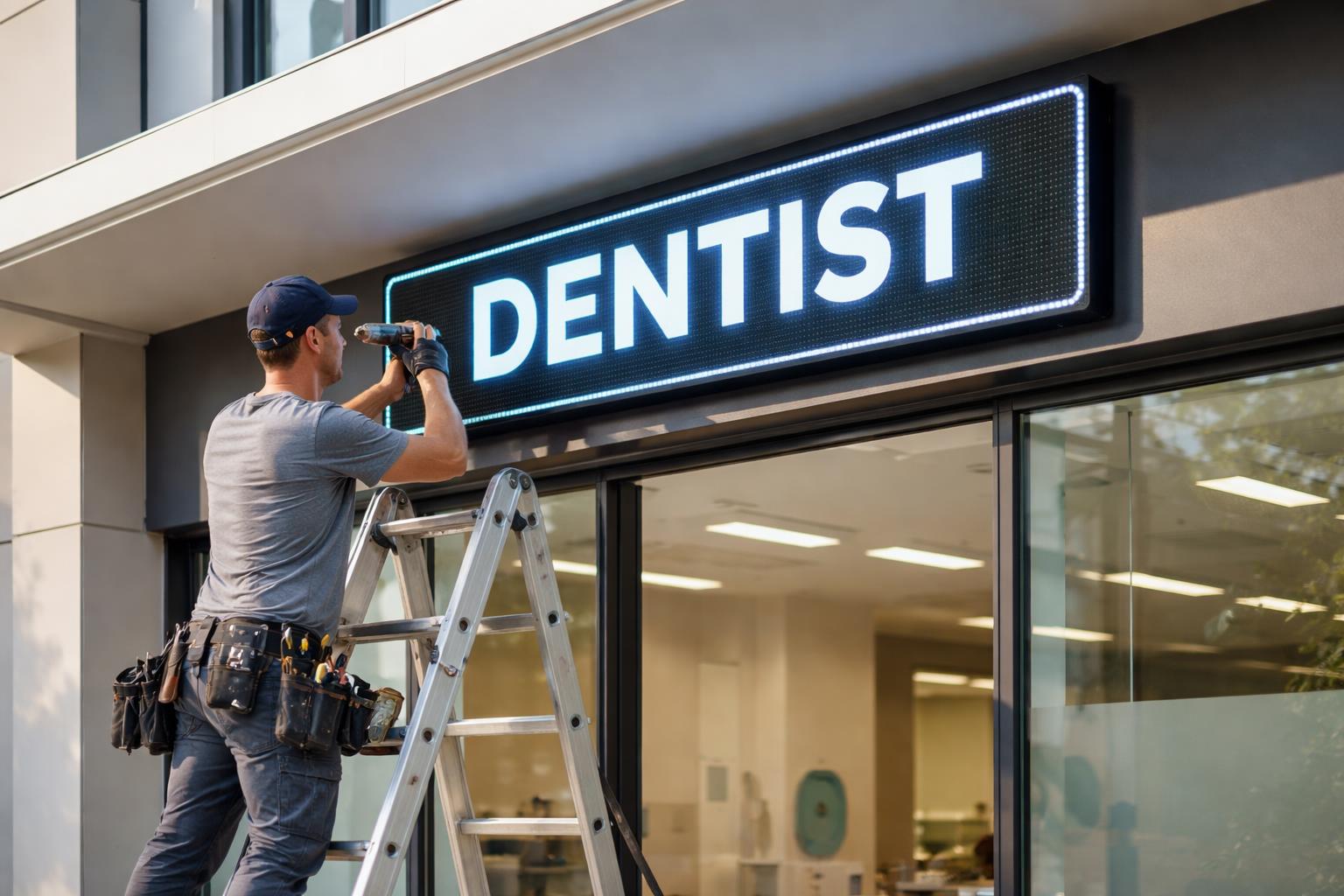
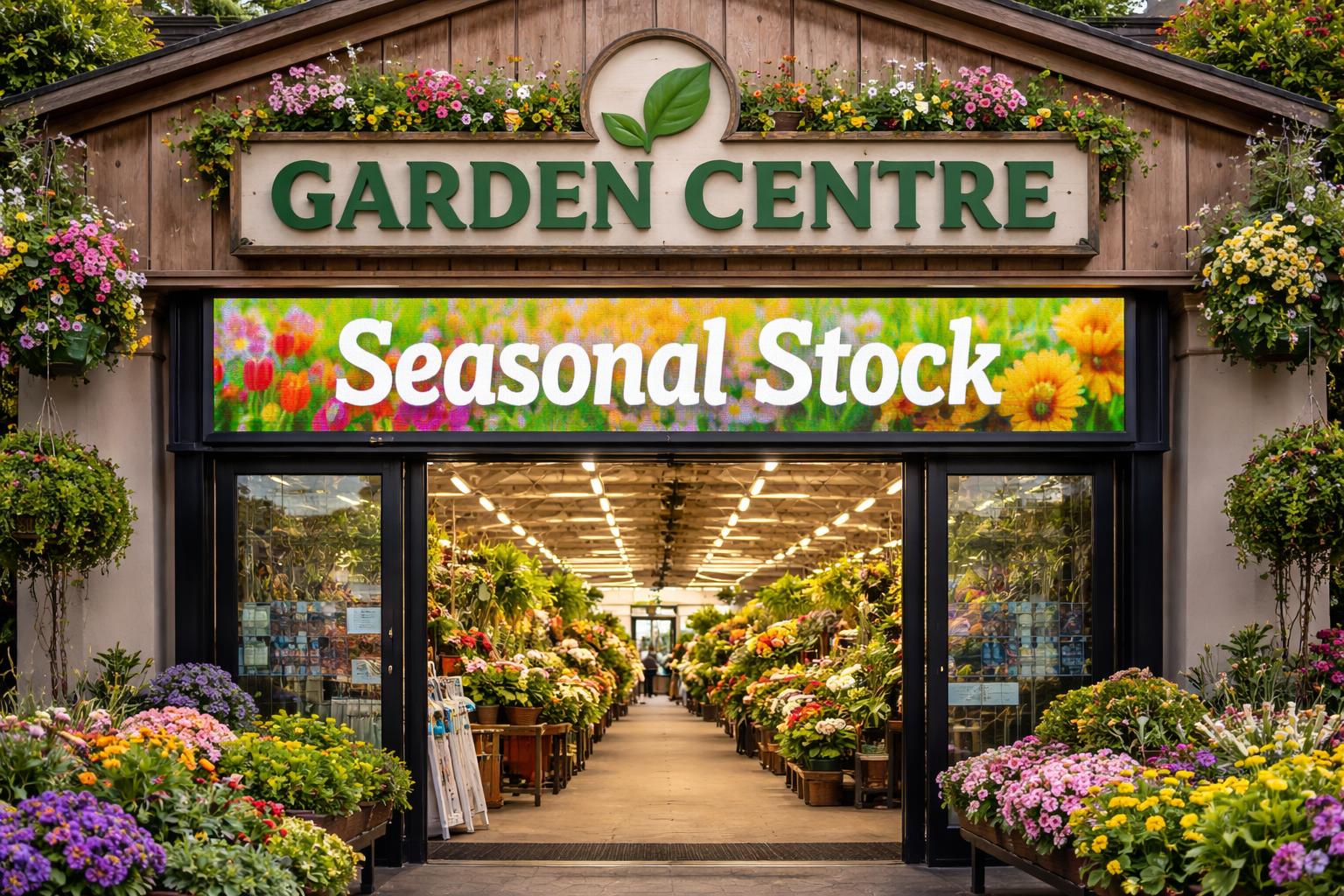
Growing from one location to five (or fifty) should feel like momentum. But in the real world, expansion often creates a brand “split screen”: one site has the new window decals, another still has old vehicle graphics, and a third is running hand‑made posters that don’t match your fonts or colours. That inconsistency costs you in trust, recognition, and customer experience—especially for franchises and multi‑site operators where familiarity is the whole point.
A multi-location signage rollout is the planned distribution (and installation) of new signage across multiple sites, usually timed around openings, rebrands, seasonal campaigns, refurbishments, or pricing/menu changes. Done well, it gives you a clean, confident, “we’ve got our act together” presence everywhere. Done poorly, it creates delays, wasted print spend, and brand drift that can take years to clean up.
This guide is written in Australian English and tailored for Blink Digital’s real service mix—general signage, digital signage, and signage installation across Australia. Blink Digital’s Contact page states the business specialises in production, installation, and management of digital signage, general signage, and billboards across Australia. We’ll show you a practical rollout method that works for franchises, real estate groups, medical networks, fitness brands, schools, and expanding retailers, with checklists you can hand to staff, agencies, and site contacts.
You’ll also see where Blink Digital can help you keep brand consistency across locations—from audits, templates and artwork control through to printing, installation scheduling, and ongoing asset tracking.
Building a scalable signage system before you roll out
The fastest way to blow up a rollout is to treat signage as a series of one‑off designs. Multi‑site growth needs a system, not just files. Industry guidance on multi‑location signage planning consistently stresses the importance of consistent use of logos, colours and fonts across all locations, plus structured site surveys and regulation checks.
A practical signage system has three layers: brand rules, sign families, and “rules for variation.”
Brand rules that actually work on physical signs
Your brand guidelines might look great online, but physical signs live in sunlight, glare, distance reading, and mixed backgrounds. A scalable signage approach should define:
- Approved logo lockups (primary, stacked, icon-only)
- Approved brand colours with real production tolerances (because print materials and lighting differ)
- Type hierarchy rules (headings vs body copy, minimum sizes)
- Icon style (especially for wayfinding and safety)
- “Do not do this” rules (e.g., never stretch logos, never use unapproved fonts)
This matters because once you have 10+ locations, local teams and external agencies will inevitably “improvise” unless the rules are unambiguous.
A best‑practice article on scaling brand consistency notes that as hospitality and retail brands expand, maintaining consistency becomes more complex, but planning and processes help keep the brand aligned across every site and sign. Your goal isn’t to eliminate initiative; it’s to keep initiative inside a controlled framework.
Define your sign families
A sign family is a standardised set of formats that every location uses in a consistent way. For example:
- Shopfront identity signs (fascia/awning, wall‑mounted panels)
- Window signs (decals, clings, one‑way vision)
- External walk‑by and footpath signs (A‑frames, banners, flags where permitted)
- Internal wayfinding and zones (reception, amenities, directional arrows)
- Promotional signs (inserts, posters, counter cards)
- Vehicle/fleet branding (door logos, partial wraps, full wraps)
Blink Digital produces many of these formats, including window signage types (decals, clings, frosted lettering, perforated window sign), vehicle wraps (partial/half/full and fleet wraps), A‑frames, banner flags, large format printing, cut vinyl, corflute and aluminium signage.
When your sign families are defined, you can roll out consistently without reinventing signage at every location.
Plan controlled variation: “same brand, different buildings”
In Australia, shopfront sizes, tenancy rules, awning heights, heritage overlays, and council rules vary wildly. Your signage system needs controlled variations so you can adapt without going off‑brand.
A simple approach:
- Define “standard” layouts for common shopfront widths (small, medium, large)
- Define acceptable alternative sign types when the primary type isn’t allowed (e.g., if a window wrap is restricted by glass coverage limits, swap to partial panels)
- Define “local modules” that allow limited local content (e.g., location phone number, unit number, clinic hours) while keeping the master design
North American Signs recommends balancing core brand standards with small, controlled customisations to connect with local communities, while still keeping signage uniform enough to strengthen recognition and trust.
This is where Blink Digital can help you most: building template families that scale across multiple premises while keeping your brand consistent across locations.
Audits and site surveys: the backbone of franchise signage consistency
If you only take one idea from this article, take this: you can’t standardise what you haven’t measured.
Rollouts fail because teams guess. They guess window sizes. They guess frame types. They guess which signs exist at each site. Then they wonder why production takes longer and install day involves emergency fixes.
40 Visuals (a signage rollout provider) states that guessing frame specs slows rollouts and recommends auditing each location’s display types and exact sizes before you print. Whether you use their system or not, the underlying lesson is universal: audit first.
Your multi-site signage audit checklist
Run this audit location by location. Keep it in one spreadsheet so you can sort and batch production later.
Exterior and shopfront
- Fascia/awning sign size and structure
- Existing fixings, power, illumination permissions (if relevant)
- Visibility angles (drive-by vs walk-by)
- Location photos (wide + close-up)
Window surfaces
- Glass panel dimensions and segmentation
- Whether the site is suitable for one‑way vision/perforated films or partial decals
- Any existing tints, safety films, textured glass, or cleaning restrictions
- Council or centre rules around coverage (see compliance section)
Footpath and walk-by space
- Footpath width and pedestrian corridor feasibility
- Where an A‑frame could sit without blocking movement
- Whether flags/banners are allowed and where they could be anchored safely
Interior
- Where customers queue and what they can see from that point
- Reception/counter signage points
- Wayfinding needs (toilets, consult rooms, exits)
- Menu boards or pricing boards (print or digital)
Vehicles (if applicable)
- Vehicle types, door/panel dimensions, wrap condition
- Where branding is most visible (rear doors, side panels)
- Replacement cycle and storage/parking conditions
This audit phase is also where you decide: which signs can be re-used with new panels and which need full replacement.
Standardised audits reduce drift over time
Multi‑site operations generally rely on consistent standards that are checked and reinforced repeatedly. A multi‑site operations article recommends establishing standardised brand guidelines so each location reflects the same brand identity through consistent signage, displays and overall aesthetic. That principle applies directly to signage: if you audit annually and update consistently, your brand stays aligned even as staff and managers change.
Blink Digital can help you formalise audits into a repeatable workflow, especially if you have multiple sites and want to reduce long-term drift.
Compliance and approvals: keeping rollout speed without breaking rules
For a rollout to be truly “national”, you need a compliance mindset. What is permitted in one council area (or one shopping centre) may be restricted in another. The goal is not to become a planning expert. The goal is to identify triggers early so your production schedule isn’t derailed.
Why “self-assessable” doesn’t mean “anything goes”
Many councils allow certain signage without specific approvals if the sign meets strict requirements. Brisbane City Council, for example, defines self‑assessable requirements for window signs (no more than 25% of glass area and no larger than 2m²) and footway signs/A‑frames (with dimensions and a required pedestrian corridor).
Similarly, the City of Moreton Bay states signs are either self‑assessable or require local law approval; self‑assessable signs can be displayed without approval only if they comply with type/location/minimum conditions outlined in its Signs Local Law.
The practical rollout implication: your “standard window wrap” may not be standard everywhere, and your “standard A‑frame placement” may not be permitted everywhere. If you build your rollout on assumed permissions, you risk expensive reprints or removal orders.
NSW “exempt development” still requires consents
In New South Wales, the Planning Portal explains that exempt signage development must meet general requirements including written consent from the landowner and, if a sign projects over a public road or footpath, approval under section 138 of the Roads Act 1993. It also states signs must not obstruct traffic signs.
This is the kind of detail that can halt a rollout if you have blade signs, projecting signs, or anything extending over public space. It also shows why a one-size-fits-all signage plan is risky.
Landlord and shopping centre manuals can overrule your “best idea”
Even if council rules allow a sign, shopping centres and landlords can reject it. Many fitout manuals restrict signage types, sizes, placement zones, illumination, and even content (e.g., store name/logo only).
A multi‑site signage rollout should include a site-by-site “governance layer”:
- landlord/centre approvals required?
- permitted sign types?
- hours of work and access windows?
- insurance and contractor induction requirements?
Blink Digital can help by building your rollout schedule around these approval requirements, so you don’t manufacture signage you can’t install.
The compliance workflow that keeps rollouts moving
For a scalable multi-location signage rollout, build a simple workflow:
- Classify the sign type (shopfront, window, footway, banner/flag, internal)
- Check the constraints (council self-assessable rules, tenant rules, road rules)
- Choose the compliant option (sometimes a different sign type, same brand)
- Lock approvals before manufacture (especially for shopfront signage)
- Install and photo-document for proof and future audits
The best rollout teams treat compliance as a project stream, not a late “admin task”.
Production and standardisation: making every site look identical
This is where many expanding brands lose consistency: they use different suppliers per region, and small differences creep in—colours drift, materials differ, finishes vary, and installations look inconsistent.
One rollout guide notes that coordinating a signage rollout involves managing deadlines, shipping and installation, and missing details turns a rollout into a costly headache. Another guide frames rollouts as involving design, legal analysis, permit acquisition, fabrication, delivery, and installation—highlighting why an integrated provider can simplify the process.
Blink Digital’s model—covering production and installation across Australia—positions the business well to help here.
Standardise the “recipe”, not just the artwork
Your “recipe” should specify:
- Substrate/material (vinyl type, banner GSM, aluminium composite thickness)
- Finish (matte vs gloss laminate; anti-graffiti options where needed)
- Mounting method (standoffs, frames, adhesive application, grommets)
- Colour approach (print profiles, brand colour matching process)
- Size rules and safe margins (so text isn’t cut off or crammed)
Blink Digital’s large format printing page emphasises durable printing with high-quality inks, plus the ability to produce coordinated shopfront packages including awning fascia signs, illuminated light boxes, window graphics, and mounted boards. That is exactly what a multi-site rollout needs: repeatable packages, not one-off prints.
Match materials to roles in your signage system
Multi-site brands usually need “tiered durability,” because not every sign serves the same lifespan.
- Permanent identity signs: aluminium composite panels are described by Blink Digital as resisting corrosion, fading and weather damage, designed to withstand harsh Australian conditions.
- Temporary campaigns and quick swaps: corflute is useful for short-term promotional runs, pop-ups, and temporary directional changes.
- Footpath capture: A‑frames are described as flexible and portable, used on sidewalks and visible to customers walking or driving.
- Event and roadside presence: banner flags are positioned as attention-grabbing through height and movement and suitable for outdoor use, with Blink Digital stating it provides durable flags designed to withstand weather.
- Windows: Blink Digital lists multiple window signage types and one‑way vision options.
- Vehicles: Blink Digital offers partial-to-full wraps and fleet wrapping, highlighting removability for refresh/rebrand and professional installation for lasting graphics.
When you standardise materials like this, every site “feels the same” even if the buildings differ.
Quality control: your rollout can’t rely on hope
Rollouts should include formal QA steps:
- Proofpacks for each sign family (artwork, dimensions, material, install notes)
- Colour checks on key brand colours (especially reds/blues which can shift)
- Installation photo validation (front-on photo, angle photo, close detail photo)
- Final site sign-off checklist (brand correctness + compliance placement)
40 Visuals notes that their cloud-based system keeps artwork, sizes, ship dates, and install photos in one dashboard, emphasising that cluttered spreadsheets can become outdated in rollouts. You don’t need their system specifically, but you do need the principle: a single version of truth for production and proof.
Blink Digital can provide that single point of coordination and help you avoid the chaos of multiple suppliers and inconsistent QC across regions.
Installation scheduling: how national rollouts stay calm
Even with perfect artwork and compliant sign choices, rollouts succeed or fail in scheduling. You need to coordinate people, access, freight, and downtime—across multiple sites.
Pilot, then scale
For most brands, a pilot install (1–3 sites) is worth it, even if you’re confident. It reveals:
- unexpected site constraints (glass segmentation, hidden services, uneven walls)
- local approval friction
- install time realities
- staff questions and operational impacts
The Ramotion multi-site rebranding guide recommends foundational rollout steps to reduce risk and ensure a consistent customer experience across markets. A pilot is the fastest risk reducer you can buy.
Roll out in waves: region or priority
40 Visuals recommends staggering rollouts by region or priority, noting that rolling out to hundreds of sites on the same day can spike costs and strain install teams, and that a phased approach allows you to fix issues before the next batch ships.
A practical wave strategy:
- Wave 1: flagship / highest traffic / newest sites
- Wave 2: metro cluster
- Wave 3: regional cluster
- Wave 4: lower-traffic or “last mile” sites
This keeps your installers efficient and reduces freight complexity.
Don’t ignore staff training and “what to do if…”
A rollout is not complete when the signs are installed; it’s complete when teams can operate with them.
A signage rollout guide emphasises staff involvement and training, noting staff should understand the brand message each sign conveys, and if digital signs are part of the strategy, staff should be trained in operation and troubleshooting.
Even for printed signage, staff training matters:
- where A‑frames are allowed to be placed
- what time they should be brought in
- who approves “quick” promo signs (so random prints don’t appear)
- how to request replacements and report damage
Blink Digital can provide simple “store playbooks” so each site remains compliant and consistent after install day.
National signage installation: choosing the right partner model
Flexlume’s rollout guide argues that working with a vertically integrated provider can streamline rollouts because the same provider handles design, permitting, fabrication, delivery and installation, reducing delays caused by multiple vendors.
Blink Digital’s positioning—production, installation and management across Australia—fits this integrated model and is a practical advantage for multi-site operators who want consistency and accountability.
If you’re aiming for “national signage installation,” the key is not only geographic reach. It’s the ability to deliver consistent outputs and use a consistent QA and approval system across sites.
Asset tracking and governance: staying on-brand after rollout day
Most brands think consistency is a “launch problem.” It isn’t. Consistency is an ongoing governance problem. Signs get damaged, replaced locally, updated during promotions, and moved around by staff. Without asset tracking and rules, drift returns.
Build a signage asset register
At minimum, your register should track:
- sign ID (unique code)
- location and placement (with photos)
- sign family/type (shopfront, window, A‑frame, vehicle, internal wayfinding)
- dimensions and material
- install date and supplier
- compliance notes (e.g., footpath clearance constraints)
- next review date or expected refresh cycle
40 Visuals highlights the value of storing exact display types and sizes per store and keeping them ready for future rollouts. That concept is your asset register: once you have accurate site specs, future updates become faster and cheaper.
Control local variations without killing speed
Local teams will need some flexibility—especially for local campaigns, community partnerships, or short-term notices. Your governance model should define:
- what local managers can change themselves (e.g., A-frame inserts)
- what requires head office approval (e.g., window decals, fascia signs)
- what requires compliance checks (e.g., anything on footpath or over public space)
- where signage templates are stored and who issues the latest versions
This is how multi-site brands keep agility without losing brand consistency across locations.
Schedule periodic audits: prevent drift
Remember the multi-site operations guidance: standardised brand guidelines and consistent signage across locations should be checked and reinforced, not assumed.
A practical audit cadence:
- quarterly photo audit for key customer-facing signs (shopfront, windows, A‑frame policy)
- twice-yearly review for internal signage and promo assets
- annual full signage inventory refresh for each site
Blink Digital can assist by providing replacement programs, template updates, and refresh services—especially useful for franchises and networks where head office wants less operational noise.
Signage rollout checklist for multi-site brands
Use this as your quick signage rollout checklist. It’s designed to be actionable, not theoretical.
Strategy and brand control
- Define sign families and what each family is for.
- Lock brand rules for sign production (logo lockups, colours, typography).
- Create master templates for common shopfront and window sizes.
Site audit and data capture
- Capture photos and measure key sign surfaces per site.
- Record existing sign types, frame systems, and mounting constraints.
- Identify site-specific restrictions (centre manuals, council rules, heritage overlays).
Compliance and approvals
- Confirm council requirements for window coverage and footway/A‑frame placement where relevant (rules vary by council).
- Confirm NSW-style consent requirements and approvals for signs projecting over public roads/footpaths (if relevant).
- Obtain landlord/centre approvals before manufacture for constrained sign types.
Production and QA
- Standardise materials, finishes, and mounting methods.
- Run colour checks on brand-critical colours.
- Build a proofpack per site (artwork + install notes).
- Require install photos for QA sign-off.
Scheduling and installation
- Pilot first, then roll out in waves by region or priority.
- Lock access windows with site contacts (after-hours if needed).
- Ensure staff know post-install rules (A‑frame placement, updates, reporting).
Asset tracking and maintenance
- Create a signage asset register with sign IDs and site photos.
- Schedule periodic audits to prevent brand drift.
- Define update workflows and approval gates.
How Blink Digital supports multi-site signage rollouts across Australia
Multi-site rollouts work best when you have a partner who can advise, produce, and install consistently—without you juggling multiple suppliers and inconsistent outputs.
Blink Digital positions itself as a provider specialising in production, installation and management of digital signage, general signage and billboards across Australia. Its general signage suite supports the exact sign families multi-site brands typically need, including large format printing and shopfront packages, window signage, vehicle wraps and fleet graphics, A‑frames, banner flags, corflute and aluminium signage.
For a growing business, that means Blink Digital can help you:
- audit sites and standardise designs into master templates
- design compliant “variations” that keep branding consistent across locations
- run production in batches with consistent materials and QC
- schedule installations in rollout waves to reduce disruption
- track assets and simplify future refreshes and seasonal campaigns
If you’re planning a multi-location signage rollout—whether it’s a franchise expansion, a multi-site refresh, or a brand update across multiple venues—contact Blink Digital. We can help you build a signage system that scales, stays compliant, and keeps every location on-brand.
Reach out via the Blink Digital Contact page and ask for a multi-site rollout consult.