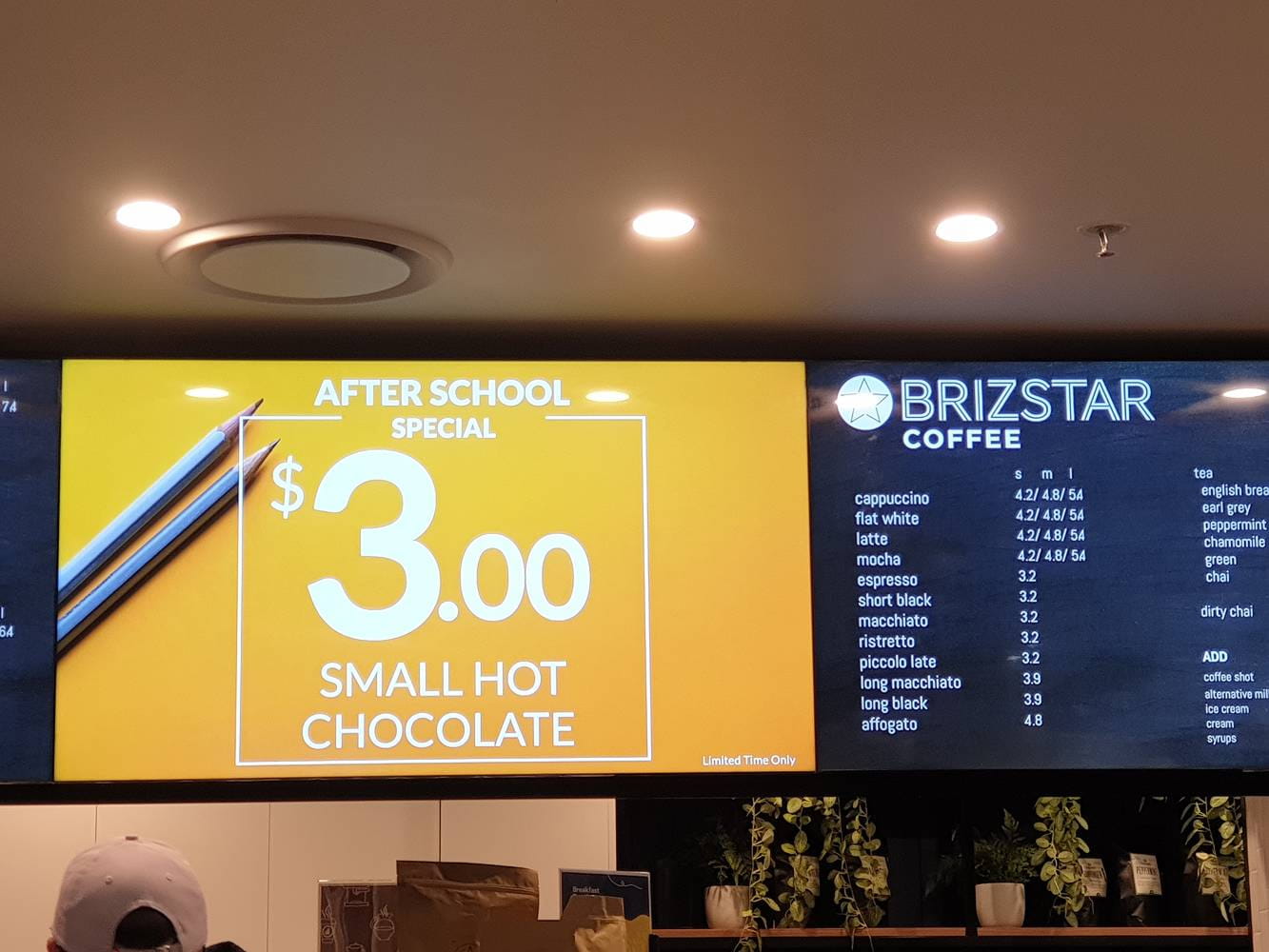
A retail screen should not be showing the same thing at 9:00 in the morning as it does at 6:30 in the evening. That sounds obvious, yet a huge amount of retail LED signage still runs like a static poster wall on a loop: the same sale message, the same tenant ads, the same seasonal creative, regardless of whether the people in front of the screen are early errand shoppers, lunch-break visitors, after-school families, or evening diners. That is exactly why this topic is worth proper attention. Blink Digital’s retail and shopping centre LED signage page already positions LED signage as a way to attract attention, build brand presence, drive foot traffic and improve customer experience, while the current Blink Digital blog archive shows neighbouring articles on other sectors and signage topics without a dedicated retail daypart guide. This article fills that specific gap.
That gap matters because retail and shopping centre signage is not only about visibility. It is about timing, relevance and flow. Across the wider Blink Digital site, the business is positioned as an end-to-end signage provider covering consulting, design, installation, maintenance and tailored solutions across Australia. For retail operators, that combination is useful because content strategy only works when the screen type, placement, brightness, CMS control and maintenance approach are planned together rather than treated as separate decisions.
In practical terms, a strong retail LED content strategy is really a scheduling strategy. It uses time-of-day logic, day-of-week logic and seasonal logic so that the screen shows the most useful and persuasive message for the audience present in that moment. Industry guidance on dayparting makes the case plainly: content scheduling works best when it changes by hour, day or season so that audiences see something relevant instead of a generic loop, and retail messaging performs better when it appears at the moment the offer or information is most useful.
Why time-of-day planning matters more than just running promotions
Retail digital signage is often discussed as though its main job is promotion. Promotion matters, of course, but it is only part of the job. Good signage can also reduce confusion, ease dwell-time pressure, improve navigation, direct people to services, support tenant discovery, reduce perceived wait times and help the centre feel better organised. In other words, the screen is part advertising surface, part wayfinding layer and part customer-experience tool. That wider role is exactly what current digital signage guidance highlights: real-time information, seamless navigation, perceived-wait reduction and tailored promotions all sit inside the same communication system.
The research base also supports the idea that message type should change with context. A field experiment published in the Journal of Business Research found that digital signage high in sensory cues tends to support affective, experiential processing, while content focused on features and benefits supports more deliberative processing. More recent large-scale field evidence published in the Journal of Marketing Research found that digital signage at the point of sale increased the likelihood of purchasing featured products by 8.1%, with stronger effects for hedonic, novel and low-priced products, and stronger performance later in the day, on weekends, in crowded stores and when the creative was more emotional. That is a strong argument for treating different hours as different communication moments instead of running identical creative all day.
Foot traffic itself is not flat across the day either. A recent shopping-centre traffic analysis found that midday still represents the largest share of visits, while growth was strongest at the edges of the day, particularly before 11 am, in early evening and after 8 pm. In Australia, food-court reporting has also pointed to stronger weekday traffic in centres, helped by hybrid work patterns and continued demand for fast, scalable food offers. For retailers and centre marketers, that means the audience at 10:30 am is not the same as the audience at 1:00 pm, and the lunch audience is not the same as the later entertainment-and-dining audience.
This is the real heart of daypart digital signage retail planning. Instead of asking, “What promotion should run on the screen this week?”, the better question is, “What does this audience most need, most notice, or most respond to at this time of day, in this part of the centre?” That is the kind of retail signage planning Blink Digital can help with, because it moves the conversation from hardware alone to operational use across the trading day.
What to show in the morning
Morning retail traffic is often more practical than theatrical. People arriving early are commonly on a mission: coffee, groceries, pharmacy, parcel collection, returns, quick service errands, or a specific planned visit before the day gets busier. That does not mean morning content should be dull. It means morning content should be useful first and persuasive second. The research distinction between feature-and-benefit messaging and more sensory, affective messaging is helpful here: early-day content often performs best when it helps customers make a quick decision or feel confident that they are heading in the right direction.
For shopping centres, morning screens near entries, car parks and travelators should usually prioritise orientation. This is where shopping centre digital signage ideas need to be grounded in customer flow rather than in whatever campaign artwork happens to be sitting in the folder. The most helpful morning content often includes centre opening information, major stores already trading, parking guidance, click-and-collect reminders, fresh-food or café offers, parcel locker information, pharmacy or service messages, and quick pointers to amenities. Time-targeted outdoor signage guidance has long recommended changing messages by time of day — breakfast offers in the morning and dinner-led messages later on — and retail-focused content guides make the same point with examples such as breakfast items and coffee in the morning, switching to different categories later in the day.
This is also where wayfinding should carry more weight than pure promotion. Accurate and easy-to-access information about store hours, restrooms, lifts, tenant locations and current trading conditions reduces friction in the visitor journey, and live data-fed directories are especially valuable in environments where store status, pop-ups or temporary relocations can change. In a complex centre, the morning screen can do important work simply by reassuring people that they are in the right place and that the centre is easy to use.
Morning content also needs to respect the realities of glance time. Digital signage is not read like a brochure. Multiple guidance sources stress that effective signage is a glance medium: the message should usually be grasped in around three seconds, copy should remain concise, and the visual hierarchy must be obvious. One university signage guide recommends limiting a sign to roughly 30 to 40 words and using a simple 3×5 style rule, while broader content best-practice material emphasises “glanceability” and message clarity above density. For morning retail messaging, that means bold headlines, high contrast, one clear action, minimal clutter and a clean reading path.
For a centre-level retail foot traffic signage plan, that can translate into something very practical. An entry pylon might surface “Centre open now”, “Fresh market until 2 pm”, “Click & collect Level 1”, or “Coffee offers near South Entry”. A screen near a supermarket wing might surface essentials, quiet-hour information or service reminders. A café-adjacent screen can shift to coffee-and-breakfast creative because that is where dwell and intent overlap. This is the kind of zoning logic that turns a screen network into a trading-day system instead of a generic ad loop.
What to show at lunch and in the early afternoon
If morning content is about reducing friction and building confidence, lunchtime content is about speed, relevance and conversion. Daypart traffic analysis shows that midday remains the largest share of shopping-centre visits, and in Australian centres weekday food-court traffic remains a significant draw. That makes lunch one of the most commercially valuable time windows for both centre operators and tenants — but also one of the easiest times to get wrong, because screens can become cluttered with too many competing short-term offers.
At lunch, the strongest content usually answers one of four questions: Where can I eat quickly? What offer is available right now? Where do I go for the service I need? What do I do while I wait? That is why lunchtime LED promotions for retail stores should be short, highly specific and strongly time-bound. Food and beverage screens can highlight quick offers, quieter zones, new vendors or order-ahead prompts. Centre screens near dining precincts can point shoppers to nearby options, special lunch bundles, seating availability or “today only before 2 pm” messaging. Screens near service-oriented tenants can support last-minute errand behaviour with haircut, pharmacy, gift, tech accessory or convenience messages that fit the lunch mindset. Digital signage guidance consistently notes that timely information and useful visuals can reduce perceived wait times while making long queues feel less frustrating.
Placement matters just as much as message type. Retail content guidance warns against relying too heavily on entrances and exits, where people are often moving too quickly to absorb more detailed information. Dwell zones such as cafés, food courts, queue areas and checkout-adjacent spaces offer far better conditions for slightly richer content because people naturally pause there. At the same time, playlists still need restraint. Digital signage best-practice material recommends basing content duration on dwell time, keeping playlists lean, and limiting each content item to a duration that is long enough to understand but short enough to hold attention — often around 8 to 12 seconds.
For retail stores inside a centre, lunchtime also creates a useful bridge between practical and impulse-led messaging. A gift store might surface “easy lunch-break gifting”, a beauty retailer might promote mini services or refill ranges, and a fashion tenant might push one simple lunchtime hero line rather than several competing offers. The key is not to turn the screen into a mini catalogue. It is to surface the message that best matches the midday shopper’s shorter decision window. That is the difference between a smart retail LED content strategy and content that simply fills space.
What to show after school, in the evening and on weekends
Late afternoon is where many retail environments begin to change character. The audience mix shifts. School pickups, teen visits, social catchups, planned after-work errands and entertainment trips all start overlapping. The key signage mistake at this point is continuing to talk to the audience as though it were still the morning or lunchtime crowd. Research suggests that this is often the time to become a little more visual, a little more emotional and a little more discovery-oriented. The 2026 point-of-sale study found stronger signage effects later in the day, in crowded stores, and for hedonic, novel and lower-priced items, especially when the message style was more emotional.
That does not mean facts stop mattering. It does mean the content mix should open up. After-school and late-afternoon screens are often a good fit for fashion drops, accessories, entertainment-led content, snack and drink offers, low-friction add-ons, social-media-friendly visuals, cinema or leisure promotions, and visually led demonstrations or tutorials. The earlier field research on sensory versus features-and-benefits content supports this shift: sensory-rich content is more likely to drive affective, experiential processing, which is highly relevant in retail environments where browsing, discovery and mood play a stronger role. Current retail-display guidance also notes that physical stores increasingly need to offer experiences that feel more engaging, personal and immersive than a simple static presentation.
Evening and weekend trade amplify this even further. Recent centre traffic data shows that early evening and after-8 pm periods have been some of the strongest growth windows, while the same large-scale signage study found that effectiveness strengthens on weekends and later in the day. For shopping centres with dining, entertainment or lifestyle precincts, that means screens should increasingly behave like destination-builders rather than simple deal boards. The best content in these periods often promotes restaurants, bars, dessert precincts, cinema sessions, family activities, community events, open-late categories and “what’s on now” messaging.
This is also where centre-level event messaging deserves more prominence. Shopping-centre signage guidance regularly points to events, live music and community activations as powerful content uses because they help the centre feel active, local and visit-worthy beyond pure shopping. In the evening and on weekends, those messages can work harder than a generic retail sale slide, especially when combined with practical navigation information such as parking zones, public transport reminders, amenity locations and precinct directions. A family choosing where to spend part of a Saturday is not only deciding what to buy; they are deciding whether the centre feels easy, useful and enjoyable.
Navigation is still crucial in these busier periods. One recent venue-experience study found that 53% of visitors to large venues experienced navigation problems, that 50% of visits were discovery-oriented rather than purely task-oriented, and that indoor map tools made it markedly easier for visitors to discover stores, restaurants and services they were not already planning to use. That is an important reminder for weekends in particular: not every high-traffic screen should be sold to tenant ads. Some of the most commercially valuable content is simple, accurate wayfinding that helps visitors reach restrooms, parents’ rooms, food precincts, entertainment zones and less obvious tenants without frustration.
For a shopping centre trying to sharpen its tenant promotion signage, the lesson is clear. Afternoon, evening and weekend content should be richer and more discovery-led than morning content, but it should still remain structured. When a centre gets this balance right, the screen network starts to support both occupancy goals and guest experience. When it gets it wrong, the centre simply looks noisy. That is precisely the kind of distinction Blink Digital can help retail operators work through, because the challenge is not just what to show, but where to show it and at what hour.
How to rotate tenant promotions without creating visual overload
One of the hardest retail signage jobs is deciding how much tenant content to run, how often to rotate it, and which screens should carry it at all. Many centres want to showcase as many tenants as possible, which is understandable. But the moment every retailer expects equal time on every screen, the network usually becomes weaker instead of stronger. The screen no longer feels curated. It feels crowded. This is particularly important for centres because Blink’s own retail page already highlights cross-promotion, rotating ads, tenant directories and seasonal campaigns as part of the retail use case. The opportunity is real, but it needs rules.
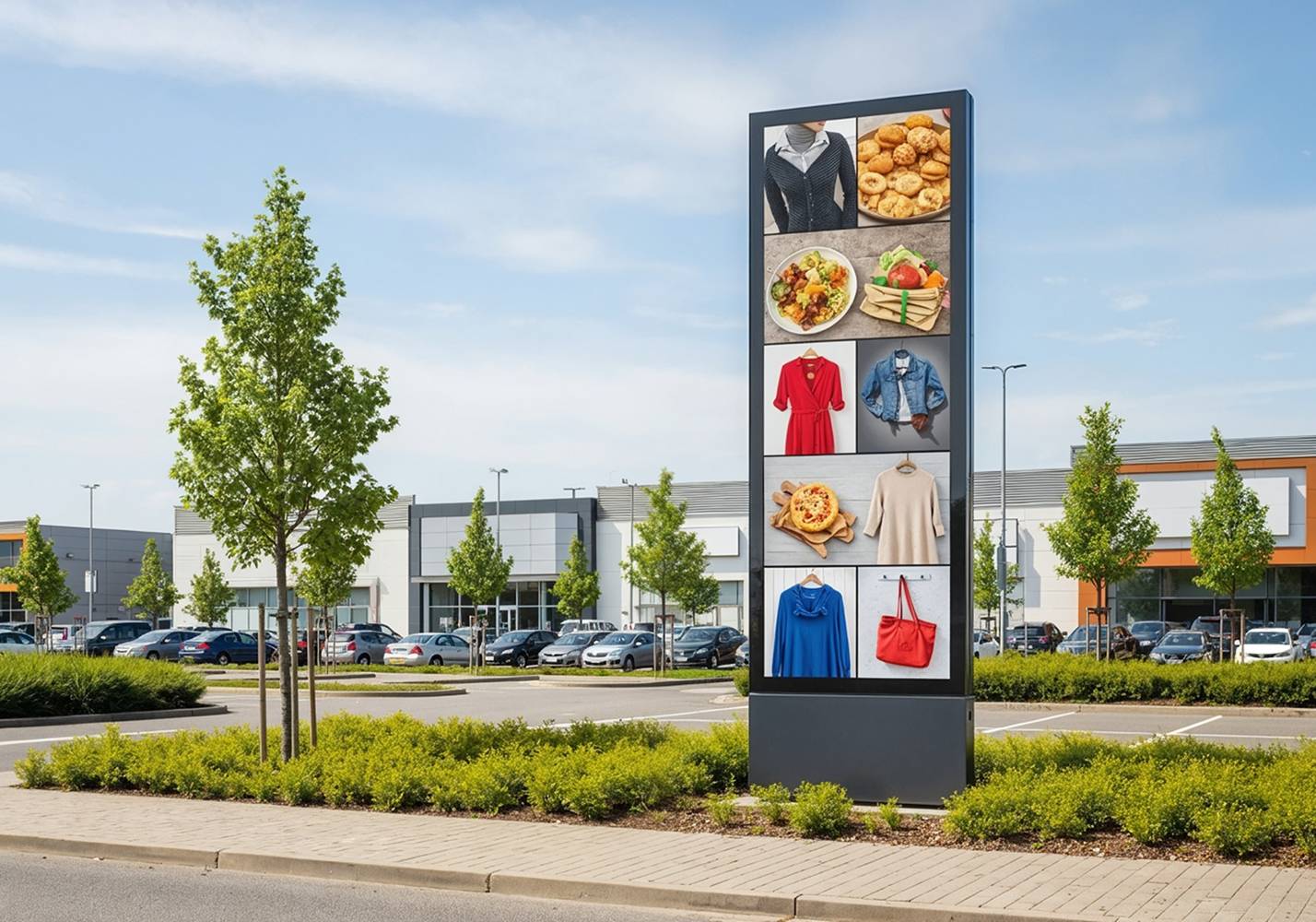
The first rule is that every screen should have a job. Arrival screens exist primarily to welcome and orient. Directory points exist primarily to help people choose a route. Precinct-entry screens can blend local wayfinding with nearby offers. Dwell-zone screens can carry more tenant promotion because people have the time to absorb it. Queue-area screens can entertain, reassure and upsell. Once the job of each screen is clear, the fight over equal airtime usually becomes easier to solve because not every screen needs to be a general media board. Retail wayfinding guidance and broader public-screen guidance both reinforce the same point: where people are moving quickly, directional clarity should come first; where people pause, promotions can do more work.
The second rule is to avoid trying to show too much at once. Zoning multiple messages onto one display can work in specialist cases, but signage experts repeatedly warn that digital signage is a glance medium, not a television channel. When too much information appears on one screen, the key commercial message is less likely to be noticed or remembered. The same applies to overstuffed playlists. If the “money message” is just one panel in a noisy, over-zoned composition, shoppers often miss it altogether. In a retail context, where viewing time is often a few seconds, clarity almost always beats density.
The third rule is to set rotation logic according to dwell time and local relevance. Best-practice guidance recommends choosing content duration based on where the screen sits in the customer journey, keeping playlists lean and using localised targeting rather than assuming one generic playlist fits every environment. For most shopping centres, that means tenant messages should usually be grouped by precinct, category or shopper intent. Food offers belong near food precincts. Fashion offers belong near fashion corridors or high-dwell browse zones. Service messaging belongs near service tenants and practical decision points. That is how shopping centre digital signage ideas become genuinely useful instead of decorative.
The fourth rule is readability. Content management articles, signage design guides and communications standards all say roughly the same thing in different words: keep the asset simple, keep the text short, keep the contrast high, and make the action obvious. One major content guide frames this as the three-second rule. A university communication guide recommends a maximum of roughly 30 to 40 words and a simple three-line or five-line structure. Playlist guidance then adds another timing layer: in many environments, 8 to 12 seconds per item is a sensible starting point. For shopping centres, that means many LED promotions for retail stores should be designed as headlines, not as paragraphs.
The fifth rule is governance. For multi-location or multi-screen networks, one digital signage platform recommends a global/local approach — about 80% global and 20% local — supported by localisation permissions and tagged content rules. While a shopping centre is not the same as a national branch network, the principle adapts well: centre-wide branding, housekeeping, major campaigns and navigation can form the stable layer, while local tenant or precinct offers form the variable layer. This is exactly where Blink Digital can help owners and centre marketers, because a good signage supplier is not only installing screens; it is helping define a playable content system that tenants can live with and customers can actually read.
How to align daypart content with seasonal campaigns and centre events
A useful retail screen strategy should not only change by hour. It should also change by date, season and event cycle. One of the biggest advantages of digital signage over print is that the same screen network can shift from morning coffee, to lunch offers, to after-school discovery, to a weekend event campaign, to a seasonal retail push without the lead times and waste associated with changing physical graphics. Scheduling guidance consistently points to time of day, day of week and seasonal events as the right foundation for smarter content planning.
For Australian centres, this matters because the retail calendar is full of trading moments that feel different from one another: school holidays, Easter, Mother’s Day, EOFY, Father’s Day, Black Friday, Christmas, local festivals, sports finals, live activations and community days. Blink’s own retail page already highlights seasonal and event campaigns as a core use case, which makes sense. These campaigns do not just need “more content”; they need phase-based content. Early awareness is one phase. Countdown and urgency are another. Same-day wayfinding and queue messaging are another. Last-day conversion or post-event redirection are another again.
This is especially important for shopping centres because event messaging and operational messaging often need to work together. If a centre is promoting a live performance, school-holiday program or weekend activation, the screens should not just advertise the event. As the date approaches, they should also help people find parking, locate the right precinct, identify which tenants are trading around the activation, and see what dining or retail options sit nearby. Screens that announce and then guide will outperform screens that simply announce. In that sense, event-led signage strategy is really just another form of good customer-flow design.
Seasonal agility also creates smarter merchandising opportunities. Retail content guidance points out that digital signage can respond instantly to local conditions, including inventory changes, local trends and even weather. If rain arrives, umbrellas and wet-weather categories can be surfaced immediately. If temperatures jump, cold drinks, summer accessories or low-effort dinner solutions can take priority. Because the CMS can schedule or trigger content so quickly, seasonal planning becomes much more precise. It stops being a slow print cycle and becomes a live content calendar. That is one of the most underused strengths of good retail LED content strategy.
How to measure whether the strategy is working
A daypart strategy is only valuable if someone can tell whether it is actually improving the result. That does not mean every shopping centre needs a complex analytics stack on day one. It does mean the content schedule should be tied to a few practical measures. Foot traffic remains one of the most useful starting points because it helps operators understand when visitors arrive, how traffic changes by hour and day, whether campaigns correlate with spikes, and whether layouts or event activations are affecting movement patterns. Retail foot-traffic guidance repeatedly points to busy times of day, busy days of week, campaign impact and sales correlation as some of the most useful outputs.
For individual retailers and for centres, the most useful metrics often sit in a small cluster: traffic by hour, dwell time in key zones, conversion or transaction lift during featured time slots, queue pressure in food or service zones, and campaign response by precinct. Broader retail analytics guidance recommends looking for peak-hour trends, in-store dwell times, conversion rates, average visit duration, heat maps of where people pause, and whether particular promotions or events change those patterns. In simple terms, a screen schedule should be reviewed against real trade behaviour, not just creative preference.
Measurement also makes it easier to improve the content itself. If one playlist works better in late afternoon than at lunchtime, that is valuable. If a weekend event message drives traffic but not tenant spend, that is valuable too. If dwell-zone screens outperform entry screens for a particular category, the centre can rotate more of that tenant promotion signage into the right zone instead of blasting it everywhere. Best-practice playlist guidance also recommends A/B testing and ongoing optimisation, which is particularly useful in large centres where trading conditions and audience mix can vary sharply by daypart.
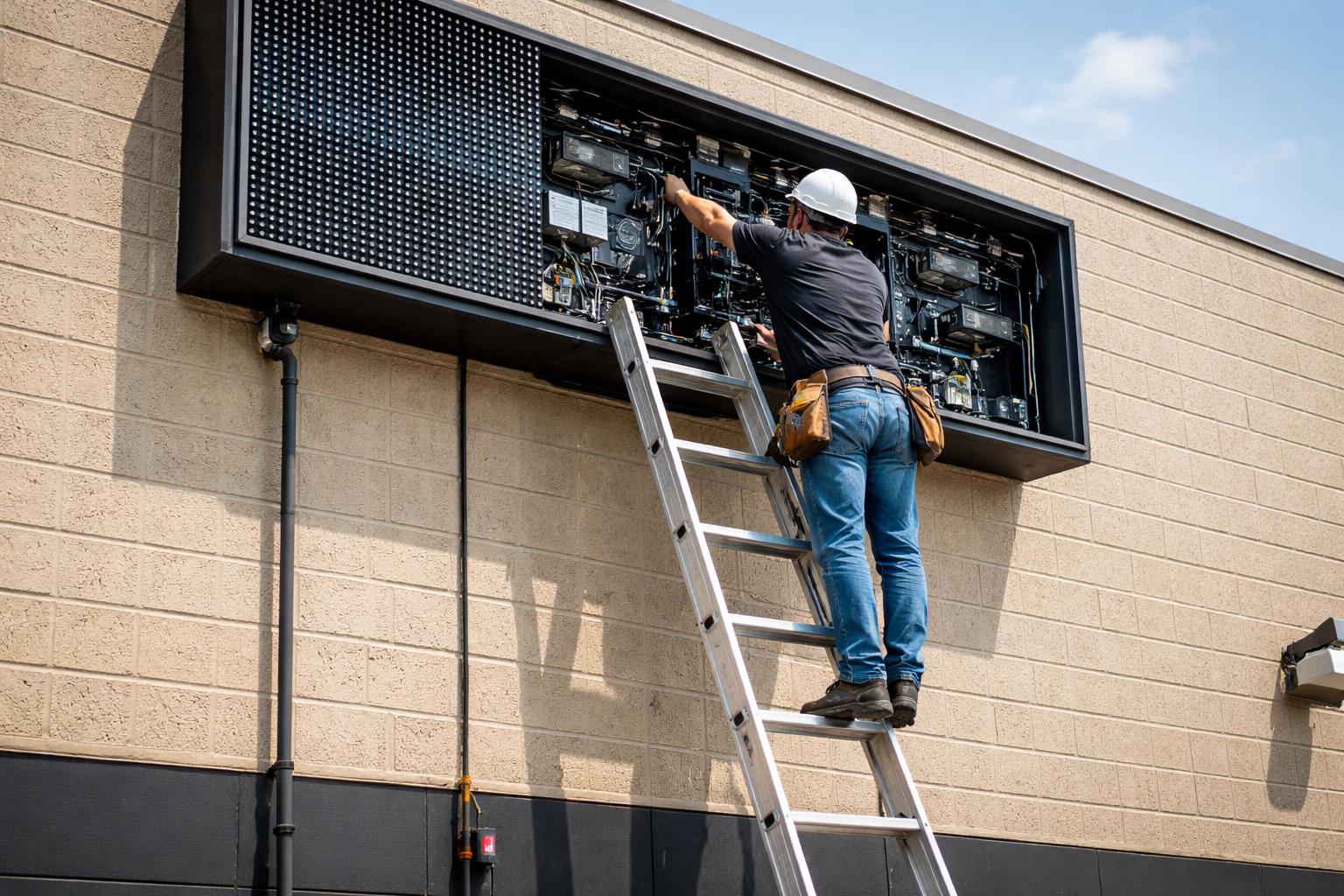
The important point is that signage should not be treated as “set and forget”. It should be treated as a live retail communications layer. That is one more reason Blink Digital is a good fit for this conversation: the company’s official positioning is not just about supplying screens, but about consulting, design, installation and ongoing support, which gives retailers and centre teams a better foundation for improving content over time rather than locking into a one-off setup.
How Blink Digital can help retail operators make this practical
A strong daypart plan is only useful if the signage itself is fit for the job. That means brightness strong enough for the location, the right screen formats for entrances, precincts and internal spaces, simple remote content control, dependable scheduling, and support when something needs to be changed quickly. Across its official site, Blink Digital positions itself as a provider of customised digital signage solutions with consulting, installation, maintenance and support built in, and its retail service page specifically highlights custom-made retail solutions, dynamic content and scheduling, intuitive content management, wayfinding, tenant directories, seasonal campaigns and ongoing support.
That combination is what makes the company relevant to shopping centres and retail groups that want more than a bright screen. If your site needs a better daypart digital signage retail plan, clearer tenant promotion signage, smarter shopping centre digital signage ideas, or a tighter retail foot traffic signage strategy that changes through the trading day, Blink Digital can help you shape the system properly. The company’s retail page specifically points to tailored solutions for challenges such as wayfinding, rotating tenant ads, seasonal campaigns and multi-screen updates, while the wider services pages highlight consulting, installation and maintenance support that can keep the network useful over the long term.
If you want your screens to do more than run the same loop from open to close, the next step is simple: build the signage plan around the real retail day. Morning needs different messages from lunch. Lunch needs different messages from after school. Evenings and weekends deserve a different mix again. And across all of it, wayfinding, tenant promotion, centre events and seasonal campaigns need to work together rather than compete. For help planning that properly, Contact Blink Digital for more information and assistance with a retail LED signage strategy that is genuinely timed to customer behaviour, centre flow and commercial outcomes.