In today’s competitive retail landscape, attracting customers starts with a great first impression. For shop owners in Brisbane (and all of Australia), deciding between transparent LED signs and traditional window graphics is a common question. Blink Digital has helped hundreds of Brisbane businesses choose the right shopfront signage, so let’s explore the pros and cons of each option. We’ll look at visibility, maintenance, cost and practicality, using Australian examples and data where possible. By the end, you’ll know whether a dynamic LED shopfront display or classic printed window sign best suits your store.
What Are Transparent LED Shopfront Displays?
Transparent LED signs are a cutting-edge form of digital signage that combine LED technology with see-through panels. Instead of a solid screen, the LEDs are mounted on clear strips or a transparent film. This lets you display bright, moving images while still seeing through the glass. Essentially, you turn your glass window into a digital billboard without completely blocking the view into your store.
The key features of transparent LED screens include:
- High transparency – Most quality panels transmit 65–95% of the light (depending on model). In practice, this means daylight still passes through. Shoppers inside enjoy natural light, and people outside can still see your interior. (For example, one tested transparent LED panel lets about 68% of light through.)
- Dynamic, vivid content – Like any LED sign, they can show videos, animations or changing promotions. They’re programmable and can be updated remotely, which is ideal for multi-site chains or frequent sales.
- High brightness – Transparent LEDs use self-illuminating diodes, so they can reach 4,000–6,000 nits for outdoor use. This ensures messages stay crisp even in full sun. Indoor panels are typically 1,500–3,000 nits, still very bright.
- Slim, lightweight design – Modern panels can be as light as 6–12 kg per m² with a depth of only 40–80 mm. This makes them much lighter than older video walls and easier to mount on existing shopfront glass. Many transparent LEDs are installed in sections or film strips, allowing custom sizes and shapes.
Because they’re essentially digital window graphics, transparent LEDs work best for shops that want both impressive video content and to maintain an open, modern look. Architectural firm oneDisplayGroup notes that transparent LED “allows users to see through the screen, creating a captivating illusion of graphics floating in the air, unlike traditional” solid displays. In practice, retail stores use them to, say, play a looping runway video on the glass while still letting passersby see the mannequins behind the screen. Blink Digital can customise a transparent LED solution to fit your window size and viewing distance, balancing pixel pitch, brightness and transparency to suit your needs.
What Is Traditional Shopfront Signage?
Traditional shopfront signage refers to printed or static graphics applied to windows and storefronts. Common examples include:
- Vinyl window decals and stickers – Full-colour prints or cut vinyl stuck on glass. This category includes clear decals, frosted film, one-way vision (perforated) vinyl and opaque vinyl lettering.
- Posters and banners – Paper or vinyl posters placed inside the window or banner flags hung on the facade.
- Lightboxes or illuminated signs – These are usually fixed, opaque signs (often outside the glass) with LED or fluorescent backlighting.
- Other static graphics – Chalkboards, sandwich boards, A-frames and so on placed near the shopfront.
On a shop window itself, you’ll often see materials like one-way-perforated vinyl (which looks transparent from inside) or frosted graphics that let light through while obscuring detail. Blink Digital notes that window signages offer high impact and can be customised for one-way or two-way vision. For example, perforated window film lets staff see out while displaying an image to outsiders, and frosted vinyl diffuses sunlight but lets it in. Traditional graphics are easy and cheap to produce – you simply print a design and stick it on.
In short, traditional window signage is static: once it’s installed, the image or message is fixed until you replace it. It’s often used for branding, operational hours, sale announcements or any information that doesn’t change every day. As we’ll see, the main advantages are low cost and simplicity, while the downsides are limited flexibility and less “wow” factor compared to LEDs.
Visibility and Natural Light
One of the biggest differences between transparent LEDs and printed window signs is how they interact with light and visibility.
- Transparent LEDs preserve the view and daylight. Because the panel itself is see-through, most of the window area still lets light pass. For example, Chipshow (an LED maker) reports that their indoor transparent LED model transmits about 68% of ambient light, and the outdoor model about 58%. This means shoppers inside can keep enjoying natural sunlight, and people outside still catch glimpses of the store interior. The view outside your shop isn’t completely blocked either. As Chipshow explains, “people outside can easily read the [LED] content, and those inside still get a bright, unobstructed view”. Sharp EIT, an LED integrator, similarly notes that transparent LED screens “combine advertising visibility with natural light and openness”. In practice, you maintain an open, bright feel in your store instead of closing off the window.
- Printed window signs usually block the view (to some extent). A full-coverage vinyl decal will block your window entirely, cutting off the view and natural light. Even one-way vision film (which has tiny perforations) typically transmits only about 35–45% of light – enough to let staff see out, but making the window look quite solid from outside. Frosted or etched vinyl diffuses light but obscures details. In contrast, clear vinyl (applied with transparent ink) can display an image while still letting you see through it. Blink Digital points out that “clear signs enable you to cover your windows with images without losing visibility”. However, note that even so, a clear decal still adds a layer of material – the colors or prints may dull the view slightly compared to nothing at all.
In summary, if maintaining that glass storefront look and natural light is important (for example in a fashion boutique or showroom), transparent LED is superior because it truly stays open. Traditional prints tend to make the storefront opaque unless carefully designed (e.g. selective frosted areas or partial window film).
Dynamic Content vs Static Graphics
Another major factor is content flexibility:
- Transparent LED displays are dynamic. You can show slideshows, videos, animations or real-time feeds. If your promotions change weekly (or hourly), a digital sign lets you update instantly. Multi-zone screens can show different ads on the same panel. Centralised content management means you can update multiple locations from one office – very useful for franchise or chain stores. As one analyst notes, “Digital signage can include videos, animations, and interactive elements, making it far more engaging than static signage”. Blink Digital often highlights that “the flexibility of content updates allows businesses to adapt their advertising strategies quickly”.
- Static window signage is fixed. Once you’ve printed your graphic and applied it, that exact message stays until you print a new one. Updating is cumbersome and slow: you must design, print, and install a whole new poster or decal. According to an industry blog, a key downside is that static signs have “limited flexibility” – content can only change if you replace the sign. This means running sales or seasonal promotions requires reprinting posters each time. It’s simple and reliable, but lacks the immediacy of digital signs.
In terms of capturing attention, dynamic content generally performs better. People tend to notice moving visuals. For busy retail corridors or malls, an animated LED loop can stand out more than a static poster. That said, static graphics can still be very effective for clear messaging (e.g. “Grand Opening” or a sale announcement) without the distraction of motion.
Key points:
- Digital (LED) – Can be updated remotely; supports video/animation; easily schedule campaigns (even per time of day); ideal for frequent promotions.
- Static (print) – No flexibility in content; updating requires manual replacement; better for stable, long-term branding. Low initial hassle.
Maintenance and Durability
Both options require upkeep, but in different ways:
-
Transparent LED Screens: These are electronic devices. They will need routine cleaning and occasional servicing. Because they are mounted on glass, they attract dust and dirt; Blink Digital recommends gentle cleaning of the transparent film to maintain clarity. You’ll also want to monitor the electronics (e.g. check that power supplies and modules are functioning). Good systems have remote monitoring and self-diagnosis, but plan on occasional technical checks. LED modules are quite durable, but in case of failure a technician can swap out small sections without removing the whole screen. Overall, regular maintenance is needed to ensure long life.
-
Printed Window Signage: Static graphics require very little maintenance. Once the vinyl is applied, it has no moving parts or electronics to fail. You might need to clean the surface occasionally, but even harsh weather has little effect on quality vinyl – most are UV-resistant and waterproof. As DBSigns (a signage company) notes, static signage is “simple and reliable” and “requires minimal maintenance” once installed. Over many years, a graphic might fade or peel, at which point you’d replace it entirely, but day-to-day it just sits there.
Summary: Static signs are generally more durable long-term and maintenance-free (no electricity, no software updates). Transparent LEDs offer richer capabilities but demand ongoing care (power supply, cleaning, software updates). Blink Digital’s technicians can handle installation and offer support packages to keep digital displays running smoothly.
Energy Use and Running Costs
A key practical difference is energy consumption:
-
LED Signs Consume Power. Like all screens, transparent LED displays use electricity whenever they run. The exact power draw depends on size, brightness and usage. To give a rough idea: a 4m² transparent LED panel might draw on the order of 150–250 watts (0.15–0.25 kW) when displaying bright content. If it runs 10–12 hours per day, that’s roughly 1.5–3 kWh per day. At a typical Queensland electricity rate (~30 cents per kWh), this is about $0.45–$0.90 per day, or roughly $170–$330 per year. The higher the brightness, the more power it uses. Blink Digital finds that, in practice, retailers should budget for a few hundred dollars per year in electricity for a sizeable window LED display. Importantly, some modern transparent LEDs are engineered for efficiency. In fact, leading panels can save 40–50% energy compared to older LED modules, thanks to better heat dissipation and no need for active cooling. (They also often auto-dim at night or when idle to save power.)
-
Printed Signs Use No Electricity. A major advantage of static window graphics is that they require no power at all. Once printed and applied, a vinyl decal sits passively on the glass. There is no direct energy cost, which keeps ongoing expenses near zero. (Of course, if you illuminate a static sign with external lights at night, that lighting power is separate.)
In short, transparent LED signs do incur an operating cost (power, controller electronics) that printed signage avoids entirely. For businesses crunching the numbers, it’s worth noting that higher brightness and longer run-times (e.g. 24/7 operation) can add to the electricity bill. However, Blink Digital ensures our LED solutions are energy-efficient and optimized for Australian conditions. We can also help estimate running costs precisely once we know your display size, brightness and hours of use.
Illustrative Calculation: Suppose a shop installs a 4m² transparent LED screen (say 2m×2m) that draws 200W on average. If it runs 12 hours a day, the daily usage is 200W×12h = 2.4 kWh. At 30c/kWh, that’s $0.72 per day, or about $263 per year. In contrast, a printed sign of the same size has $0 running cost (aside from occasional replacement). These figures highlight that while LED signs have some ongoing cost, many businesses find the marketing impact outweighs the expense.
Initial Cost and ROI
When budgeting, remember:
-
Transparent LED Panels are More Expensive Upfront. High-quality transparent LED screens (including control hardware and professional installation) can cost tens of thousands of dollars for a typical shopfront display. Exact prices depend on pixel pitch and brightness: a fine-pitch (high resolution) indoor panel is pricier per m² than a coarser outdoor panel. Installation on glass also requires expert work. So the capital outlay is significant. However, you get a long-lasting digital asset in return.
-
Printed Window Graphics are Cheaper to Install. Designing and printing a vinyl window wrap or poster might only cost a few hundred dollars (or a couple thousand for a very large, full-glass installation). It’s a much smaller investment, which is why small retailers often start with printed signs.
The trade-off is long-term value. Digital signage eliminates recurring printing costs for new promotions. Blink Digital’s clients often run multiple campaigns per year; instead of reprinting static posters each time, they simply update the screen. Over 5–10 years, the break-even point can be reached if static prints would otherwise be replaced frequently. In contrast, static signage is “cost-effective” upfront but can become expensive over time if you keep needing new versions.
ROI Consideration: If your business changes offers frequently (weekly specials, seasonal décor), a transparent LED sign can pay back the higher initial cost through saved printing and improved sales. If your branding is stable (e.g. a café menu that rarely changes), printed signage may be more economical.
(Note: The above are general observations. Blink Digital can provide a detailed quote for your specific project and help you compare options.)
Suitable Applications by Industry
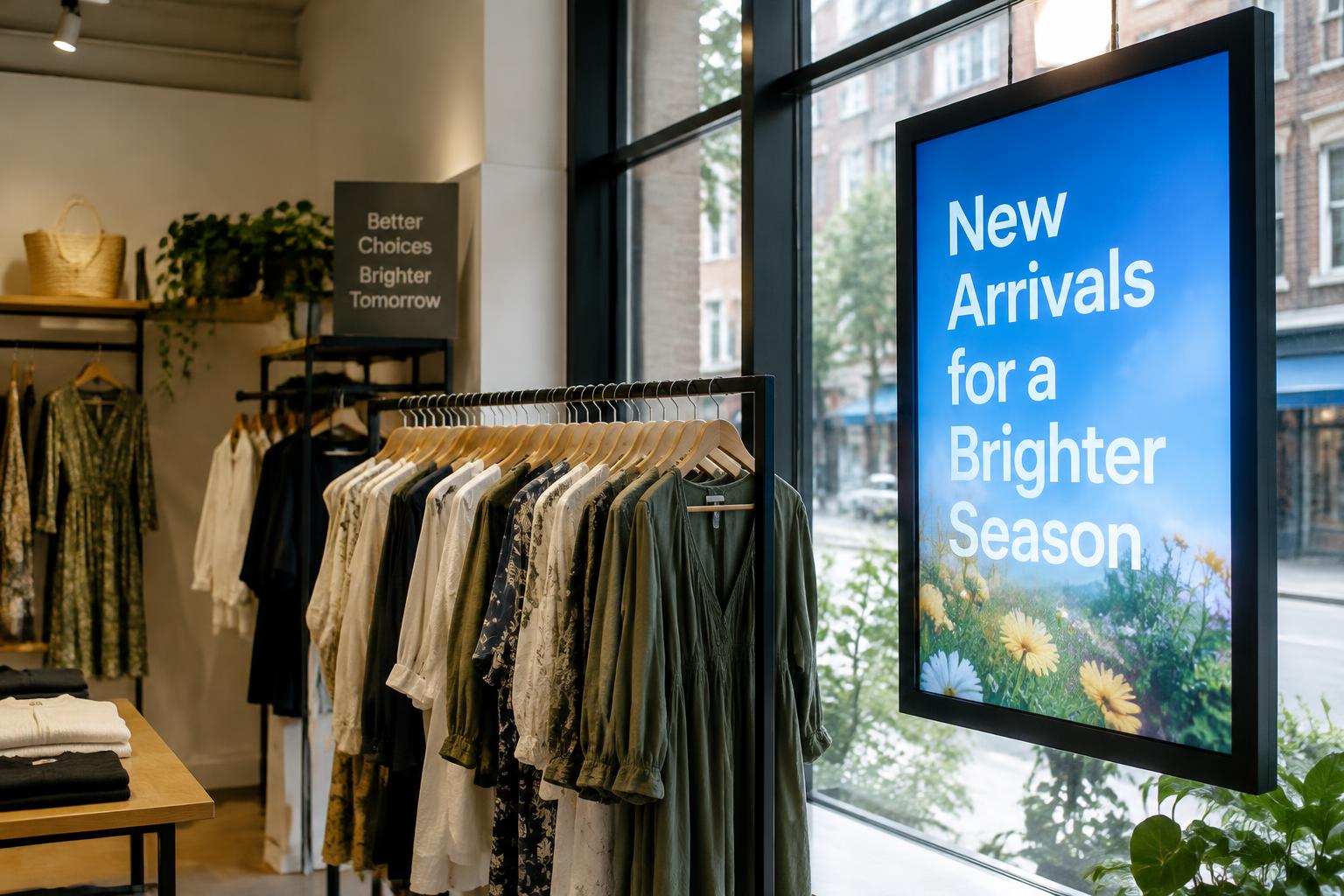
Fashion Retailers: Clothing and apparel shops often benefit from transparent LED screens. They can run runway videos, slideshows of outfits or branded animations right on the storefront glass. This dynamic display catches eyes on busy shopping streets (e.g. Queen St Mall in Brisbane) and draws people in. The transparency means storefront mannequins and shop interiors remain visible behind the ads, blending digital content with real products.
Furniture Showrooms: Stores that display furniture or homewares usually have spacious showrooms behind large windows. A transparent LED can highlight a featured sofa or kitchen set with changing images, while still letting customers see the real products. Natural light is often desirable in showrooms, so the see-through LED preserves that brightness. For example, a home furnishings store might show a looping promo video on one window, with customers browsing through the actual furniture visible behind it.
Shopping Centres and Malls: In big malls (like Westfield or Pacific Fair), transparent LED screens can be used on glass atrium walls or shopfronts to advertise tenant promotions. Here, distance is often larger, so coarser pixel pitch panels work well. These installations become interactive focal points – shoppers can’t help but notice the moving images. Blink Digital has provided LED displays for food court entrances and mall directory walls, where visibility and modern look were key.
Premium and Flagship Stores: High-end brands often want their storefronts to have a futuristic edge. Transparent LEDs give that “wow” factor. For instance, a luxury watch or jewellery retailer might use a tiny, ultra-fine-pitch transparent display to complement an otherwise minimalist window. Because these screens are costly, they’re usually reserved for anchor stores in CBDs or tourist areas, where the branding impact justifies the expense.
In all these cases, transparent LEDs are chosen when visibility and flexibility matter most. If a store has static informational needs (like a clinic’s opening hours or a bank’s branch locator), traditional signage is usually enough. Blink Digital advises businesses to assess how often content changes and how important engaging visuals are for their audience.
When to Choose Transparent LED vs Traditional Signage
Use this quick guide:
-
Go for Transparent LED Signage if:
- You want dynamic, changing content (videos, slideshows, timed promotions).
- Your store sees heavy pedestrian or street traffic where moving visuals will grab attention.
- Maintaining natural light and view-through is important (e.g. fashion or design stores).
- You have multiple locations and want centralised content updates.
- Your branding or product lineup changes frequently (making printing new signs costly).
-
Stick with Traditional Window Signage if:
- Your messaging is static or infrequently updated (e.g. a non-profit information board, legal office signage).
- You have a tight budget and limited need for digital features.
- You operate in a very small shopfront where a full-screen LED isn’t practical.
- You need simple privacy or frosted glass effects (e.g. to cover up shelving behind window) – these can be done effectively with printed film.
- Energy use and maintenance overhead are major concerns – static signs have almost none.
Ultimately, the “better” choice depends on your goals. A startup boutique on a busy Brisbane mall might find an LED shopfront transforms foot traffic into sales. A suburban pet store with a simple logo and hours might do fine with a printed decal.
Blink Digital: Your Local Signage Partner
Blink Digital specialises in LED signs Brisbane retailers love. Whether you lean toward high-tech or high-value, we have the expertise to deliver:
- Custom Consultation: We’ll review your shopfront, discuss your marketing plans, and recommend the right pixel pitch, brightness and sign size.
- Product Range: We offer both transparent LED screens and a wide variety of printed window graphics (vinyl decals, one-way vision film, frosted glass etching and more).
- Professional Installation: Our Brisbane-based team handles everything from council requirements (permit advice) to clean electrical installation. We ensure transparent LEDs are safely mounted on your glass and work flawlessly.
- Support & Maintenance: From initial setup to content training, Blink Digital supports you. We can also manage remote updates for digital displays, and handle repairs or refurbishments down the line.
For example, Blink Digital has completed over 250 signage projects across Brisbane. Our clients range from local boutique owners to national retail chains, all benefiting from our custom solutions. As one case study shows, after installing dynamic LED or vinyl signage, businesses have seen up to a 35% boost in customer engagement. We’d be happy to help you achieve the same success.
Frequently Asked Questions
Q: Are transparent LED signs visible in daylight?
A: Yes. High-brightness LEDs can output several thousand nits, cutting through ambient light. Indoors, 1,500–3,000 nits is typical, and outdoors you may need 4,000–6,000 nits for sunny conditions. These levels keep your content visible even on bright days. Plus, when idle, the screen’s transparency means the glass still looks mostly clear to passersby. Blink Digital can calibrate the brightness to your location.
Q: Will the LED film damage my existing window?
A: No. Transparent LED panels or films are designed for glass. We use non-permanent adhesives or slim frames that hold to the glass without drilling. The film can usually be removed cleanly if needed. Installation is done by professionals who ensure the integrity of your storefront isn’t compromised.
Q: Can you change the content yourself, or do we need Blink Digital to do it?
A: You have full control. Transparent LED systems we install come with user-friendly software. After setup, your team can update images and videos on demand (even from a smartphone). We also offer training and ongoing support, or we can handle updates for you if you prefer.
Q: How do I clean a transparent LED screen?
A: Gently! Typically, use a soft, lint-free cloth and a mild, glass-friendly cleaner. Avoid harsh chemicals or abrasive tools. Cleaning is only needed occasionally (every few months) unless the window is very dusty. Regular maintenance tips are provided by Blink Digital.
Q: Do I still need any lighting for transparent LED signs?
A: No external lighting is needed for the LED portion – it’s self-illuminating. However, standard shop lighting can remain on (they don’t interfere). At night, you can turn off any additional spotlights on printed posters because the LED itself will light up your graphics.
Conclusion and Next Steps
Choosing the right shopfront signage comes down to your needs and audience. Transparent LED displays offer unmatched visibility and flexibility (with a higher cost and a power requirement), while traditional window graphics provide simplicity, low cost and zero electricity use. Blink Digital can walk you through both options:
- We’ll help you weigh factors like pixel pitch, ambient light, and content frequency.
- We’ll provide detailed pricing, including installation and expected running costs.
- You’ll get a proposal tailored to Brisbane market conditions and your specific shop.
Ready to elevate your storefront? Contact Blink Digital today for expert advice and a free quote. Our Brisbane-based team will guide you on whether a sleek transparent LED sign or a bold static graphic (or even a combination of both) makes the most sense for your business.
Get in touch via our website or call us at 0424 505 990. Let Blink Digital light up your brand and help you stand out on the Brisbane streetscape.