Choosing the right LED signage isn’t just about finding the lowest price. It’s crucial to understand the warranty and support package that comes with your sign. A good warranty can protect your investment, covering replacement of failed components and reducing downtime when problems arise. This practical guide breaks down the common elements of LED sign warranties, highlighting what’s usually covered (and what isn’t), so you know what to look for. We’ll cover parts versus labour coverage, on-site service, software support, spare parts availability, and ongoing maintenance – all from the perspective of helping Brisbane and Australian businesses make an informed choice. (And of course, Blink Digital is here to help with all aspects of your LED signage project.)
Parts vs. Labour: Comparing Warranty Coverage
Parts-only Warranty: Most LED sign warranties start with a parts-only basis. This means the manufacturer will replace defective parts (LED modules, power supplies, controllers, etc.) at no charge, but labour and travel are not included. For example, many suppliers include a 2–3 year parts-only warranty by default. Under such a plan, if an LED module or power supply fails, you simply send the faulty part back for replacement and pay the freight. Labor for removal and installation is on you (or your contractor).
-
Example: Adelaide-based LED-Signs Pty Ltd offers a standard 36-month parts-only warranty, extendable up to 10 years. This covers replacement modules and electronics, but customers arrange any labour needed. Similarly, large manufacturers like LG back their LED signage with 3 years parts and labour (see [29]), but even LG requires you to return the unit to their service centre (so on-site labour isn’t provided).
-
Why It Matters: Parts-only warranties are common and keep upfront costs down. However, they shift labour risk to the buyer. If a problem occurs, businesses must either have in-house capability or pay a technician to perform the fix.
Parts-and-Labour Warranty: A more comprehensive warranty includes parts and on-site labour. With this, the supplier sends technicians to fix or replace the faulty parts at your location (usually during normal business hours) for the covered period.
-
Example: LED-Signs offers an optional 24-month on-site parts-and-labour warranty (extendable to 10 years). For the first two years, it includes on-site labour for warranty issues with a typical 2-business-day response time. You still pay extra if you’re outside the specified service area (more on that below).
-
Key Trade-off: Warranties with labour cost more but save hassle if things break. When comparing quotes, look at how long labour is included. Sometimes parts-and-labour is offered only for 12–24 months, after which you’re back to parts-only.
Bullet-List of Common Warranty Types:
- Self-Service Warranty: You handle all labour. Supplier provides spare parts and tech support. (e.g. long-term DIY plan).
- Parts-Only Warranty: Covers replacement parts (LEDs, power supplies, controllers) for a set period (often 2–3 years). You pay shipping and labour.
- Parts+Labour Warranty: Includes technician call-outs. Typically shorter term (1–2 years) and may have travel limits.
- Full Service Agreement (SLA): Extended plan (often paid annually) covering parts, labour, scheduled maintenance and priority response.
When evaluating your quote, note exactly what labour is included and for how long. Also ask if the labour coverage can be extended (some companies allow up to 5–10 years of total coverage). Blink Digital can clarify which plans make sense for your site: we know Brisbane weather and sites well, so we’ll recommend the coverage that best fits your risk profile.
Covered Components: What’s Included in the Warranty
A robust warranty should explicitly list which parts of your LED sign are covered. Generally, you should expect coverage for all critical internal components of the display, including:
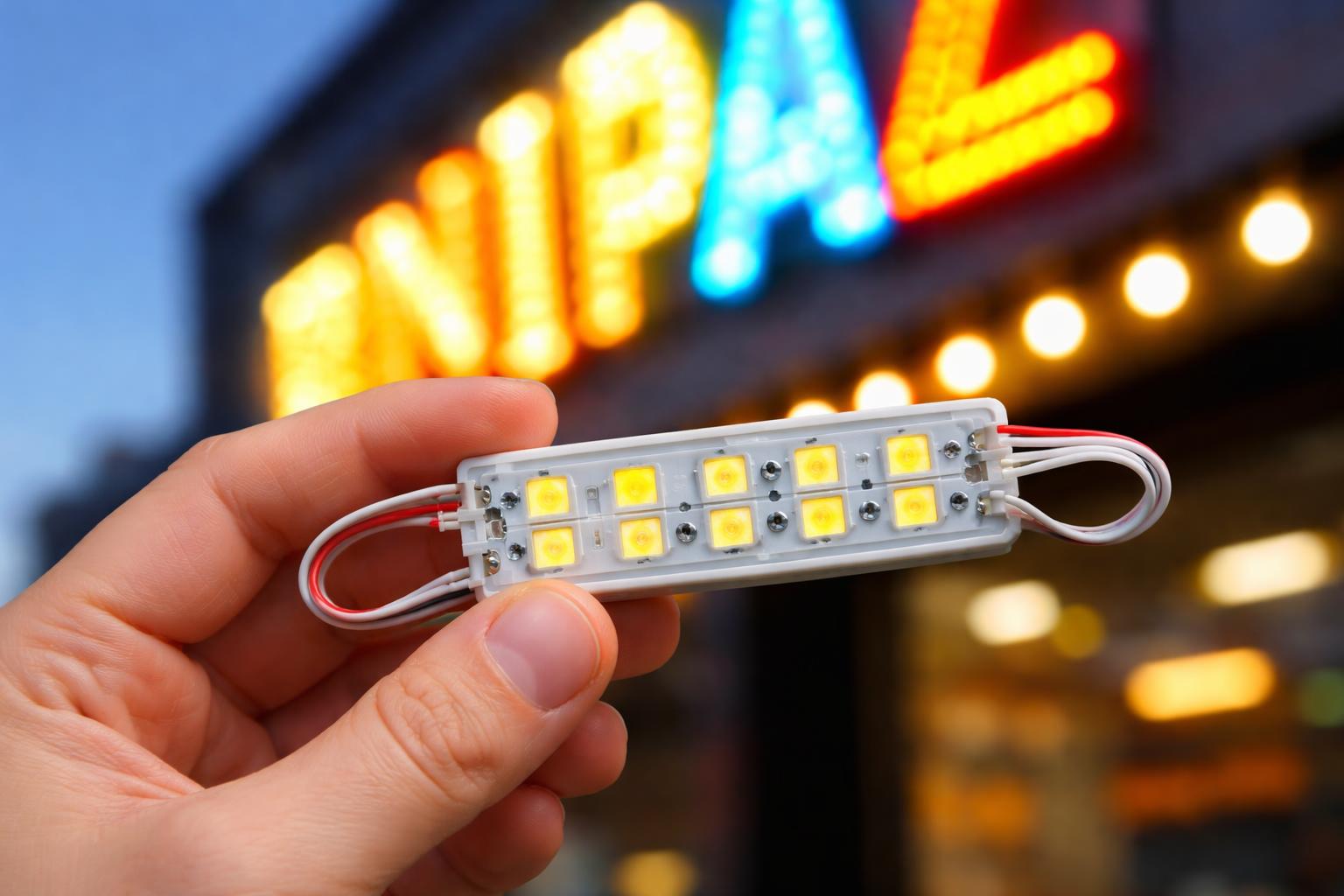
- LED Modules: The panels of LEDs that make up the image (often the most expensive parts).
- Power Supplies: Units that power the LEDs.
- Control Cards/Driver Boards: The electronic boards that manage image data and refresh rates.
- Cabling and Connectors: Internal wiring and connectors between modules and power.
- Cabinetry (to an extent): The display enclosure and rack, typically against defects in manufacturing.
For example, Aurora Signage’s warranty terms specify that parts like “modules, cabinets including connectors… power supplies, receiver cards, [and] cabling” are covered. In practice, that means if an LED pixel goes out or a power unit fails, the supplier should replace it under warranty at no charge.
Some warranties are tiered by product class. Premium displays may get 5-year parts cover plus 1 year on-site labour, while budget models get 3-year parts-only. Always check the exact durations for your sign’s components (Aurora’s table in is a good example of different ranges).
It’s also wise to confirm whether any external equipment is covered. LED sign warranties typically exclude things like:
- Media Players or External PCs: If you use an external computer or set-top box to drive content, its warranty may be separate.
- Networking Equipment: WiFi routers, 4G data modems, etc., are usually not part of the LED sign warranty.
Ask: “Does the display controller or content player come with separate support?” and “Is software licensed separately?” By clarifying this up front, you avoid surprises if that hardware fails. Blink Digital often provides our own cloud-based CMS software with our signs, so we make sure that software support terms are clear from the start.
Spare Parts Kit
Some LED signage projects include an initial spare parts kit. This means the supplier gives you extras (spare modules, PSUs, etc.) at installation to cover inevitable failures during the warranty period. For example, Blink Digital can arrange spare part kits for large installations, especially when sites are remote or hard to service.
If a parts kit is not supplied, ask if the company keeps stock locally. In Australia, having local inventory matters – you don’t want your Brisbane shop’s sign down for weeks while a part is shipped from overseas. Reliable providers often stock popular LED module types and controller cards domestically.
Covered Failures vs. Wear-and-Tear
Lastly, remember that a warranty covers defects (things that fail early) rather than normal wear-and-tear. Even covered parts must fail due to manufacturing defect – not because they’ve simply worn out from years of use. Suppliers will typically say “defects due to faulty manufacturing/materials”. Normal ageing of LEDs (gradual dimming over many thousands of hours) is not a “warranty fault.” That’s why regular maintenance (next section) is recommended: keep your sign clean and inspected to prevent early failures that are warranty-worthy.
Service Levels: On-site Support, Response Times and Travel
Having parts covered is one thing – getting them fixed quickly is another. Carefully compare the service terms: how fast will the supplier respond, and who pays to send someone out? Here are the main points to consider:
-
Response Times: Does the warranty promise a guaranteed response time or repairs within a certain window? Some suppliers offer express SLAs. For example, LED-Signs offers an optional annual maintenance contract that guarantees on-site service the next business day (if reported before 10am). Without such an SLA, the baseline might be “best efforts.”
-
On-site Labor: Is on-site labour included in the warranty, or do you pay separately? If included, note any time limit (e.g. only the first 2 years). Also see if labour is limited to business hours or requires additional fees for nights/weekends.
-
Travel and Location: Warranties often cover travel only within a certain radius. In one plan, LED-Signs includes travel up to 50 km from their service centre. Beyond that, travel charges apply. Blink Digital is Brisbane-based, so we can often reach any SE Queensland location quickly. If your site is rural or interstate, check if the sign company has technicians or partners nearby (Blink Digital, for example, partners with installers Australia-wide).
-
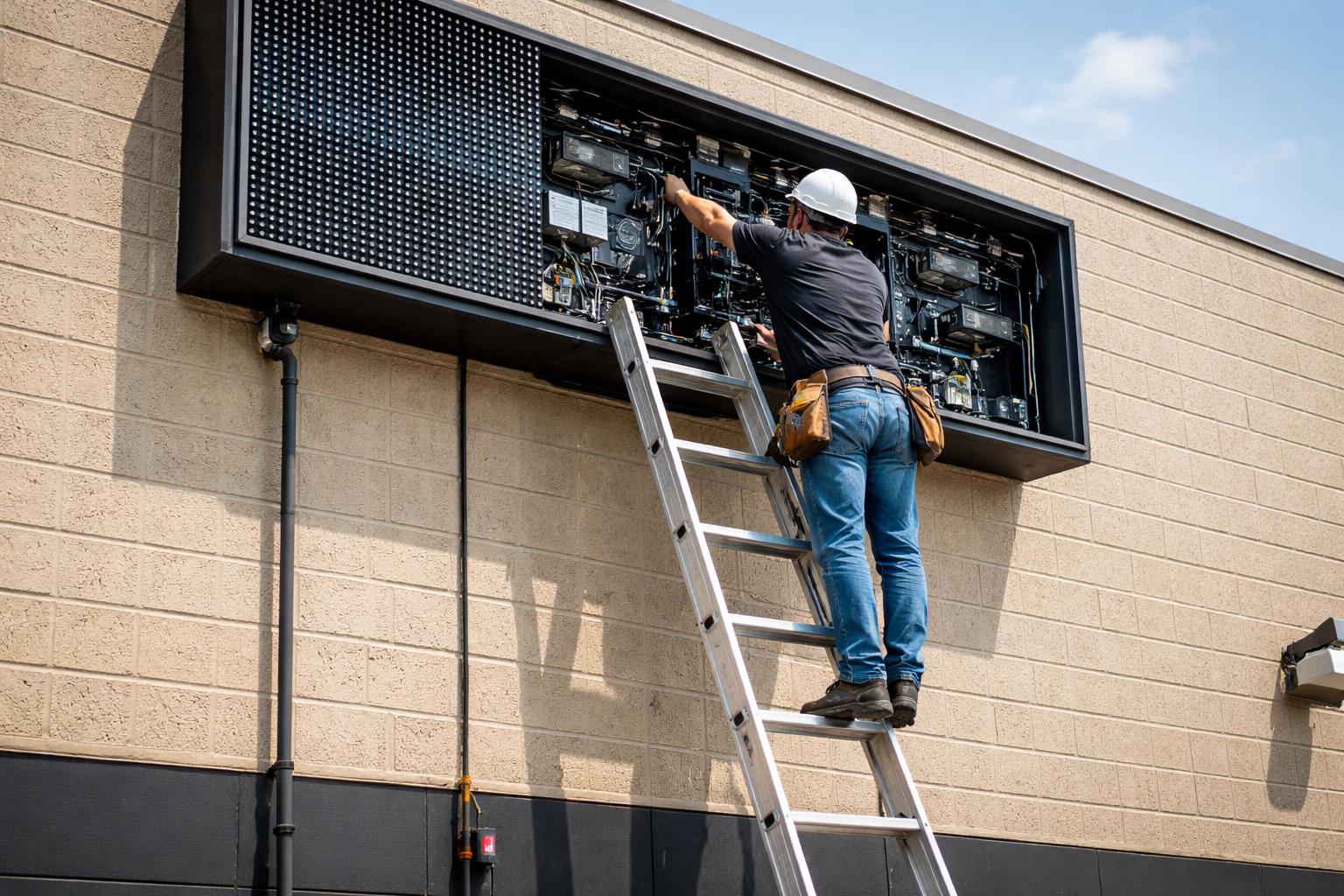
Access Equipment: For high or hard-to-reach installations, who provides the lift or ladder? Aurora’s terms state that if the LED is above 1.8 metres or needs scaffolding/boom-lift, the client must supply access equipment. Always confirm whether your sign supplier will bring the needed tools or if you need to arrange them.
-
Call-Out Fees: Outside warranty or contracted service, ask about call-out fees. If you’re not on a labour-inclusive plan, some companies still send a technician for diagnostics for a fee.
Local Support in Brisbane and Beyond: With Blink Digital’s headquarters in Brisbane, we provide fast local service for businesses in Brisbane, Southeast Queensland and beyond. We have in-house electricians and sign installers ready to attend to any warranty issue. For interstate clients, we collaborate with certified installers nationwide. In short, our Brisbane customers benefit from quick on-site fixes, while even those in Perth or Sydney can rely on our national network.
“On-site labour for warranty issues during business hours is included… Typical on-site attendance within 2 business days from returned service authority” – this is what a premium warranty plan might look like. Make sure you get these response commitments in writing when you sign. Blink Digital’s quotations clearly spell out expected response times and coverage areas.
In summary, when comparing suppliers, map out the service map: ask each one, “If our sign fails tomorrow, what do we do?” The answer should detail whether you call a hotline, how they triage faults, where the technician comes from, and who pays for travel/time. Blink Digital is always upfront about this: we’ll tell you exactly what is covered, our expected response window, and any charges for after-hours or remote locations.
Covered vs Excluded: Understanding Warranty Limitations
Almost every manufacturer’s warranty lists exclusions – things that are not covered. It’s vital to review these so you know your responsibilities. Common exclusions include:
-
Water and Weather Damage: Outdoor LED signs are built to withstand weather, but most warranties exclude damage from extreme conditions. For example, LG explicitly does not cover “exposure to moisture and dampness” under its LED signage warranty. Similarly, Milestone’s terms exclude electrical storms and “natural disasters”. In practice, this means if a flood or lightning strike damages your sign, you’ll likely pay for the repair yourself (unless you have specialised insurance).
-
Vandalism and Accidents: Intentional damage like vandalism or accidental impacts are almost always out of scope. If someone spray-paints or crates fall on the sign, expect no warranty payout. Also, misuse (like drilling into the cabinet, or unauthorized modifications) will void coverage.
-
Installation Faults: If the sign itself fails due to faulty installation of structure, that’s typically excluded. Milestone’s policy notes that faults arising from improper installation are not covered. This underscores the importance of professional installation. Blink Digital’s team is fully licensed and experienced, so our installations meet all electrical and structural codes – ensuring your warranty stays valid.
-
Acts of God: Events like cyclones, earthquakes or severe hail might fall under “act of God” exclusions. Check the fine print: if your area is prone to cyclones, ask how your warranty handles such events.
-
Normal Wear and Software: As mentioned, general wear-and-tear is not covered. Likewise, software issues are usually outside a hardware warranty. For example, LG’s warranty disclaims any damage from non-LG software and notes normal “maintenance” tasks (cleaning, adjustment) aren’t covered.
-
Static Image Burn-In: Some warranties call out screen burn-in as an exclusion. LG specifically excludes damage from displaying static images for too long. To avoid this, companies like Blink Digital recommend using varied or moving content on LED displays.
Summarising Exclusions:
“The warranty does not cover faults or damage arising from … vandalism, electrical storms or power fluctuations, intentional or unintentional damage, theft, fire, or natural disasters.”
LG also excludes repairs necessitated by “exposure to moisture… improper installation… liquid entering the unit… or external interference.”
In short, the key takeaway is: keep your sign in good condition. Preventative maintenance (see below) will avoid many exclusion scenarios. If your sign is outdoors, ensure it has proper weather sealing and lightning protection. Asking the warranty point-blank, “What situations void the warranty?” is smart. Blink Digital is always transparent about our warranty terms, so there are no surprises later.
Software and Remote Support: More Than Just Hardware
Today’s LED signs are not just boxes of LEDs – they include controllers, media players, and cloud software. When evaluating a warranty, don’t forget to consider software and content support.
-
Content Management System (CMS): If your sign uses a proprietary cloud CMS (Blink Digital’s signs use BlinkPress Cloud™, for example), check if software updates and bug fixes are included. Often, digital signage companies bundle CMS access as part of the package but may limit support to an initial period.
-
Telephone and Remote Support: Some suppliers include a brief period of free phone support. Milestone, for instance, gives 3 months of phone support by default. Beyond that, support might require a service contract. Ask your vendor: how do we log faults? Is there a help desk or hotline, and is it 24/7?
-
Remote Diagnostics: Modern signage often allows remote troubleshooting. As onQ Digital notes, “many digital signage issues can be resolved remotely through secure access to the CMS, media player controls, configuration updates, and diagnostic tools”. In practice, this means software glitches, configuration errors or content issues can often be fixed without a truck roll. Ensure your supplier provides secure remote access (e.g. VPN or cloud login) so fixes can be applied quickly.
-
Software Updates and Security: If your sign connects to a network, it’s prudent to update its software occasionally. Ask if your signage hardware has any subscription for firmware or if updates are included under warranty. Also, check if the provider monitors cybersecurity (e.g. ensuring no vulnerabilities in the sign’s control system).
-
Managed Support Services (Optional): Some businesses opt for a managed service contract. This is beyond the standard warranty: it might include 24/7 monitoring, content management help, and emergency response. For example, onQ Digital offers 24/7 support SLAs for critical signage networks. Blink Digital can tailor similar SLAs – for instance, we can monitor your Brisbane screen 24/7 and escalate critical issues any time of day.
Key Point: Hardware warranties typically focus on physical components. Software and CMS support often follow different terms. Before signing, confirm: What CMS does the sign use? How long do we have telephone/remote support? Are software upgrades included? Having clarity here ensures you’re not caught off-guard by a “software support expires” notice.
In practice, most issues we see are hardware-related (dead LEDs, power failures). But when things like corrupted playlists or network dropouts happen, Blink Digital’s tech team is ready to jump in remotely. We include initial CMS training and ongoing support for BlinkPress Cloud™, and can arrange extended IT support if needed.
Replacement Parts Availability and Long-Term Support
Even with a solid warranty, someday the warranty will end. Or perhaps a failure occurs just after expiry. That’s why spare parts availability is crucial for the long-term reliability of your sign.
-
Obsolescence Planning: LED signage components evolve over time. Make sure your supplier guarantees availability of key parts (like your specific model of LED module) for the foreseeable future. Some manufacturers commit to a certain parts-obsolescence period. Ask: “If my sign uses parts that become discontinued, how will repairs be handled? Can you upgrade us seamlessly?” Blink Digital typically sources parts from major global manufacturers who supply spares for many years.
-
Local Stock: As mentioned earlier, having local stock speeds repairs. In practice, Blink Digital aims to keep an inventory of common modules and power supplies in Brisbane. If a part isn’t in stock, we order express freight from our distributors in Australia.
-
Replacement Lead Time: Even if a part is available, factor in how long it takes to get. For critical campaigns (e.g. a retailer during holiday season), downtime hurts. If possible, negotiate a clause that you get an “advance replacement” if a sign goes down, which some plans offer. For example, LED-Signs’ maintenance plan mentions “parts shipped in advance to expedite repairs”.
-
Warranty for New Parts: If you end up buying parts after the initial purchase, know their warranty. Aurora’s terms state that any replacement parts bought after the project are covered for 12 months.
-
Supplier Viability: Finally, consider the vendor’s stability. Blink Digital has been in the Brisbane signage business for over 20 years, and we stand behind our installations for the long haul. A firm backing its words is as important as the printed warranty.
The bottom line: try to ensure you’re not left with an orphaned sign. Good providers will discuss future-proofing (for instance, offering an upgrade path to higher-efficiency LEDs later). When planning your purchase, think decades: your sign might run for 10+ years, so vet each supplier’s long-term commitment.
Preventative Maintenance: Protecting Your Warranty and Extending Life
Most warranties implicitly assume you’ll use the sign responsibly. Some explicitly require certain upkeep. Even if they don’t, following a preventative maintenance routine maximises your sign’s life and avoids minor issues becoming warranty claims.
Recommended Maintenance Tasks:
- Surface Cleaning: Remove dust, bird droppings, bugs and other debris from the LED face and louvers. This should be done at least yearly (or more often in dusty/coastal areas). The Australian standard for outdoor signs (AS 1158.1, though generic to road signals) suggests cleaning intervals. In practice, Blink Digital advises an annual clean of outdoor signs. (LED-Signs also recommends annual maintenance for outdoor displays.)
- Ingress Checks: Inspect seals, gaskets and ventilation for water-tightness. Look for any cracks or damage in the cabinet that could let water in. Rain and condensation are common issues for outdoor signs.
- Electrical Inspection: Have a qualified electrician (or our team) check connections, earthing, and ensure there are no loose wires. Water-tight connectors should be tight.
- Thermal Performance: Check that fans (if any) are running and vents are clear. Excessive heat can shorten component life.
- Functional Test: Run through different colours, brightness levels and a test pattern to spot any dim or dead LEDs. Early detection (before large dead areas form) can save replacement costs.
- Software/Content Audit: Ensure the CMS software is updated, and the content system is functioning. Check timers and scheduling (so the sign doesn’t run 24/7 unnecessarily if it’s not needed).
Maintenance Agreements: Many LED sign vendors (including Blink Digital) offer maintenance contracts to perform these tasks. For example, LED-Signs provides optional preventative maintenance visits annually as part of an extended warranty. Under that plan, an annual service call is included with all labour and travel covered. This not only satisfies any warranty requirements but can catch minor fixes before they become major faults.
Even without a formal contract, document your maintenance. If a warranty claim ever arises (e.g. mid-warranty failure), having logs that show you kept the sign clean and professionally inspected will support your case.
Why Bother?
Preventative maintenance keeps your brightness and clarity high, and ensures long-term reliability. As one source notes, inexpensive maintenance (like cleaning and inspection) can extend an LED display’s life substantially. Think of it as servicing your car – it’s not covered by the car’s warranty but will prevent bigger issues. Blink Digital can arrange annual check-ups for customers; in practice we combine these with software check-ins, so your sign is always firing on all cylinders.
What Happens After Your Warranty Expires
Warranty coverage is finite, so it’s wise to plan for the day after it ends. Here’s what to keep in mind:
-
Extended Warranty Options: Some companies allow purchase of extended warranties, but typically only at or before installation. For instance, Aurora permits extending a 3-year warranty to 5 or 10 years on some products, but often you must sign up within a month of install. Blink Digital offers multi-year service agreements that kick in when your initial warranty lapses – protecting you with fixed annual fees rather than surprise bills.
-
Maintenance Contracts: If you didn’t take one initially, consider a maintenance service contract once the OEM warranty is ending. Even a basic contract that includes yearly visits can be a budget-friendly insurance. These contracts often include either a flat hourly rate for service or predetermined rates for parts (sometimes discounted).
-
Out-of-Warranty Repairs: When something breaks after warranty, expect quotes. Aurora’s terms indicate that if a warranty claim is denied or after expiration, “costs for service will be presented before proceeding”. In other words, the supplier will tell you the price to fix it before doing anything. Blink Digital always provides full out-of-warranty quotes for approval, so you control the decision.
-
Self-Service vs Replacement: For older signs, there comes a point where repairs become uneconomical. If many modules and electronics need replacement, it might make more sense to upgrade to a newer display (which could be more energy-efficient). We can help you run a cost analysis: sometimes a partial retrofit (new LEDs in an existing frame) is possible, other times a new sign is better.
-
Extended Support Periods: Post-warranty, you can often purchase adhoc support at standard rates. This might include phone support or even per-incident service calls. Blink Digital provides these options, but also recommends transitioning clients to a service plan if regular work is anticipated.
In summary, don’t be caught off-guard the day after your warranty ends. Have a plan: either extend protection up front or budget for future support. With Blink Digital, we can discuss what extended coverage or maintenance contract makes sense for your display’s age and usage patterns. Your peace of mind doesn’t have to end with the printed expiry date on the warranty document.
Summary: Ensuring Peace of Mind for Your LED Signs
Evaluating LED signage offers means looking beyond the sticker price. A well-understood warranty and support package can save your business money and hassle down the road. Key takeaways for LED signage buyers in Brisbane and Australia:
- Compare Warranty Terms: Look at length, parts covered, and labour inclusions. 3–5 years parts cover is common, but longer is better.
- Check the Fine Print: Know exactly what’s excluded. Water, storms, vandalism and improper installation are usually not covered.
- Factor in Service: Fast on-site response (e.g. within 1–3 days) and included travel up to a reasonable distance (e.g. 50 km) are valuable. Clarify who pays if you need someone outside those limits.
- Software and CMS: Confirm the level of software support. Can your sign be updated remotely? OnQ Digital highlights that many issues can be resolved via remote CMS access, which reduces downtime and call-out costs.
- Plan for the Long Haul: Ask about parts availability for years to come, and consider an ongoing maintenance plan.
At Blink Digital, we put customer support front and centre. Our Brisbane team provides end-to-end support: from choosing the right sign, to installing it safely, to maintaining it for years. We’re happy to explain any warranty clause and help you choose the best coverage.
Contact us today to discuss your LED signage needs. Whether you’re comparing quotes or servicing an existing display, Blink Digital can guide you through the warranty details, preventive maintenance options, and any post-warranty support. Our goal is simple: ensure your LED signs keep working reliably and let you focus on your business, not on equipment breakdowns. Give us a call or send us a message for more information and assistance with your LED signage project!