Digital signage should follow the entire drive-through customer journey
For a fast food or takeaway business, the drive-through experience starts long before a customer reaches the speaker box.
A driver may first notice your business from the road. Seconds later, they are deciding whether to turn into the site. Once they enter, they may need to choose between a featured promotion and their usual order, understand where the lane goes, review the menu, select extras, wait for traffic to move, check their order and finally collect their food.
Every one of those moments creates a different communication opportunity.
That is why digital signage for drive-through and fast food businesses should not be treated as one electronic menu board positioned beside an ordering point. A more useful way to plan it is as a connected customer journey in which each screen has a specific job.
At Blink Digital, we can help fast food businesses think about signage in those terms. Blink Digital provides digital signage production, installation and management services across Australia and has a dedicated signage offering for fast food franchises, drive-through restaurants, food courts and takeaway businesses. Its fast food range is positioned around promoting combo deals, new menu items, limited-time offers and drive-through specials while supporting consistent branding across individual locations or larger networks.
The distinction matters because the customer at the roadside is not asking the same question as the customer sitting at the ordering point.
At the roadside, the question may be:
Should I turn in?
At the entrance:
Where do I go?
Before the menu:
What looks good today?
At the ordering point:
What exactly can I buy and how much does it cost?
While waiting:
What happens next?
At collection:
Have I received the right order, and is there anything else this brand wants me to remember?
A digital signage strategy becomes much stronger when each display answers the question customers are most likely to have at that exact stage of the journey.
That approach is also a useful way to avoid one of the most common mistakes in fast food signage: attempting to make every display show everything.
A roadside LED sign does not need a full menu. A pre-menu screen does not need to display every possible modifier. A collection-point screen probably should not repeat the same promotional sequence customers have already watched twice. Each screen can instead perform one clear role and pass the customer naturally to the next stage.
For operators, this creates another advantage: content can be organised around business objectives rather than around screens alone.
A breakfast promotion can begin at the roadside, develop into a hero-product message at the driveway entrance, become an ordering choice at the menu point and finish with a reminder about tomorrow morning’s coffee offer at the collection window. One campaign can therefore appear differently at different stages rather than simply being duplicated six times.
This is where digital signage becomes particularly valuable compared with a collection of independent printed signs. A suitable content management system can support scheduled campaigns, playlists, remote changes and multi-location management, allowing operators to plan what appears where and when instead of physically replacing posters every time a campaign changes. Blink Digital’s existing CMS guidance specifically discusses remote scheduling, real-time updates and managing multiple locations through a centralised system.
There is already clear evidence that sophisticated drive-through environments use digital displays for more than simply reproducing static menus. McDonald’s Australia, for example, states that customers using its rewards system may see their name displayed on drive-through menu boards, illustrating how digital screens can become part of a broader digital ordering journey rather than functioning as isolated advertising panels.
That does not mean every independent takeaway needs complex personalisation or enterprise-level technology. In many businesses, the most valuable improvement may be much simpler: making it possible to change breakfast messaging automatically, remove an unavailable product quickly, promote a high-priority combo at lunch, or update the same campaign across several stores without sending new printed artwork to every location.
The key is to design the system around how the business actually operates.
At Blink Digital, we can help businesses work through those questions before screens are selected. Where are customers looking? How quickly are vehicles moving? Where do queues regularly form? Which messages need to change most frequently? Does head office control campaigns, or does each location need some flexibility? Will the display face full daylight? How will it be serviced? Does the site need one large hero screen, several smaller screens, or a combination?
Answering those questions first makes it much easier to decide what type of digital signage belongs at each stage of the drive-through.
From the roadside to the collection window: give every display a specific job
The strongest drive-through signage plans begin by physically walking or driving through the site as a customer would.
Do not start at the menu board. Start on the road.
From there, identify every point where the customer notices the business, makes a decision, slows down, stops, waits or needs reassurance. Those moments become potential signage zones.
The roadside promotion zone
The roadside display usually has the shortest window in which to communicate.
A passing motorist may only have enough time to recognise the brand, absorb one key message and decide whether it is worth entering. For that reason, roadside digital signage should normally prioritise simplicity over detail.
A strong message might promote a limited-time burger, a breakfast deal, a family bundle, an iced drink on a hot afternoon, a late-night offer or simply the fact that the drive-through is open.
The goal is not to present the entire menu. It is to create a reason to enter.
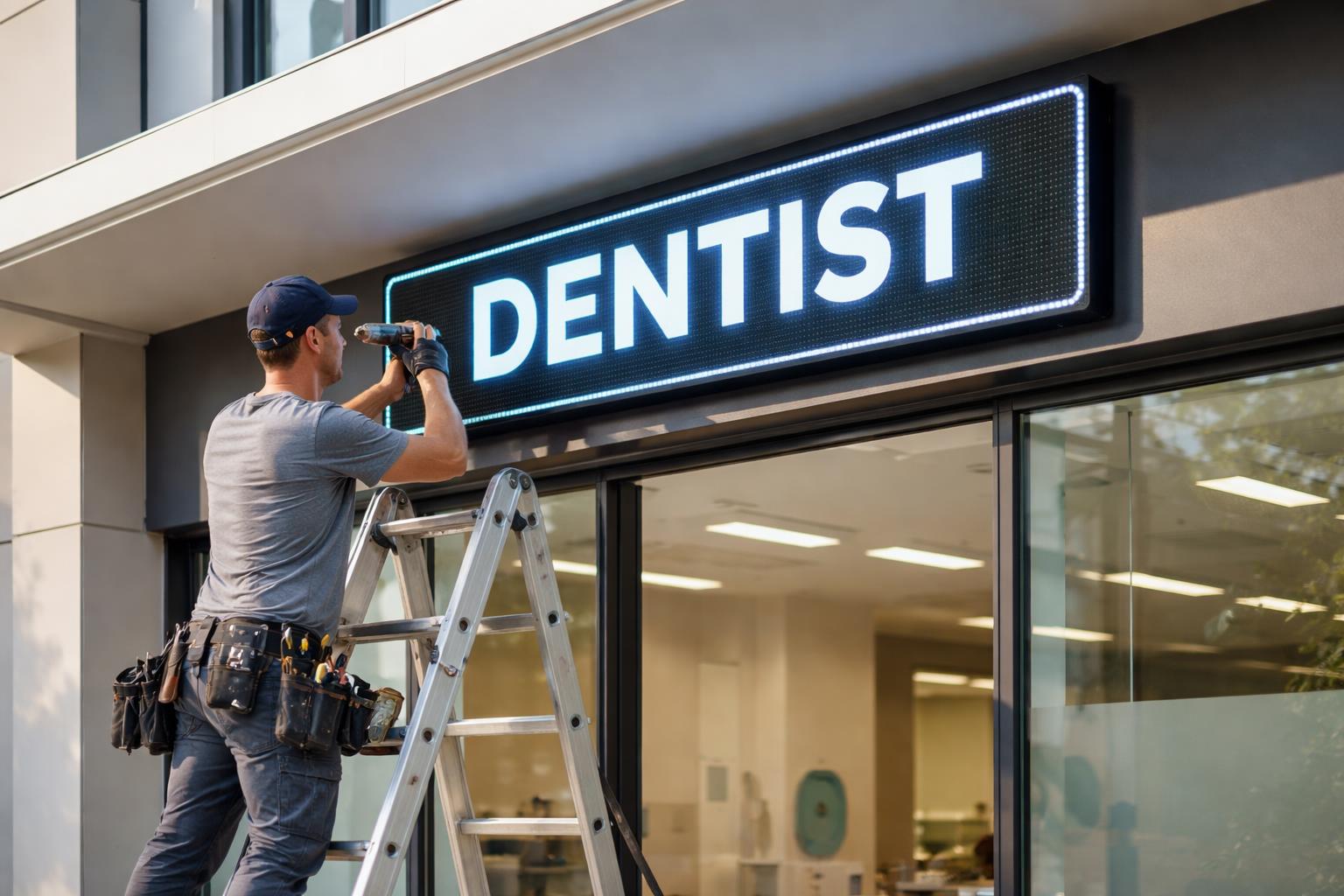
This is also where screen placement, viewing distance, traffic direction and ambient light become crucial. Blink Digital’s Brisbane outdoor-signage guidance emphasises that visibility and readability depend on factors including viewing distance, pixel pitch, brightness, sightlines and exposure to daylight. For a vehicle-facing sign, those factors should be considered alongside the speed and direction from which customers approach the property.
At Blink Digital, we can help fast food operators assess those real-world conditions rather than choosing an outdoor display solely because a particular screen size fits an available wall or pylon.
There is an important compliance consideration here as well. Brisbane City Council regulates advertising devices and notes that illuminated or electronic signs must satisfy applicable technical requirements; some high-impact electronic display signs are prohibited in certain locations. Queensland’s Department of Transport and Main Roads also maintains a Roadside Advertising Manual and may impose controls where advertising associated with state-controlled roads could create a traffic hazard.
In practical terms, operators should not assume that because a screen can run fast animation, flashing creative or rapid transitions, that such content is appropriate for every roadside position. Site conditions and applicable approvals should be checked before the creative strategy is finalised.
The driveway entrance
Once the customer has turned into the property, the purpose of signage changes.
You no longer need to persuade them to make the turn. Now you need to reinforce that decision and make the next step obvious.
A driveway-entry screen might promote one or two current offers while also supporting directional communication such as “Drive-Through This Way”, “Order Ahead Pick-Up”, “Open 24 Hours”, “Breakfast Until 10:30” or another location-specific instruction.
For sites that share access with a service station, shopping centre or larger hospitality precinct, this stage can be particularly important. A customer who has already decided to buy can still become frustrated if they cannot immediately identify the correct lane.
Digital signage can therefore work alongside static directional signage rather than attempting to replace it entirely. Permanent wayfinding information may be better suited to fixed signs, while digital space can be reserved for information that actually changes.
That distinction prevents valuable screen area from being consumed by content that never needs updating.
The pre-menu decision zone
The stretch before the ordering point is one of the most commercially interesting parts of a drive-through.
Here, the customer is already committed to the lane but may not yet have decided what to order. This is an ideal place to simplify the decision rather than overwhelm them with the full catalogue.
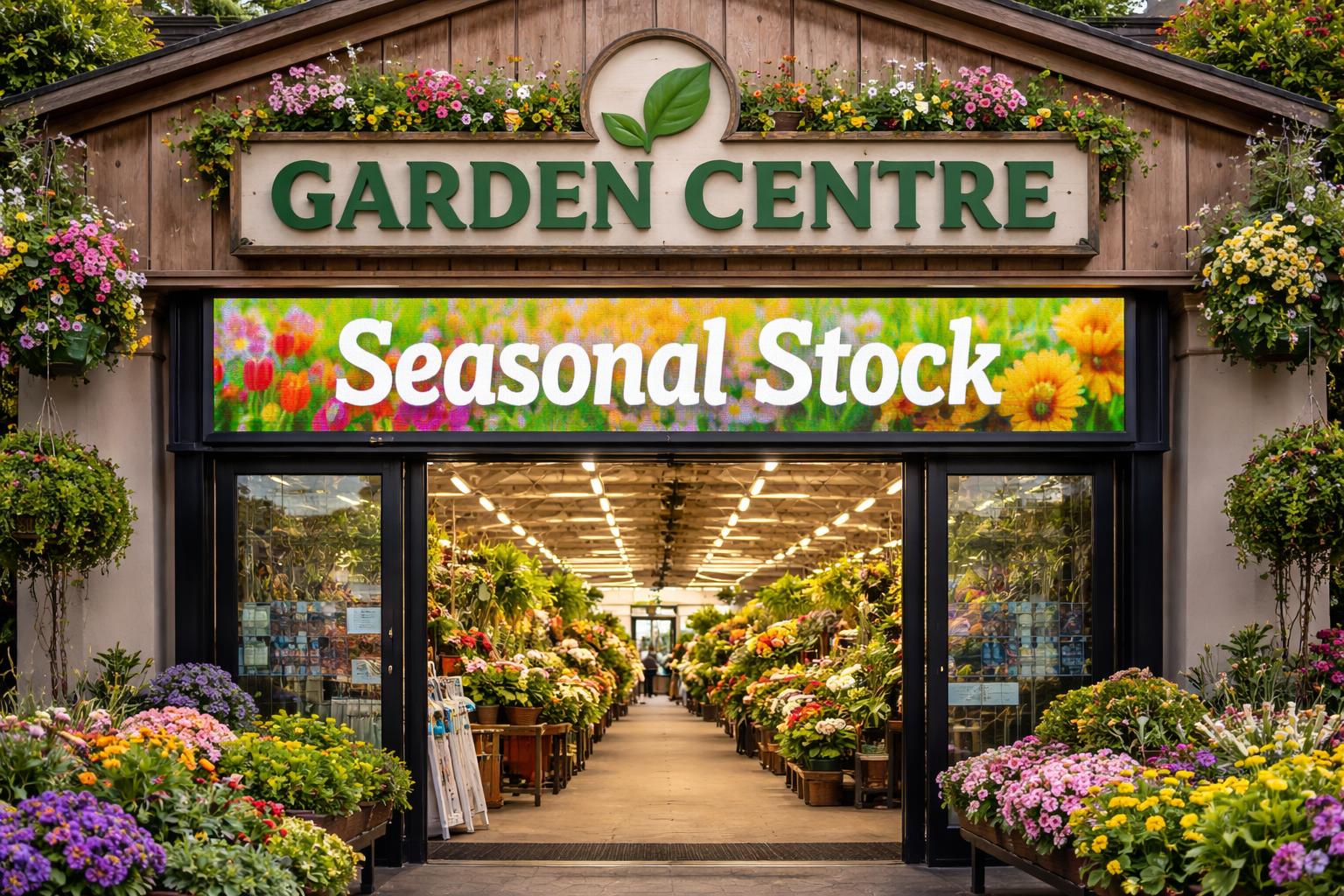
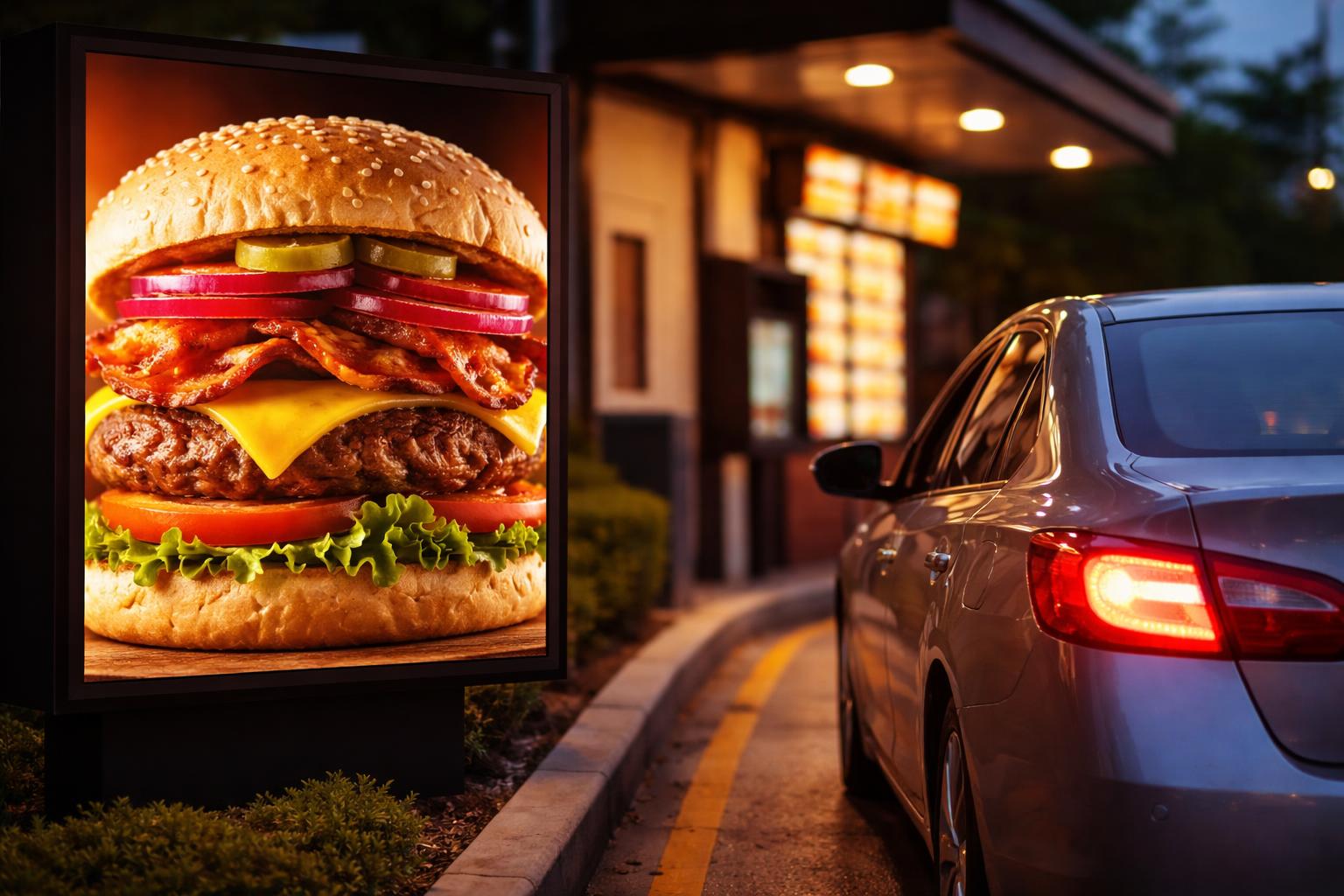
A pre-menu display might feature a hero meal, a limited-time offer, a new product, a family bundle, a premium upgrade or a simple “add a drink and chips” message.
Think of this screen as the digital equivalent of a well-positioned promotional display before a supermarket checkout: it introduces a choice before the customer reaches the moment where they must make a final decision.
This also gives new products more room to breathe. Trying to introduce a completely unfamiliar product inside an already dense menu layout can make both the new item and the core menu harder to process. Giving the launch its own pre-menu display allows the creative to focus on appetite appeal, the product name and one clear reason to try it.
Blink Digital can help businesses plan this separation between promotional and transactional content so a drive-through is not forced to make one screen perform every marketing task.
The ordering point
This is where clarity becomes more important than spectacle.
The customer has reached the point where they need to understand available products, combinations, options and prices. Promotional content still matters, but it should not interfere with ordering.
Blink Digital already has a separate article dedicated to menu-board readability, which is why the focus here is different: the ordering screen should function as part of the wider lane rather than carrying the entire promotional burden itself. By the time customers reach it, preceding displays should already have introduced the campaign priorities.
This lets the ordering point concentrate on the information needed to complete the transaction.
Price accuracy is particularly important. The Australian Competition and Consumer Commission states that businesses must communicate clear and accurate prices before consumers order or purchase, must not create a misleading impression about prices, and must properly communicate applicable fees or surcharges.
Digital signage does not remove that responsibility. In fact, because digital prices can be changed quickly, it makes disciplined content control even more important.
A useful operating rule is simple: never let the digital menu board become disconnected from the price customers are actually being charged.
Where possible, menu updates should follow an agreed approval process. Someone should be responsible for checking product name, price, campaign dates and store applicability before content is published.
Food information needs the same care. Food Standards Australia New Zealand confirms that food-service businesses have obligations around providing allergen information for restaurant food and provides dedicated guidance and training resources for the sector. Digital menu boards can support customer communication, but they should sit within the business’s broader food-safety and allergen-information procedures rather than becoming the sole source of that information.
The waiting and queue zone
Once the order has been taken, another communication opportunity appears.
At busy sites, cars may move through payment, holding or waiting areas before reaching collection. The customer has already made their purchase, so repeating the complete menu is unlikely to be the best use of this space.
Instead, queue-focused digital signage can help manage expectations and keep the experience feeling organised.
Messages might explain where to wait, tell mobile-order customers which lane to use, highlight a collection procedure, promote loyalty or app features, introduce an upcoming campaign or reinforce a brand message.
During unusually busy periods, the tone can also change from selling to reassurance.
A concise message such as “Thanks for your patience — your order is on the way” may be more useful than showing another burger promotion to somebody who has already ordered.
This is an important distinction. Digital signage should not constantly demand another purchase. Sometimes its job is simply to reduce uncertainty.
Where a fast food site regularly experiences overflow queues, multiple pick-up streams or changes to traffic flow, having a screen that can be updated without replacing physical graphics also provides greater operational flexibility.
The collection point
The final screen in the journey should answer a different question again: what do you want customers to remember as they leave?
Collection-window signage may support order checking, loyalty prompts, future offers, feedback messaging or a simple brand sign-off.
This can also be a useful place to promote a future purchase rather than trying to increase the transaction that has already been completed.
For example, a breakfast customer might see an afternoon drink offer. A dinner customer might see tomorrow morning’s coffee promotion. A family collecting an evening order might see an upcoming weekend special.
The collection point therefore closes the loop while potentially giving the next visit a starting point.
Taken together, these six zones create a simple principle:
Roadside signage attracts. Entrance signage directs. Pre-menu signage influences. Ordering signage clarifies. Queue signage reassures. Collection signage brings the experience to a close and supports the next visit.
When Blink Digital helps businesses plan fast food digital signage, this customer-journey approach can help determine which screens are genuinely useful instead of simply adding more displays because space happens to be available.
Build a content system that changes with the way your fast food business trades
Installing digital signage is only the first step.
Its long-term value comes from being able to show content that reflects what the business is actually selling at a particular moment.
A drive-through that shows exactly the same creative from opening until closing is using only a fraction of what digital signage can offer.
Dayparting should begin with customer relevance.
Breakfast, lunch, afternoon, dinner and late-night customers often arrive with different needs. That makes fast food an especially natural environment for scheduled content.
A breakfast period might prioritise coffee, breakfast wraps, quick meal bundles and commuting convenience.
At lunch, the emphasis may move to core meals, value combinations or products that can be ordered quickly during a limited break.
Mid-afternoon could shift towards cold drinks, coffee, snacks or smaller purchases.
Dinner may give more space to larger meals, bundles or family offers.
Late at night, a simplified set of high-demand products may be more useful than continuing to promote the morning campaign.
The technology required does not have to be complicated. Blink Digital’s CMS content explains that cloud-based signage management can support scheduled campaigns, playlists, remote updates and management across multiple locations.
The important part is planning the timetable before content production begins.
Instead of producing “a menu”, produce a content plan that asks what should appear at 7 am, noon, 3 pm, 6 pm and late evening — and whether those messages belong at the roadside, pre-menu screen, ordering point or collection window.
Limited-time offers need a defined beginning and end.
Digital signage is particularly well suited to short campaigns because there is no requirement to print and physically replace every promotion each time the offer changes.
That does not mean campaigns should be uploaded informally.
A limited-time offer should have confirmed start and finish dates, applicable sites, approved pricing and replacement content ready for the moment it expires.
Nothing makes a digital system feel poorly managed faster than yesterday’s “last chance” campaign still appearing three days later.
Scheduling can reduce that risk.
At Blink Digital, we can help businesses think about content management as part of the signage project rather than treating it as a problem to solve after installation.
Sold-out products should disappear quickly.
Product availability is one area where the difference between printed and digital signage becomes immediately practical.
When a promoted product runs out, continuing to display it can create unnecessary conversations at the ordering point.
With the right content workflow, a location can remove the item, replace the promotion or insert an alternative.
For a single takeaway restaurant, that might involve a manager making a straightforward update.
For a franchise network, it may require more structure. Head office might control national campaigns while individual stores receive permission to disable specific products based on local availability.
The most appropriate model depends on the business.
What matters is deciding who is authorised to make what change before an urgent update is needed.
Upselling works best when it matches the stage of the journey.
Not every screen should display “add chips”, “make it large” and “add dessert”.
Those prompts are most useful near the decision and ordering stages.
Roadside upselling is usually too early; collection-window upselling is usually too late.
A pre-menu screen, on the other hand, can introduce an upgrade before the customer begins ordering. The menu screen can then reinforce that option where relevant.
This sequencing is more coherent than showing identical upsell creative everywhere.
It also gives operators a way to prioritise particular products without cluttering every menu category.
New product launches deserve their own journey.
Launching a new item is a good example of why multiple digital touchpoints can be more powerful than one overloaded board.
At the roadside, the campaign may simply show the product, name and launch message.
At the driveway entrance, it can add the key offer.
At the pre-menu display, it can explain the meal combination.
At the menu board, it becomes an ordering option.
At collection, a short reminder might invite customers to try another version on their next visit.
The campaign remains consistent while changing its role as the customer progresses.
That is the difference between a signage network and a group of screens.
Weather-related promotions should be useful, not gimmicky.
Fast food and takeaway demand can change with conditions, and digital signage allows operators to respond far more quickly than printed signage.
On a hot Brisbane afternoon, a business might decide to prioritise iced drinks, cold desserts or lighter offers. During wet weather, a café drive-through might put more emphasis on hot drinks or convenient stay-in-the-car ordering.
This does not necessarily require automated weather feeds. For many businesses, a simpler approach is sufficient: prepare approved weather-specific creative in advance and let authorised staff or the marketing team activate it when appropriate.
More advanced systems may support data-triggered content, but operators should confirm the capabilities of their chosen CMS and integrations rather than assuming every signage platform provides the same functionality.
Blink Digital can help businesses work out the level of control that makes sense for their operation instead of adding complexity for its own sake.
Queue messaging is an operational tool as much as a marketing one.
There are times when a fast food customer does not need another promotional message.
When a lane is moving slowly, the most valuable communication may be reassurance, instructions or expectation management.
Digital screens can help communicate temporary conditions such as:
“Please have your order number ready.”
“Mobile orders: follow signs to Collection Bay 2.”
“Drive-through open — dining room closed.”
“Please proceed to the waiting bay.”
“Thanks for your patience during our busy period.”
These are not glamorous marketing messages, but they can make a site feel more controlled and easier to navigate.
Content should also have a fallback state.
Every screen should have an answer to the question: what should appear when there is no active campaign?
A default brand message, core product sequence, opening-hours message or evergreen promotion is better than a blank display or an expired offer.
This is particularly important when campaigns are heavily scheduled. Removing one promotion should automatically reveal appropriate fallback content rather than leaving an empty playlist.
That operational discipline is part of what separates effective digital signage from an expensive screen playing whatever artwork somebody last uploaded.
Choose digital signage hardware for the real drive-through environment
Content strategy matters, but it cannot compensate for a screen that customers cannot read.
Drive-through digital signage operates in a demanding environment. Displays may be exposed to strong daylight, rain, heat, dust, vehicle exhaust, changing viewing angles and long operating hours. They may also be installed near traffic lanes where access for maintenance is more complicated than walking up to a screen inside a restaurant.
That means hardware selection should start with the site rather than with a product catalogue.
Blink Digital’s existing Brisbane guidance stresses that outdoor displays need to be selected around actual viewing distance, daylight conditions, placement, weather exposure, pixel pitch and service access. Its site-survey guidance similarly recommends confirming sightlines, mounting conditions, power and data, installation logistics, maintenance access and required approvals before committing to a display.
Brightness should match the environment.
A screen that looks excellent inside a showroom may struggle when installed outdoors against Queensland daylight.
For vehicle-facing digital signage, the question is not merely whether the screen lights up brightly enough. The content has to maintain sufficient contrast to remain legible from the driver’s real viewing position.
At the same time, nighttime operation needs consideration. An unnecessarily intense screen after dark can become uncomfortable for customers and inappropriate for the surrounding environment.
This is one reason site-specific screen selection matters.
At Blink Digital, we can help assess where the screen will face, when direct sun reaches it, how far away customers will be and what type of content they need to understand.
Pixel pitch should follow viewing distance.
A drive-through can contain very different viewing distances within a small physical area.
A roadside display may primarily be seen from much farther away. A menu screen may be viewed from only a few metres. A collection-window display could be extremely close to the driver.
Those three screens do not necessarily require the same specification.
Blink Digital’s outdoor signage guidance explains that finer pixel pitches support closer viewing while larger pitches can be suitable where audiences view the screen from greater distances.
Buying finer resolution everywhere can therefore add cost without automatically adding value. Conversely, installing a coarse display at a close ordering point can make text and product imagery less refined than required.
The specification should follow the job.
Outdoor protection matters beyond the front of the display.
The screen face is only one component of the installation.
Power supplies, controllers, media players, data connections, mounting structures, cable routes and service access all need to suit the operating environment.
The same is true of physical placement. A screen positioned where vehicles are likely to strike it, where landscaping blocks the view six months later or where technicians cannot safely service it has a planning problem regardless of display quality.
That is why Blink Digital’s broader service model is relevant. The company describes its work as covering digital signage production, installation and management rather than simply supplying a screen in a box. Its services page also states that Blink Digital maintains an eight-year supply of parts for each LED sign, reflecting an emphasis on longer-term serviceability as well as initial installation.
Power and data need to be planned early.
A digital sign requires more than a physical mounting point.
Power availability, isolation, cable pathways, network connectivity and control equipment can affect where a screen can practically be installed and how easily content can be managed later.
For multi-screen drive-through environments, planning these services together can be much cleaner than installing one display and discovering later that the next location requires major trenching, cabling or electrical changes.
That is another reason Blink Digital recommends proper site assessment before signage selection.
Think about maintenance before the lane opens.
Ask how a technician would reach each display.
Could the work be completed without shutting the entire drive-through? Is there enough access behind or around the display? Are components serviceable from the front or rear? Is working at height involved? Would traffic management be necessary?
These questions may not be as exciting as screen size or content design, but they can affect the lifetime practicality of the installation.
A digital signage project should therefore be judged not only by how it looks on opening day but by how straightforward it is to operate and maintain for years afterwards.
Approvals cannot be left until the screen is ready to install.
For Brisbane businesses, whether advertising-device approval is required depends on factors including device type, property zoning and the relevant advertising environment. Brisbane City Council specifically requires electronic and illuminated signs to meet applicable requirements and asks applicants to determine their zone, environment classification and device type when checking approval obligations. Where the applicant is not the landowner, Council may also require the landowner’s consent.
Sites associated with state-controlled roads can create additional considerations. Queensland TMR maintains separate processes and technical guidance for roadside advertising and states that departmental approval may be required for signs and promotional objects in state-controlled road corridors.
For a fast food operator, the practical lesson is straightforward: treat approvals as part of project planning, not as paperwork to investigate after hardware has been ordered.
Keep every location consistent without making every location identical
The signage challenge becomes more complex when one restaurant becomes five, twenty or fifty.
A single-site operator can often manage content informally. The owner knows the menu, knows what has sold out and can decide what promotion should run tomorrow.
A multi-site business needs governance.
Who controls the national campaign?
Who changes prices?
Can a franchisee remove an unavailable item?
Can one location run a local community promotion?
What happens when breakfast ends at slightly different times?
Who checks that an old campaign has disappeared?
Which screens receive national branding and which receive location-specific content?
These decisions matter because centralisation and local flexibility are not opposites. A good system can provide both.
Blink Digital’s multi-site rollout content describes coordinated signage rollouts as a way for growing businesses to maintain a consistent brand across locations while managing the practical complexity created by openings, rebrands, campaigns and menu changes. Its CMS guidance also describes centrally managed scheduling and multi-location content updates.
For a franchise or fast food group, one sensible structure is to divide content into three levels.
Core brand content is controlled centrally. Brand identity, major launches, national campaigns and mandatory messaging should look and feel consistent wherever customers encounter the business.
Location-specific operational content can vary. Trading hours, stock availability, directions, local pricing where applicable and temporary service information may need local control.
Pre-approved flexible campaigns sit between the two. Head office can create a library of approved promotions and allow locations to activate whichever options are relevant.
That model gives stores useful flexibility without turning every screen into a completely independent marketing channel.
It also reduces the risk of brand drift.
The same principle applies to layouts. Consistency does not necessarily mean every store needs exactly the same number and size of screens.
One drive-through may have a long entry lane with room for roadside and pre-menu displays. Another may sit on a compact urban site where customers reach the ordering point almost immediately. One location might face harsh afternoon sun; another may be mostly shaded. A regional store may have a large freestanding pylon while an inner-suburban site relies on façade signage.
Forcing identical hardware onto different properties can be less effective than keeping the content system and brand rules consistent while adapting the physical solution to each site.
That is where a signage partner becomes valuable.
Blink Digital can help multi-location businesses identify what should be standardised and what should be site-specific. The company’s existing service mix includes digital signage design, installation and management, while its fast food industry page specifically addresses both individual locations and franchise networks.
A structured rollout can also make measurement more useful.
Rather than vaguely asking whether “digital signage works”, operators can test specific questions.
Did the lunch hero promotion increase orders of the featured meal?
Does changing the pre-menu product affect product mix?
Does removing unavailable products reduce order-point corrections?
Does the collection-window loyalty message increase programme participation?
Which creative receives the best response at different dayparts?
Not every business will have the systems required to attribute every sale to an individual screen, and signage should not be credited for changes that cannot genuinely be isolated. But digital signage does make controlled campaign testing easier because operators can deliberately alter messages by location, screen or period without repeatedly producing physical signs.
Keep the testing disciplined. Change one major variable at a time where possible, document campaign dates and compare equivalent trading periods rather than drawing conclusions from one unusually busy Saturday.
Most importantly, make sure the signage data serves an operational question.
A drive-through does not need more dashboards for their own sake. It needs clearer answers about what customers respond to and how screens can make marketing and operations easier.
Plan your fast food and drive-through digital signage with Blink Digital
The most effective digital signage for a drive-through is not one menu board multiplied across the property.
It is a planned sequence.
A roadside sign gives passing traffic a reason to turn in.
An entrance display confirms the decision and helps customers find the correct lane.
A pre-menu screen introduces products before the customer has committed to an order.
The ordering display presents clear choices and accurate pricing.
Queue signage gives customers relevant information while they wait.
A collection-point display completes the experience and can introduce a reason to return.
Behind those screens sits the less visible part of the system: content scheduling, campaign governance, remote updates, power, connectivity, approvals, installation, maintenance and staff responsibility.
Get those elements working together and digital signage becomes much more than an electronic replacement for printed posters.
It becomes part of how the drive-through operates.
For a single-site takeaway, that might mean being able to change from breakfast to lunch automatically and remove an unavailable product quickly.
For a growing hospitality group, it might mean maintaining the same campaign standards across several stores while still allowing location managers to communicate local information.
For a franchise network, it could mean creating a structured digital environment in which national promotions, local availability, different dayparts and multiple screens are managed as one system.
Blink Digital is well positioned to help with that process. The company specialises in the production, installation and management of digital signage and has a dedicated offering for franchises, fast food chains, drive-through restaurants, food courts and takeaway stores. Its website also provides related expertise covering outdoor LED signage, content management, site assessments, multi-site rollouts, menu signage and long-term support.
At Blink Digital, we can help you plan the solution from the customer journey backwards.
That means considering what drivers need to see before recommending where screens should go. It means selecting outdoor digital signage around real viewing conditions rather than showroom specifications. It means thinking about content updates and dayparting before your first campaign goes live. And it means considering installation, access, approvals and ongoing support as part of the project rather than treating them as separate problems.
For Brisbane businesses in particular, local conditions matter. Outdoor displays may need to perform in strong Queensland daylight and changing weather, while advertising-device requirements vary according to the site and type of sign. Blink Digital’s Brendale-based operation provides a local starting point for businesses researching digital signage Brisbane solutions while also servicing customers more broadly across Australia.
Before choosing a drive-through display, it is worth asking a few simple questions.
Where does the customer first see us?
Where do they decide what to buy?
Where do they need information rather than advertising?
Which messages change every day?
Which messages change by location?
How quickly must we respond when a product sells out?
Who controls pricing and promotions?
Which displays need to work in direct daylight?
How will each unit be accessed for maintenance?
And, perhaps most importantly, are we buying separate screens — or designing one connected customer communication system?
The second approach is where digital signage becomes substantially more useful.
Blink Digital can help you move from that first site conversation through screen selection, installation, content management and ongoing support, creating a signage solution suited to the way your fast food or drive-through business actually trades.
Ready to explore digital signage for your drive-through, fast food restaurant, takeaway store or franchise network? Contact Blink Digital today for more information, practical advice and assistance planning a solution for your site. Whether you are upgrading a single ordering lane, introducing outdoor digital signage for the first time or planning a coordinated rollout across multiple locations, our team can help you work through the hardware, placement, content and management requirements so every screen has a clear purpose from roadside promotion to the collection point.