In Australia’s competitive fitness industry, attracting a new member is only the beginning. Gyms, fitness studios, aquatic centres and health clubs must also keep members informed, motivated and connected throughout their entire membership journey.
This is where well-planned digital signage can make a significant difference.
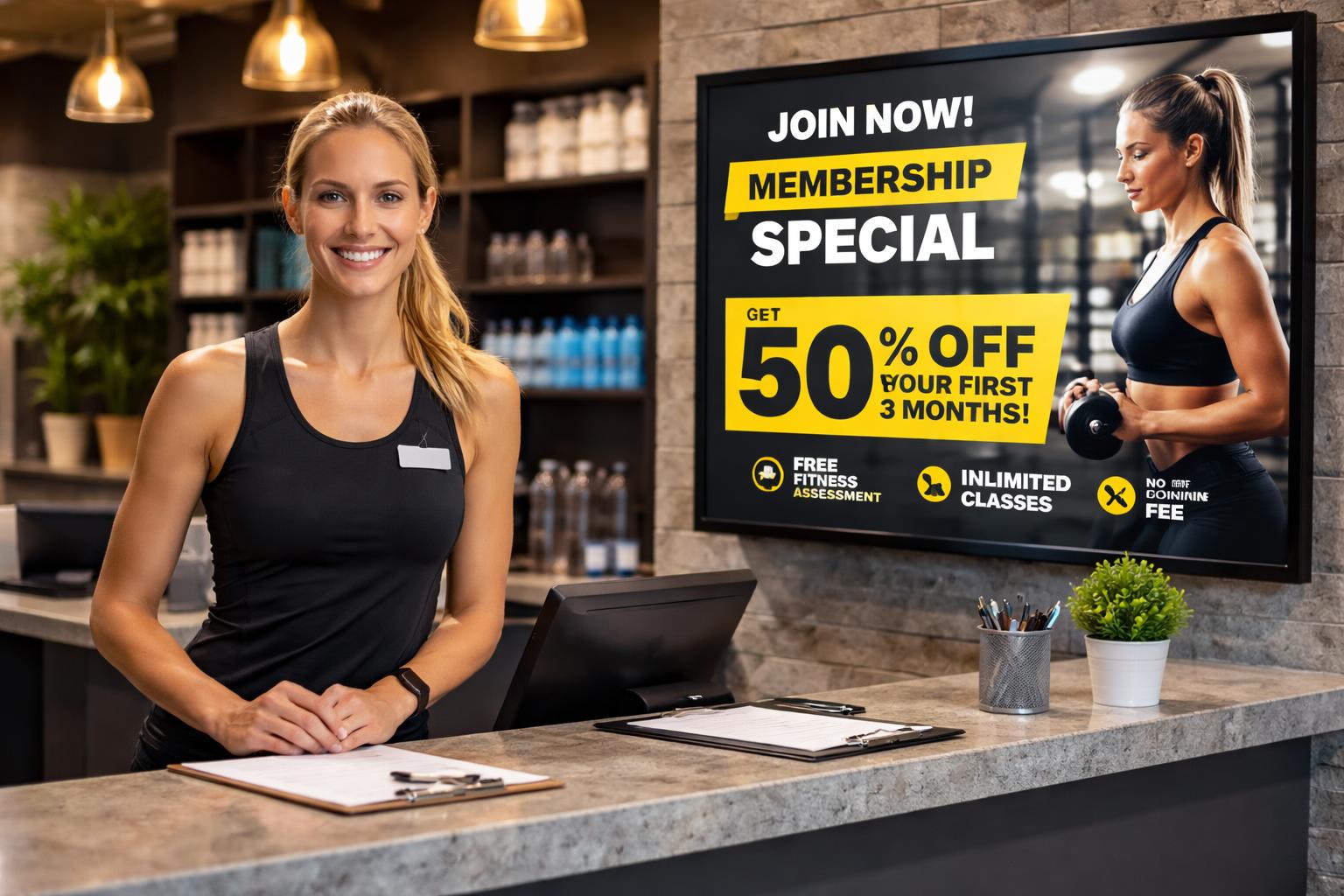
Rather than treating screens as electronic decorations, fitness businesses can use them as active communication and marketing tools. A roadside display can attract the attention of people travelling past the facility. A reception screen can welcome visitors and promote memberships. Displays around the gym floor can provide exercise demonstrations, safety reminders, personal training offers and live class information.
For Brisbane fitness businesses, professionally installed digital signage Brisbane solutions can also help messages remain visible in demanding conditions, including bright outdoor environments, heavily lit interiors and busy 24-hour facilities.
Blink Digital helps gyms and fitness centres plan, supply and install digital display solutions that support real operational and commercial goals. Whether the priority is increasing membership enquiries, improving communication, promoting additional services or creating a more engaging facility, Blink Digital can recommend a suitable combination of indoor displays, outdoor LED signs and content-management technology.
This guide explains how fitness businesses can use digital screens across the entire member journey, from the first roadside impression to ongoing membership retention.
Why Digital Signage Matters for Gyms and Fitness Centres
Traditional posters and printed timetables still have a place, but they have significant limitations. They can become outdated quickly, require staff time to replace and cannot easily adapt to changing conditions.
A printed class timetable may become incorrect when an instructor calls in sick. A paper promotion may remain on the wall after the offer has expired. A handwritten notice at reception can be difficult to see and may not reflect the professional image a fitness brand wants to present.
Digital signage allows businesses to update information more efficiently. Content can be scheduled in advance, changed when circumstances change and adapted for different areas of the facility.
For example, a fitness centre could use its displays to:
- Advertise a limited-time membership offer outside
- Welcome visitors at reception
- Show current class times and studio locations
- Promote personal training packages
- Demonstrate correct exercise techniques
- Share health, hydration and safety reminders
- Advertise café, merchandise or supplement offers
- Celebrate member achievements
- Display emergency or after-hours information
- Coordinate campaigns across multiple locations
The technology is most effective when every screen has a defined purpose. Blink Digital can help fitness businesses determine where screens should be installed, what type of display is appropriate and how each screen can contribute to a broader communication strategy.
Roadside LED Signs for Membership Promotions
The membership journey can begin before a potential customer enters the gym. For facilities located near busy roads, shopping precincts or commercial areas, outdoor signage can turn passing traffic into awareness and enquiries.
A static sign usually presents one fixed message. Outdoor fitness centre LED signs, on the other hand, allow the gym to rotate several carefully selected messages throughout the day.
A roadside display might promote:
- A no-joining-fee campaign
- A seven-day trial
- A new group fitness program
- Extended or 24-hour opening
- School holiday aquatic programs
- Personal training introductions
- A seasonal fitness challenge
- A new studio or facility upgrade
Messages can also be adjusted according to the time of day. Morning traffic might see information about early classes, while afternoon commuters might be shown evening sessions or membership offers.
The content should remain simple. Drivers have only a limited amount of time to understand the message, so roadside displays should generally use a strong headline, minimal supporting text and a clear action.
For example:
JOIN THIS MONTH
No joining fee
Enquire inside
Or:
NEW 6 AM CLASSES
Start your day stronger
Blink Digital can assess viewing distance, traffic direction, display size, brightness, pixel pitch and mounting position when recommending LED signs Brisbane businesses can use effectively. These factors influence whether the content will be readable under real-world conditions.
A large screen is not automatically the best screen. The display must suit the site, the intended viewing distance and the type of message being communicated.
Reception Digital Signage: The Welcome and Sales Zone
Reception is one of the most valuable communication areas in a fitness facility. Every member, visitor and prospective customer is likely to pass through it.
A reception display can help create an organised and professional first impression while reducing the amount of information front-desk staff must explain repeatedly.
Useful reception content may include:
- Welcome messages
- Today’s class schedule
- Opening hours
- Studio changes
- Trainer introductions
- Membership options
- Upcoming events
- Facility rules
- Referral incentives
- Personal training packages
- Café or retail promotions
The content should address both existing members and people considering joining.
A visitor may be interested in a trial membership, while an existing member may need to know that a class has moved to another studio. A well-managed reception screen can communicate both messages in a rotating playlist without creating a cluttered wall of posters.
Blink Digital can help businesses develop screen layouts that maintain a clear hierarchy. Urgent operational updates should be easy to distinguish from general marketing messages.
For example, a cancelled class notice should not compete with an animated membership promotion. The urgent notice may need to remain on screen longer, appear more frequently or use a clearly recognisable layout.
Reception screens can also support staff conversations. When a visitor asks about personal training, the staff member can refer to current trainer profiles or packages displayed nearby. This turns the screen into a visual sales aid rather than a passive background feature.
Live Class Timetables and Schedule Updates
Class timetables are among the most practical uses of gym digital signage.
Printed schedules become outdated whenever there is an instructor change, cancellation, room change or special event. Digital displays allow updates to be made without redesigning, printing and distributing new posters.
A class timetable screen could show:
- Current time
- The next scheduled class
- Instructor name
- Studio location
- Remaining availability
- Session duration
- Equipment requirements
- Substitute instructor details
- Late changes or cancellations
Content can also be organised according to where the screen is installed.
At reception, the display may show the complete daily schedule. Outside a studio, it may show only the next few sessions taking place in that room. Near the entrance, it may highlight the classes most relevant to visitors or trial members.
Clear design is essential. Timetables need readable text, logical spacing and sufficient contrast. Trying to place an entire weekly schedule onto one screen can make the information too small to read.
Blink Digital can recommend screen formats and content layouts based on expected viewing distance. In some facilities, a portrait display may suit a timetable better than a conventional landscape screen. In others, a larger landscape screen may be needed to show several studios or program categories.
Digital Displays in Cardio and Strength-Training Areas
Members often spend extended periods in cardio and strength-training zones. Displays in these areas can contribute to motivation, education and additional service promotion.
Appropriate content may include:
- Short exercise demonstrations
- Technique reminders
- Motivational messages
- Class countdowns
- Fitness challenge updates
- Personal trainer profiles
- Hydration reminders
- Equipment etiquette
- Member achievements
- Upcoming workshops
The content should suit the environment. A member running on a treadmill is unlikely to read several paragraphs of text. Short, visual messages will generally be more effective.
A screen might show a brief demonstration of proper rowing technique, followed by a reminder about an upcoming strength workshop and then a promotion for a personal training assessment.
The aim is not to overload members with advertising. Too many promotional messages can become repetitive and may eventually be ignored. A balanced playlist combines helpful information, motivation, entertainment and carefully timed offers.
Blink Digital can help gym operators create separate content zones. This allows cardio-area displays to show different material from screens in a strength-training space, studio corridor or reception area.
Exercise Demonstrations and Educational Content
Many members are uncertain about how to use equipment correctly, particularly when they are new to a gym.
Although digital content should not replace personalised instruction from qualified staff, it can reinforce safe habits and encourage members to seek assistance when needed.
Exercise demonstration content might cover:
- Basic equipment setup
- Correct posture
- Common technique mistakes
- Warm-up movements
- Cool-down stretches
- Safe lifting principles
- Cleaning equipment after use
- When to ask a trainer for help
Videos should be short and visually clear. Members may only see part of a content loop, so each demonstration should make sense without requiring them to watch a long introduction.
The screen location is also important. An instructional display should be positioned where members can see it without obstructing walkways or creating a distraction around moving equipment.
Blink Digital can assess mounting heights, viewing angles and surrounding lighting to help make educational content visible while maintaining a safe training environment.
Safety and Equipment-Use Instructions
Digital displays can help reinforce facility policies and safety procedures more consistently than occasional staff announcements.
Messages could remind members to:
- Return weights after use
- Use safety clips where required
- Wipe down equipment
- Keep walkways clear
- Store personal belongings securely
- Follow pool or sauna rules
- Supervise children in designated areas
- Report damaged equipment
- Ask staff before using unfamiliar machines
In an aquatic centre, digital signage may also communicate pool closures, lane availability, weather-related changes or program information.
For a 24-hour facility, displays can explain what members should do if they need assistance outside staffed hours. This may include emergency procedures, contact instructions or directions to safety equipment.
Safety content must remain direct and easy to understand. It should not be hidden inside a long promotional playlist. Important instructions may need dedicated screen time or a fixed area within a multi-zone layout.
Blink Digital can help fitness businesses design a content structure that separates operational information from advertising while keeping both types of messages visible.
Promoting Personal Training and Specialist Services
Personal training, group coaching and specialist programs can provide valuable additional revenue for a fitness centre. However, members may not understand what is available or how the service could help them.
Digital displays can introduce trainers and programs in a more engaging way than a printed staff profile.
A trainer promotion might include:
- Trainer name and image
- Areas of expertise
- Available session types
- Ideal member profile
- A short client result
- An introductory offer
- A booking instruction
For example:
MEET ALEX
Strength and beginner fitness coaching
Book a complimentary introduction at reception
Displays can also promote services such as:
- Small-group training
- Physiotherapy
- Exercise physiology
- Nutrition consultations
- Swimming lessons
- Reformer Pilates
- Sports performance coaching
- Corporate wellness programs
The timing of these promotions matters. Personal training messages may perform well near strength equipment or during quieter periods when members have more time to look at the screen.
Blink Digital can help create a flexible signage network that allows different services to be promoted in the locations where they are most relevant.
Café, Supplement and Merchandise Promotions
Many fitness facilities operate a café, smoothie bar or retail counter. Others sell supplements, branded clothing, towels, drink bottles and training accessories.
Digital signage can place these offers in front of members at the moment they are most relevant.
After a workout, a member may be more receptive to a promotion for a recovery drink. Before a class, they may notice an offer for a towel, water bottle or training accessory.
Examples of promotional content include:
- Daily smoothie specials
- Protein drink bundles
- New apparel arrivals
- Member-only discounts
- Pre-order collection information
- Loyalty rewards
- Seasonal merchandise
- Supplement education
- Café operating hours
The content should be coordinated with stock availability. Promoting a sold-out product creates frustration and increases work for staff.
A content-management system can allow staff to remove or replace an offer quickly. Blink Digital can recommend systems that make routine updates manageable without requiring advanced technical skills.
Member Achievements, Challenges and Community Building
A fitness centre is often more than a place where people exercise. For many members, it provides routine, social connection and a sense of progress.
Digital displays can reinforce that community by recognising achievements and encouraging participation.
Possible content includes:
- Member of the month
- Fitness challenge leaderboards
- Attendance milestones
- Personal bests
- Team competition results
- Charity fundraising progress
- Community event photos
- Staff achievements
- Member testimonials
Before publishing a member’s name, image or personal result, the business should obtain appropriate permission. Not every member will want their progress displayed publicly.
Recognition should also remain inclusive. Celebrating consistency, confidence, participation and personal improvement can create a more welcoming environment than focusing only on weight loss or elite athletic performance.
Blink Digital can help gyms create reusable templates for member stories, milestone announcements and leaderboards. Staff can then update the details while maintaining consistent branding.
After-Hours Information for 24/7 Gyms
A 24-hour gym must communicate effectively even when reception is not staffed.
Digital displays can provide useful information during these periods, including:
- Emergency contact instructions
- Access procedures
- Staffed hours
- Upcoming closures
- Facility rules
- Security reminders
- Maintenance notices
- Class booking instructions
- Expected staff return times
- Directions to amenities
After-hours content should be simple and practical. A member who encounters a problem should not need to wait through a long promotional playlist to find relevant instructions.
One option is to use a permanent information zone alongside rotating content. Another is to schedule operational messages more frequently outside staffed hours.
Blink Digital can help configure content schedules that change automatically according to the facility’s operating timetable.
Planning Content for Quiet Periods, Peak Hours and Seasonal Campaigns
One of the greatest advantages of digital signage is the ability to present different content at different times.
A single playlist running unchanged all day may not address the needs of members using the gym at different times.
Early Morning
Early-morning content could promote:
- Coffee or breakfast offers
- Express classes
- Quick workout plans
- Shower and change-room reminders
- Motivational messages
- Upcoming lunchtime sessions
Midday and Quiet Periods
When the facility is quieter, members may have more time to absorb detailed content.
Suitable messages include:
- Trainer introductions
- Exercise education
- New service explanations
- Member success stories
- Workshop information
- Longer promotional videos
Evening Peak
During busy evening periods, communication should be immediate.
Displays could show:
- Studio changes
- Class availability
- Busy-area reminders
- Equipment etiquette
- Short personal training offers
- Next-session countdowns
Seasonal Campaigns
Fitness businesses often run campaigns around New Year, winter, summer preparation, school holidays or local sporting seasons.
Digital signage allows the facility to update the entire campaign without replacing numerous printed materials. Blink Digital can help establish templates that preserve brand consistency while allowing headlines, dates and offers to change.
Creating a Digital Signage Content Calendar
A content calendar helps prevent screens from becoming outdated or repetitive.
Without a clear plan, a gym may continue displaying an expired offer or the same motivational message for months. Members quickly learn to ignore content that never changes.
A practical calendar can identify:
- What content will run
- Which screens will show it
- When it will begin
- When it will end
- Who is responsible for updating it
- What action the audience should take
Content can be divided into several categories:
Operational content: Timetables, closures, class changes and opening hours.
Educational content: Exercise tips, equipment demonstrations and safety reminders.
Community content: Member achievements, challenges and local events.
Commercial content: Memberships, personal training, retail and café offers.
A balanced playlist should include all relevant categories rather than allowing sales messages to dominate every screen.
Blink Digital can help clients structure content zones and playlists so that each display has a clear function. This makes ongoing management simpler and helps the signage continue delivering value after installation.
Accessibility and Readability in Fitness Centre Digital Signage
Digital content should be designed for the people who will actually view it.
Small text, low contrast, rapidly moving graphics and overly complicated layouts can make information difficult to understand. This is particularly important in fitness facilities, where viewers may be moving, exercising or looking at the screen from a distance.
Good content design generally includes:
- Clear, readable typefaces
- Strong contrast between text and background
- Short sentences
- Simple layouts
- Sufficient display time
- Captions for important video content
- Consistent icons and terminology
- Limited use of flashing or distracting effects
Screen height and angle can also influence accessibility. A display that is mounted too high, affected by glare or hidden behind equipment may not communicate effectively.
Blink Digital considers viewing conditions as part of the signage planning process. By assessing the location before installation, the team can recommend a display size, position and brightness level suited to the environment.
Managing Digital Signage Across Multiple Gym Locations
For gym chains, franchises and organisations with several facilities, centralised content management can improve both efficiency and brand consistency.
A head office may want to control national or statewide campaigns, while individual managers need the flexibility to update local class information.
A suitable system can allow:
- Network-wide promotions
- Location-specific timetables
- Emergency updates
- Local event announcements
- Scheduled campaign changes
- Consistent brand templates
- Different permissions for different users
For example, a franchise group could launch the same summer membership campaign across all locations while allowing each club to show its own instructors, class times and contact details.
Blink Digital can help businesses plan scalable digital signage Brisbane networks that can expand as new locations open. Starting with a well-structured system can be more efficient than trying to combine several unrelated screens and software platforms later.
How to Measure Whether Gym Digital Signage Is Working
Installing screens is not the end of the process. Gym operators should assess whether the content is producing the intended result.
The appropriate measure depends on the screen’s purpose.
A roadside display promoting memberships might be evaluated through:
- Enquiry numbers
- Trial registrations
- Website visits
- Promotional code usage
- Walk-in traffic
A reception screen promoting personal training might be measured through:
- Consultation bookings
- Package sales
- QR code scans
- Questions received by staff
Operational screens may be assessed differently. A class timetable display may be successful if it reduces repeated questions at reception or decreases confusion about studio changes.
Businesses can test different messages, layouts and calls to action. For example, a gym could compare a general “Personal Training Available” message with a more specific “Book a Complimentary 15-Minute Trainer Introduction”.
Blink Digital can help clients structure their content so that campaigns have clear objectives and can be updated based on results.
Choosing the Right Displays for a Gym Environment
Not every screen is suitable for every area.
A consumer television designed for occasional home use may not be appropriate for long operating hours, demanding commercial conditions or high-brightness environments.
When selecting displays, fitness businesses should consider:
- Daily operating hours
- Indoor or outdoor use
- Ambient lighting
- Viewing distance
- Screen orientation
- Heat and ventilation
- Dust and moisture exposure
- Required brightness
- Installation method
- Future maintenance access
- Content-management requirements
Outdoor LED displays need to be specified for local conditions and installed within a suitable weather-resistant structure. Indoor screens near windows may need higher brightness than displays in darker areas.
Blink Digital can conduct a site assessment and recommend the most suitable combination of LED signs, commercial displays, video walls and content-management technology.
Why Installation and Positioning Matter
Even high-quality displays will underperform if they are installed in the wrong position.
A successful installation considers:
- Whether the screen is visible from key approaches
- Whether glare will affect readability
- Whether equipment blocks the viewing area
- Whether the mounting height is appropriate
- Whether power and data connections are available
- Whether maintenance can be completed safely
- Whether the display creates any obstruction
- Whether the screen suits the expected audience flow
Outdoor LED signs Brisbane businesses install may also require consideration of council requirements, structural engineering, landlord approval and electrical work.
Blink Digital can help coordinate the signage process from initial planning through to installation and ongoing support. This reduces the risk of purchasing a display before confirming whether it suits the location.
Building a Scalable Signage Strategy
A gym does not necessarily need to install every screen at once.
A staged approach may begin with the areas that offer the greatest immediate value. For example, the business could start with an outdoor membership display and a reception screen, then add timetable displays and training-area screens later.
The important point is to plan for future expansion.
Questions to consider include:
- Can additional screens be added to the same system?
- Can the software manage several content zones?
- Can users have different permission levels?
- Will the network support another business location?
- Can content be updated remotely?
- Are replacement parts and technical support available?
- Can the display layout adapt as the facility changes?
Blink Digital can help develop a practical roadmap based on the business’s current priorities, available budget and longer-term plans.
Common Mistakes to Avoid
Gym digital signage is most effective when technology, placement and content are planned together.
Common mistakes include:
Installing Screens Without a Content Plan
A screen with no regular update process can quickly become an expensive version of a printed poster.
Using Too Much Text
Members may be moving past the display or exercising while viewing it. Messages need to be understood quickly.
Showing the Same Content Everywhere
A roadside audience, reception visitor and member using a treadmill have different needs.
Allowing Information to Expire
Old class times and finished promotions reduce trust in everything else shown on the screen.
Overloading Members With Advertising
Promotional content should be balanced with useful, educational and community-focused messages.
Choosing Equipment Based Only on Price
Display quality, operating hours, brightness, warranty, software and support should all be considered.
Blink Digital can help businesses avoid these problems by developing a solution around real site conditions and communication objectives.
Frequently Asked Questions About Gym Digital Signage
Can digital signage show live class timetable updates?
Yes. Depending on the selected system and available integrations, timetable information can be updated remotely or connected to other scheduling tools. Blink Digital can discuss the most practical approach for your facility.
Can different screens show different content?
Yes. A properly configured content-management system can create separate zones and playlists. Reception, studio and gym-floor screens do not need to show the same material.
Can content be changed for different times of day?
Yes. Content can be scheduled so that morning, midday, evening and after-hours audiences receive more relevant information.
Are outdoor LED signs suitable for gyms?
Outdoor LED signage can be highly effective for gyms with suitable roadside visibility. The correct display depends on viewing distance, site conditions, brightness, mounting requirements and local approvals.
Can a signage system support several fitness centres?
Yes. Blink Digital can recommend scalable systems that allow centralised campaign management alongside location-specific content.
Does Blink Digital help with installation?
Blink Digital provides end-to-end assistance, including consultation, signage recommendations, installation planning and ongoing support. The specific requirements will depend on the facility and the type of display selected.
Work With Blink Digital on Your Gym Signage Strategy
Effective digital signage should do more than fill an empty wall. It should help a fitness business attract attention, communicate clearly, improve the member experience and promote services at the right time.
From roadside membership campaigns and reception welcome screens to live timetables, safety messages and personal training promotions, every display can serve a defined purpose.
Blink Digital works with Australian businesses to create signage solutions suited to their locations, audiences and commercial objectives. The team can help with outdoor LED signs, indoor commercial displays, content-management systems, installation and ongoing support.
Whether you operate a boutique fitness studio, independent gym, aquatic centre, 24-hour club or multi-location fitness brand, Blink Digital can help you plan a system that works now and remains adaptable as your business grows.
Contact Blink Digital today for more information and assistance. The team can assess your facility, discuss your communication and membership goals, and recommend a digital signage solution designed around the way your members move through and interact with your space.