When Brisbane businesses start collecting quotes for an LED sign, it’s common to find big price variations even for what seem like similar-looking products. One supplier’s quote might be 50% higher than another’s – but that doesn’t always mean the more expensive one is “rip-off”. In fact, there are many hidden differences in LED sign specifications and services that can drastically affect cost and performance. Before you decide which company to hire, it’s vital to understand the key factors that drive price so you can compare quotes apples to apples.
Below we explain the major items that typically vary between quotes. We draw on industry guidelines and Blink Digital’s own experience installing and servicing screens around Brisbane. By the end, you’ll have a checklist of questions to ask every LED signage supplier. Armed with this knowledge, you’ll avoid paying extra for features you don’t need – or being caught out by omissions in a cheap quote.
1. Pixel Pitch (Resolution) – One of the Biggest Price Drivers
Pixel pitch is the distance (in millimetres) between the centres of two adjacent LED pixels on the display. A smaller pitch (for example, P4 or P6) means more LEDs per square metre, which yields higher resolution and sharper image quality, especially at close range. However, finer pixel pitch typically costs a lot more per square metre than coarser pitch. As one industry source notes, “pixel pitch is the primary cost driver, with finer pitches demanding higher prices”. For example, an outdoor LED wall with P3 (3mm) pitch can be two to three times more expensive per m² than a P10 screen.
In practice, choosing the right pitch depends on your viewing distance. A city storefront or indoor screen (viewed up close) may warrant P5–P6 or finer. By contrast, large roadside billboards often use P8–P10 since motorists view them from far away. In Brisbane, a rule of thumb is that P6–P8 is common for pedestrian or street-level signs, while P10 or coarser is used on fast roads (up to 50–100 metres away).
When comparing quotes, always check the pixel pitch being offered. If one supplier gives a quote for P10 and another for P6, the P6 display will have far higher resolution – and cost – even if their sizes look the same. Blink Digital’s consultants will recommend the smallest pixel pitch you need for your location, but no smaller (to avoid paying for unneeded resolution). We’ll match the pitch to your typical viewing distance and target audience so your message is crisp without over-spending.
Example question to ask: “What is the pixel pitch (mm) of your LED panels, and what viewing distance is it suited for?”
2. Brightness (Nits) and Colour Performance
Outdoor and high-visibility LED signs must produce very high brightness (measured in nits or candelas per m²) so their content remains readable in daylight. A sign that can only deliver 1,000 nits, for example, will look washed out in the Queensland sun. For Brisbane roadways and shopping precincts, professional installations often aim for 5,000–6,000 nits of peak brightness to ensure clear legibility at midday. Premium displays may go even higher, at the cost of more expensive LEDs and power supplies.
Be aware that quotes may assume different brightness levels. If one quote is cheap, it may be offering a lower-brightness panel (or a cheaper grade of LED) that won’t be as visible in sunlight. Conversely, a higher price might include premium diodes or multiple LED bins for extra lumen output and colour consistency. Differences in colour quality (chromaticity) and refresh rate can also affect both cost and on-screen appearance, although these are usually less obvious on a quote.
Regulations also limit brightness. Brisbane City Council’s technical standards require electronic displays to automatically dim at night and comply with AS/NZS 4282:2019 (the standard on obtrusive lighting). In practice, this means the hardware must support ambient-light sensors or timed dimming. When checking quotes, ask if the sign’s brightness can be adjusted automatically – it’s a legal requirement for high-impact roadside signs in Brisbane. A quote may include the dimming control unit or sensor, so verify that this is covered.
Example question to ask: “What is the peak brightness of the LED panels (in nits), and does the system include automatic dimming to meet local standards?”
3. Cabinet Construction and Weatherproofing
The LED panels themselves are housed in a cabinet or enclosure. The design and build of this cabinet have a big impact on price and durability:
- Material and Finish: Cabinets are usually extruded aluminium. Thicker walls and high-grade aluminium alloys increase cost but improve rigidity and heat dissipation. Any steel parts (frames or poles) should be galvanised to resist Brisbane’s humid, coastal environment.
- IP Rating (Ingress Protection): This is critical for outdoor signs. At minimum, the front of an outdoor panel should be IP65 (protected against strong jets of water and dust). Many suppliers quote “IP65” but actually mean front IP65, rear IP54, which is fine for wall-mounts but not for pole signs exposed on all sides. For any installation with exposed cabinet backs (like on a pylon in the open), insist on rear IP65 as well.
- Cooling and Ventilation: Quality panels include heat sinks and sometimes fans. A well-designed cabinet will dissipate heat effectively to maintain LED lifespan. Cheaper cabinets may skimp on cooling; this can reduce service life in our hot climate. Ask whether the panels have active ventilation or just passive cooling.
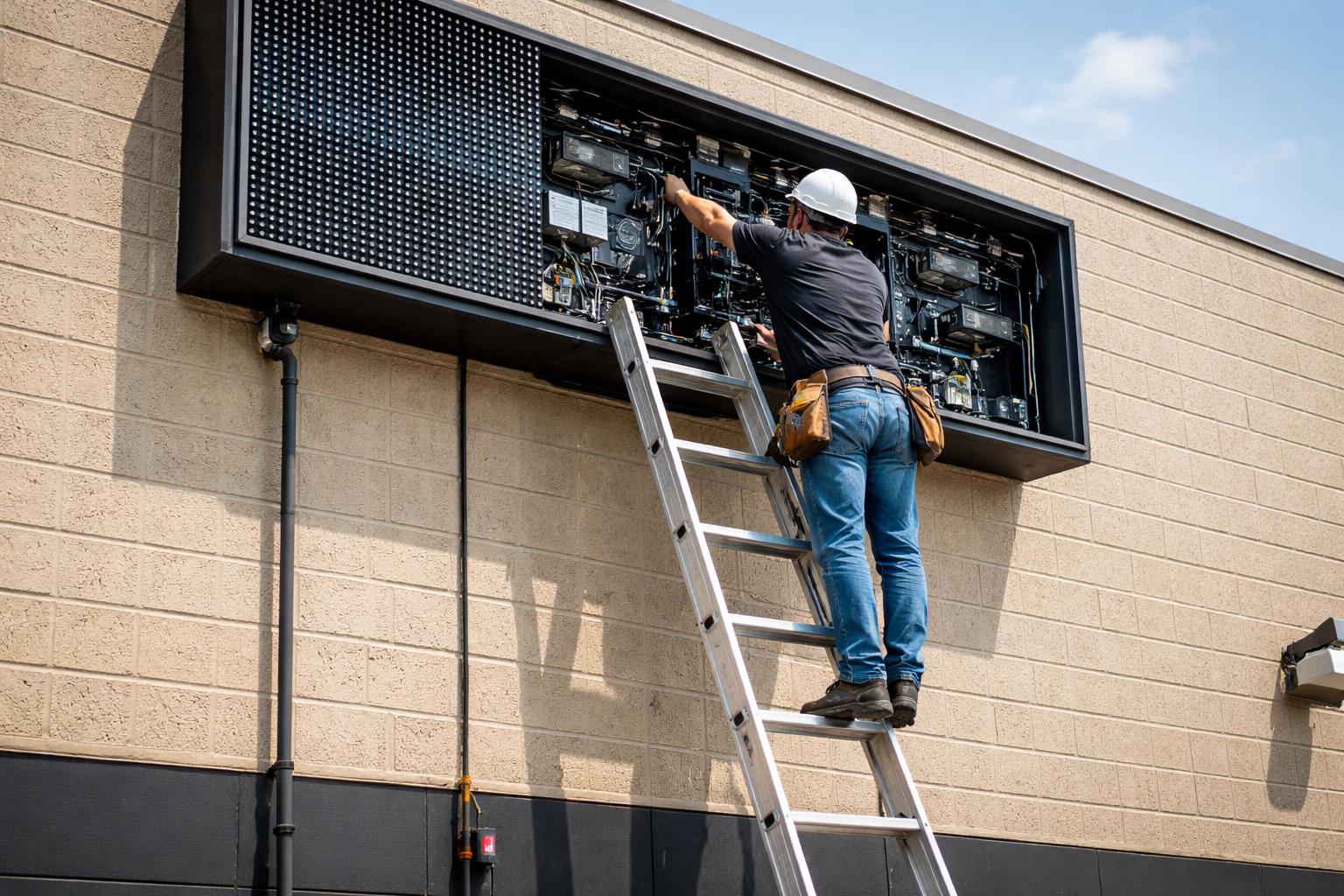
- Access for Maintenance: “Front-service” cabinets (where you can remove modules from the front) cost more initially but save on ladder lift rentals later. Blink Digital often installs front-access cabinets in tight spots. If your quote uses rear-access cabinets (cheaper), check how technicians will reach them for future repairs.
For example, Aurora Signage advises asking, “What is the IP rating – separately for front and back?” and warns that a single “IP65” claim usually means front IP65/rear IP54. Always confirm the actual IP ratings, because better sealing and gasketing (IP66/IP67) can add cost but prevents failures in rain or high-pressure cleaning.
Example question to ask: “What are the cabinet dimensions, weight, and material? What are the IP ratings front and back? Can these panels be serviced from the front?”
4. Control System and Software
An LED sign is not just hardware – it needs a controller/media player and software to display content. Quotes often include a basic solution, but these can vary widely:
- Controller Type: Cheaper signs may come with a simple USB or PC-based media player. Higher-end solutions use dedicated sending/receiving cards (video processors) that ensure smooth playback of high-resolution video at fast refresh rates. The choice affects cost – more advanced video processors are pricier.
- Content Management Software (CMS): Will you manage content from a computer or via cloud-based software? Some suppliers bundle a proprietary CMS license, while others expect you to buy separate software or an ongoing subscription. Make sure the quote specifies whether CMS is included, and how many user licenses you get.
- Network Connectivity: If you want to update your sign remotely (over Wi-Fi or cellular), you may need a built-in network module or router. Confirm if the quote covers any needed networking hardware or SIM cards.
- Training: Learning to use the system is part of the real cost. Blink Digital always includes training on our CMS for local staff. A quick quote might omit training hours (making it cheaper upfront, but leaving you to figure it out later).
None of the sources we found give a single industry quote on controllers, but experience shows some suppliers expect customers to supply their own computer. At Blink Digital, we provide a complete solution out-of-the-box. When comparing quotes, ask precisely what is included in the “control package” so you don’t end up with software or hardware gaps after installation.
Example question to ask: “What media player or processor is included? What content software comes with the sign, and is training provided?”
5. Installation, Foundations and Engineering
One of the largest parts of the budget is installation, especially for outdoor freestanding signs. You must consider site-specific factors:
- Mounting Structure: If you’re mounting on an existing building wall, is the wall structurally capable of holding the sign? Larger indoor signs or small wall signs may bolt on with minimal reinforcement, but big facades often need steel braces or additional framing. If your quotes assume simply screwing the sign to a wall, verify whether structural beams or engineering are included.
- Pylons and Poles: A ground-mounted LED pylon requires a custom steel pole or frame and a concrete footing deep enough to resist wind loads. In Brisbane (Wind Region B), regulations mandate engineering certification for tall installations. One quote might include a standard steel pole, another might have a fully engineered 10m mast with a 2m footing – prices differ greatly. Blink Digital’s estimates always include foundation design and RPEQ-certified engineering for pylons.
- Foundation Work: For a pylon or monument sign, a civil contractor usually needs to dig footings, set rebar, and pour concrete. If your site has rocky soil or has underground services in the way, costs can skyrocket. Ask if the quote includes an allowance for civil works or if they expect the client to prepare the site.
- Cranes and Access: Very tall or heavy signs need cranes or lifts to install. A quote should specify if crane hire (and how many hours) is included. Some installers load scaffolding or lifts into their price, others bill it as an extra.
- Electrical Connection: The sign will need a dedicated power supply. Confirm if the quote includes running electrical cable from your switchboard to the sign location. If the nearest outlet is a long way, trenching and conduit may be required (big extra cost). Also check whether the installer handles the electrical work or if you need a separate electrician.
- Permits and Compliance: In Brisbane, most outdoor LED signs require a permit under the Advertising Devices Local Law. Blink Digital can assist with council liaison and approvals. Our team even coordinates the required electrical sign-off (Form 15 certification). If a quote doesn’t mention council approvals or engineering drawings, find out who will manage those obligations.
As an example of structural requirements, industry literature notes that “Brisbane is classified as Wind Region B” and any digital billboard must withstand those wind loads, with a structural engineer’s certificate. Likewise, JVG Sound’s guide reminds readers that “designing for [cyclone] ratings is non-negotiable” to prevent failures in severe weather. If a supplier’s quote ignores engineering, it could lead to additional charges later (or an unsafe sign).
Example question to ask: “Does this price include all labor, crane/scaffolding hire, and electrical work to install the sign? Do you handle council approvals and engineering certification?”
6. Electrical System and Safety
A digital sign is an electrical appliance, so its power system and safety features affect cost:
- Power Supplies: Each cabinet needs one or more power supply units (PSUs) to convert mains AC to the low-voltage DC used by the LEDs. Suppliers should specify how many PSUs are included and their quality. Cheaper panels often use overloaded PSUs that may fail early in Australian heat. Ask about the PSU brand and rating. (Aurora Signage warns that electrolytic capacitors in cheap PSUs can wear out in 3–5 years, whereas “premium PSUs” last 5–8 years.)
- Circuit Requirements: Get clarity on the sign’s electrical load (e.g. “5 kW at 240V”). A large outdoor sign might need a 32A or higher circuit. If your existing switchboard is too far or lacking capacity, the quote should include installing a new sub-panel or heavy-duty cable.
- Compliance (RCM, AS/NZS 3000): In Australia, any electrical equipment must carry the RCM (Regulatory Compliance Mark) to show it meets national standards. Never skip verifying this. If a sign or its components aren’t RCM-certified, you could be liable if something fails. The buyer questions from Aurora’s blog include asking for the RCM certificate number. Make sure any supplier provides proof that the entire assembled sign (especially custom products like LED cabinets) meets AS/NZS electrical safety standards (AS/NZS 3000).
- Surge Protection and Lightning: Good installations often include lightning arrestors or surge protection devices, especially for exposed outdoor signs. These should be specified (even if they add to the quote) to safeguard the investment in storms.
- Isolation Switches: A fused isolation switch is normally required near the sign for maintenance safety. Check that the quote covers installing this switch and meter box if needed.
Brisbane Council’s guidelines also emphasise that LED displays are subject to the same electrical code as any commercial installation. In other words, the installer can’t cut corners on wiring or safety gear. Blink Digital always includes full AS/NZS 3000-compliant electrical work in our quotes. If you receive any cheaper offer, double-check that all wiring, circuit breakers, and protective devices are accounted for.
Example question to ask: “Will you handle all the electrical wiring and supply? Are the panels and components RCM certified for Australia (can I see the certificate)?”
7. Warranty, Spare Parts and Support
After installation, the ongoing support for your LED sign is a crucial part of total cost of ownership. Two quotes might look similar for hardware, but the warranty and after-sales service can save or cost you thousands down the line:
- Warranty Coverage: At minimum, professional suppliers offer a 3-year parts warranty on LED modules. Better offers include on-site labour as well. Aurora Signage points out the difference between “parts only” (the cheap option, where you still pay the technician) and full “on-site replacement” warranties. If your sign is high up (above 6m), the on-site labour and lift hire easily outstrip the cost of parts. Be sure you know whether your warranty includes sending someone to swap out parts on site, or if it leaves you footing that bill.
- Spare Parts Stock: Ask where spare parts are kept. Some companies will say “we can ship spares from overseas,” which can mean a 2–6 week wait. Blink Digital maintains an eight-year supply of LED modules and PSUs locally, which means we can support a sign for years with minimal downtime. A longer warranty is pointless if there’s no stock to honour it.
- Power Supply Plans: LED power supplies are known weak points. Check if the supplier has a stated replacement interval for PSUs and whether replacing them is included. Ideally, a high-quality LED sign will come with PSUs rated well above the actual load (150–200% margin) so they last longer. If the sign is large, ask explicitly if the warranty covers PSU failures or replacements (some vendors exclude them).
- Software Updates and CMS Support: Make sure the quoted CMS comes with free updates (for bugs or new features) for at least a year. Some companies try to charge separately for future software support. Get that in writing.
- Local Support Contact: Finally, who will you call if the sign has a problem? Aurora’s checklist includes asking the supplier who, in Australia, will own your project after handover. You want a name and number of someone local, not just an overseas call centre. Blink Digital’s Brisbane team will personally handle any support or warranty claims in real time, backed by our technician on-call.
In practice, a slightly higher quote that includes a full on-site warranty, local spares and a support agreement can be better value than the lowest bid. Don’t shy away from asking about these service details. Blink Digital quotes always specify exactly what the warranty covers (and for how long) so you know what’s guaranteed.
Example question to ask: “How long is the parts warranty? Does it include onsite labour and equipment for repairs? Where are spares stocked, and what response time do you guarantee for failures?”
8. Total Cost of Ownership vs. Initial Price
Finally, remember that the cheapest quote on paper is not always cheapest in the long run. Aside from the points above, consider:
- Energy Efficiency: Newer LED modules and drivers can use less power for the same brightness. Over years of 24/7 operation, a more efficient panel can save money. (JVG Sound notes that modern LED systems use far less power than older models.)
- Maintenance Requirements: Signs accumulate dust and need recalibration or cleaning. Ask if the supplier recommends a maintenance schedule (and whether a service plan is offered). Frequent servicing adds ongoing cost.
- Update Flexibility: If the sign’s CMS or hardware is locked down, future changes (e.g. adding cameras, sensors or integration) could require expensive upgrades. An open, upgradeable system is worth paying for upfront.
- Revenue Potential: On the flip side, a high-quality display can run multiple advertisers and significantly boost revenue from your location. A well-positioned billboard can charge thousands of dollars per month (the JVG guide cites CBD screen slots at $8K–$25K per four-week campaign). If you under-spec the screen (poor resolution or tech), you might miss out on premium advertisers.
The rule of thumb from parts suppliers is simple: double the hardware cost and then add 25–50% for structure, installation and wiring. That rough estimate reminds us that “the expense of factors like structure, control systems, electricity, logistics and personnel can easily add 20–40%” or more beyond the raw panel price. Always look at the itemised quote for hidden line items before assuming one price is clearly better.
Pro Tip: If one supplier’s hardware price is much lower, ask if they are excluding any required items. Very low bids might use thin aluminum, off-brand LEDs, minimal IP protection, or no local support – all of which can cost you later.
9. Brisbane-Specific Regulations and Standards
Brisbane businesses must also keep local rules in mind when choosing an LED sign:
- Permitting: Any large outdoor digital sign usually requires a Development Application (DA) under the Brisbane City Plan. The city council will check that your sign meets zoning, size and illumination rules. For example, modern Brisbane policy generally prohibits continuously animated ads on high-impact digital billboards. Councils often insist on static images held for at least ~8 seconds with simple transitions. Make sure your content plan aligns with these rules – some low quotes overlook them.
- Luminance Limits: The council’s technical standards (AS/NZS 4282 based) cap the maximum luminance of an LED sign’s surface in different zones. A high-end sign might overshoot these limits if unadjusted. Reliable installers will programme the brightness correctly and include sensors to reduce glare at night. Before finalising a quote, confirm that the system can comply with AS/NZS 4282:2019 requirements.
- Electrical Approvals: In Queensland, a licensed electrician must issue a Form 15 (Certificate of Electrical Safety) for a new sign installation. Blink Digital can coordinate this as part of the installation. If your quote doesn’t mention who will handle compliance paperwork, factor in that cost yourself.
- Sign Dimensions and Setbacks: Brisbane’s code limits sign area (for example, façade signs are usually capped around 5m² without special consent, and pylons have setback requirements). A quote might propose a sign size that later needs adjustment to meet council rules. Blink Digital will advise on maximum permitted dimensions and help design your sign to fit the rules, avoiding last-minute redesign fees.
By tackling these questions early, you ensure both quotes can be legitimately implemented. A winning tender isn’t just about price – it’s about providing a sign that works legally, safely and profitably.
Key Standard: All electrical work must meet AS/NZS 3000 (the Australian Wiring Rules), and LED equipment must carry a valid RCM mark for Australia. Always require these certifications when signing off on a quote.
10. Checklist: Questions to Ask Your LED Sign Supplier
Use this bullet list as a quick reference when reviewing quotes. Don’t take answers for granted – get them in writing:
- Pixel Pitch: “What pixel pitch (mm) are you quoting, and what is the recommended viewing distance?”
- Panel Brightness: “What is the peak brightness in nits? Do you include a light sensor or timer for automatic dimming?”
- LED Quality: “What LED chip brand and bin grade do you use?” (Higher-bin LEDs cost more but are more consistent.)
- Cabinet Specs: “What are the cabinet dimensions and weight? What are the IP ratings for front and back?”
- Service Access: “Can the panels be serviced from the front? Is it front-service or rear-service?”
- Power Requirements: “How much power does the sign draw? What kind of circuit and breaker is needed?”
- Controller & CMS: “What hardware controls the display? What content management software is included, and how many user licences?”
- Installation Inclusions: “Is crane or lift hire included? Who will do the electrical wiring and cabling?”
- Structural Work: “Does your quote include poles, concrete footings or any structural steel work? Do you provide engineering certs for wind loading?”
- Permits & Compliance: “Will you handle the council permit/DA process? Who is responsible for AS/NZS 3000 wiring compliance and the Form 15?”
- Warranty: “What does the warranty cover? Parts only, parts+labour, or full onsite replacement?”
- Spare Parts: “Do you keep spare LEDs and PSUs in Australia? How quickly can you dispatch a replacement module if needed?”
- Support Contact: “Who will support our project after handover? Is there an Australian-based contact for service issues?”
- Referrals: “Can you provide references for recent Brisbane installations?” (This ensures the supplier has handled local regulations and conditions.)
Ticking off all these points will make sure you’re truly comparing comparable solutions. If one supplier can’t answer a question confidently, that’s a red flag.
11. How Blink Digital Can Help You Compare Quotes
Blink Digital is a Brisbane-based LED signage specialist, and we’ve helped dozens of businesses navigate this quote process. Our goal is to ensure you get the right sign, not just the cheapest. We provide full transparency so you know exactly what you’re paying for at every stage:
- We’ll review any supplier’s quote with you, line by line, to spot missing items or suspiciously low specs.
- We can perform a site survey to measure viewing distance, ambient light, and structure. This allows us to recommend an appropriate pixel pitch, brightness and mounting solution. (For example, we once advised a church to use a P6 panel mounted 3m high to suit a 20m viewing distance.)
- We assist with regulatory requirements. Our team can handle the DA/permit process, electrical permits (Form 15) and engineering certificates on your behalf, streamlining what can otherwise be a headache.
- We stock spare parts locally and offer maintenance packages, so your sign stays bright for years. Many clients initially balk at a slightly higher quote, but later appreciate that their sign required no extra charges for routine servicing or minor repairs.
- We believe in education: if you want it, Blink Digital can explain each component and quote item. We’ll ensure you fully understand why one quote might cost more – for example, if it uses higher-grade LEDs or includes a robust control system.
If you’re already gathering quotes, consider giving Blink Digital a call. We can prepare our own competitive proposal and also help you evaluate others. A quick chat or free consultation can often save time and money.
Contact Blink Digital today for more information or a no-obligation review of your LED signage quotes. Our Brisbane team will answer all your questions and make sure you choose the system that truly fits your needs and budget. The right LED sign should meet both your marketing goals and technical requirements – and we’re here to help you achieve that confidently.